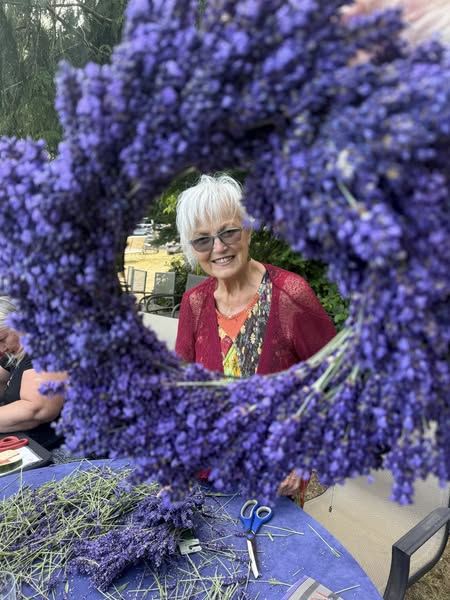
Surrounded by the exquisite scent of 700 Lavender plants in bloom and serenaded by wind chimes and birdsong, my sister, Anne and I, along with 4 other women and the amazing Dar Yuill spun lavender into beautiful wreaths.It was a delightful afternoon of creating, chatting and celebrating our human connections and community.
And… I decided, just for fun, to write a song for the day and ask AI (I know, I’ve crossed over to the ‘dark’ side – but it’s really cool!) to put my song to music. And this is what I got! (Lyrics are mine)
And these are the complete song lyrics:
In Lavender Fields
by Louise Gallagher

In lavender fields where the sun sets wide,
Gentle breezes whisper tales of old.
Memories float like clouds in the sky,
Soft petals dance under the sun's gold light.

Oh, lavender fields, how you bring me peace,
With every breath, my heart finds release.
In your charms, I find the quiet ease,
Of simple days when life was full of rest.

Through the rows of purple, I create a wreath,
Feeling the warm sun caress my cheeks.
Each strand weaves a memory, each scent a tone,
Nature's melody, sweet and sweet.

In lavender fields, I let go and rest,
Where worries fade and calm takes hold.
In your gentle beauty, I find my best,
A peaceful journey, soul and fold.
When worry threatens to steal my joy, I find anchors in the present moment. Join me as I share a personal journey through the shifting tides of life and discover simple practices to cultivate calm amidst the storm.
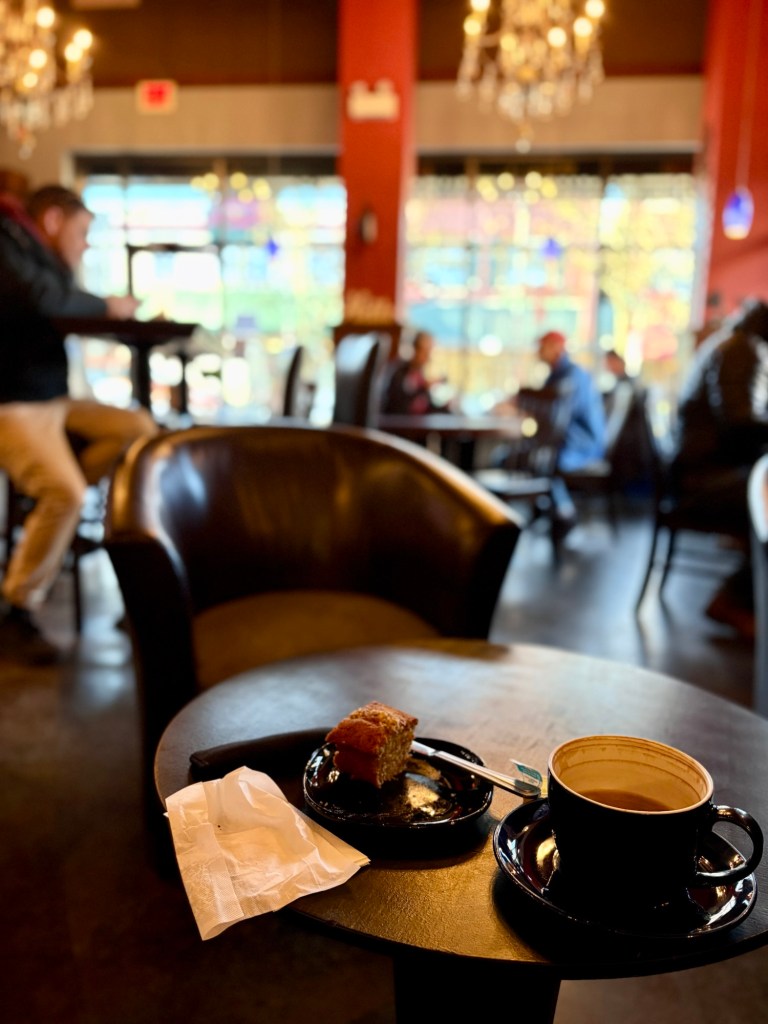
The ferry crossing was smooth, a gentle glide from Gabriola to Nanaimo. Now, I sit in Serious Coffee, bathed in the light of a beautiful morning. Alone.
There’s a soothing balm in this solitude, a restorative quietude. No need for conversation, no urge to connect beyond this moment.
Around me, the world unfolds in a symphony of sounds. The cappuccino machine hums its gentle rhythm, steam hissing, a counterpoint to the murmur of voices. Two men by the window, their deep voices rising and falling: a question mark in one, a nasal certainty in the other. To my right, a different scene. Two women, their conversation hushed and intimate, a conspiracy of whispers. One speaks with her hands, a flurry of movement, like a sparrow flitting between bare winter branches. Her voice is a rustle of leaves, while her companion listens, a picture of quiet empathy. A hand reaches out, a touch of comfort offered and withdrawn, and then back to the attentive stillness of listening.
Suddenly, I hear my mother’s voice, a familiar echo in the chambers of my memory. “It’s not polite to eavesdrop,” she chides, her words sharp, her disapproval clear. I can almost see her hands, those tiny, fluttering gestures, like a hummingbird hovering at a feeder.
“I’m not eavesdropping,” I whisper back, “just observing.” And in my mind’s ear, I hear the click of her tongue, that familiar tsk of disapproval, a sound that once held the power to wound.
My mother, a woman whose love was woven with threads of criticism, a tapestry of warmth and irritation. I carry her memory like an itchy wool sweater, comforting and chafing in equal measure.
I thought she was gone, that she had finally found the peace that eluded her in life, that she had moved beyond the confines of this earthly realm. But here she is, on this bright January morning, a presence in my solitude.
Perhaps she can hear me now, as clearly as I hear her. In life, I rarely granted her the grace of true listening, my responses clouded by judgment and the lingering shadows of childhood hurts.
But now, in this quiet coffee shop, I find myself comforted by her presence. Grateful for the grace that allows me to meet her memory with a gentler heart, a more understanding spirit. And I find hope in the thought that perhaps, even now, reconciliation is possible, in the vast and mysterious expanse that lies beyond this life.
The two women leave. More strangers enter, drawn by the warmth and the aroma of coffee. And I sit alone. Calm. Listening to the clinking of cups, the murmur of voices, the whisper of the cappuccino machine. My mother, I realize, has slipped away again, back into the quiet corners of my memory. But the grace she unknowingly offered remains.
Soon, I’ll be back on the ferry, the salt spray on my face, the island rising from the sea.
A sweet, succulent smile of gratitude warms my heart. Life is beautiful, a tapestry woven from these small, perfect moments.
According to Bruce Weinstein, PhD and author of Ethical Intelligence: Five Principles for Untangling Your Toughest Struggles at Work and Beyond, the five principles that form the core of our ethical intelligence are: Do No Harm, Make Things Better, Respect Others, Be Fair, and Be Loving. These principles, while simple to understand, can be challenging to live by, especially when faced with complex social issues like homelessness.
It’s easy to fall into patterns of judgment and indifference. We gossip, complain, and criticize. We dehumanize others with labels and stereotypes, forgetting that behind every struggle is a human being with a story. In the context of homelessness, this can manifest as fear, revulsion, or a “not in my backyard” mentality.
My work in the homeless-serving sector in Calgary brought me face-to-face with these challenges. I witnessed firsthand how the label “homeless” can evoke a tsunami of negative emotions, overshadowing the individual’s humanity. In community meetings, I often heard the phrase “those people,” a subtle but powerful form of othering that violates the principles of Respect, Fairness, and Love.
Whether it’s in a bustling city or a quiet island community like the one I live in now, homelessness exists. It might be hidden in tents in the forest or vans parked on remote dirt roads, but the underlying issues remain the same. The lack of affordable housing, inadequate mental health support, and dwindling social safety nets push people to the margins.
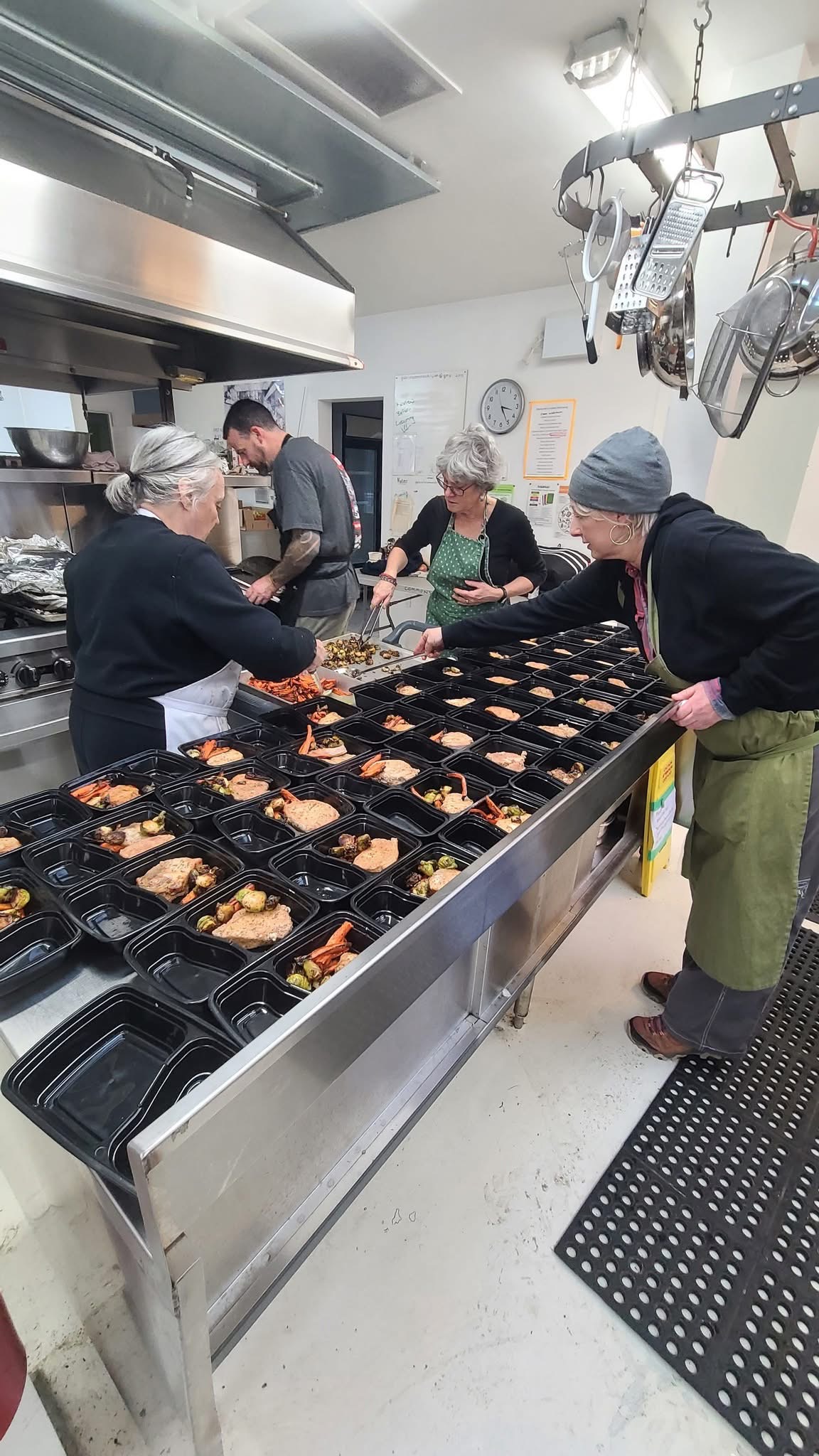
There’s no single solution to homelessness, but we can all play a part in making things better. Since moving to the island, every Thursday afternoon I volunteer with The Grub Huggers, a group that prepares meals for people needing food support. This simple act, fueled by community donations and a desire to help, embodies the principles of ethical intelligence. By providing a basic necessity like food, we’re not only preventing harm but also taking active steps to improve the lives of others.
Each act of kindness, no matter how small, creates a ripple effect. Whether it’s volunteering at a food bank, donating to a shelter, or simply treating someone experiencing homelessness with dignity and respect, we can all contribute to a more compassionate and just society. Let’s commit to doing our little bit, radiating kindness outward and creating a world where everyone feels valued and supported.
Perhaps it’s the unwinding of memories as I declutter and organize, or the echoes of poet and philosopher David Whyte’s words echoeing in my mind from the podcast I listened to yesterday as I worked in the garage. Or, perhaps it’s simply that my focus turns inward as I sift through the outward markings of our life in this beautiful home…
Whatever the impetus, this morning was not meant for poetry. I awoke early, completed my morning puzzles (Wordle, Connections, The Mini) and embarked on the all-consuming quest for Spelling Bee Genius status. Barefoot, I made coffee, tidied the kitchen, and took Sir Beaumont for his morning saunter.
But as I sipped my latte, sitting at my desk, looking out at the river flowing past, responding to messages on my computer, the muse beckoned. I fell under her thrall. Words flowed in that space of limitless expansiveness. Two hours later, a poem was born. Heart unburdened, now it’s time to return to the task of decluttering.
Those two hours were not lost time in preparing our house for market. They were overflowing with soulful nourishment, soothing the edges of sadness as we leave this beloved home and our wonderful community here and fueling the excitement for our next adventure—into the mists of the known and unknown.
Life is an incredible journey when I listen to my heart, live with soul, and weave creativity into everything I do.
Lynda recently invited me to join her on the podcast (thank you, Lynda!), and she shared a few past episodes she thought I might enjoy. I love how genuine and present Lynda is in her interviews. In one episode, she hosted a panel discussion called, “On Death, Dying, and Grief,” which was both moving and inspiring.
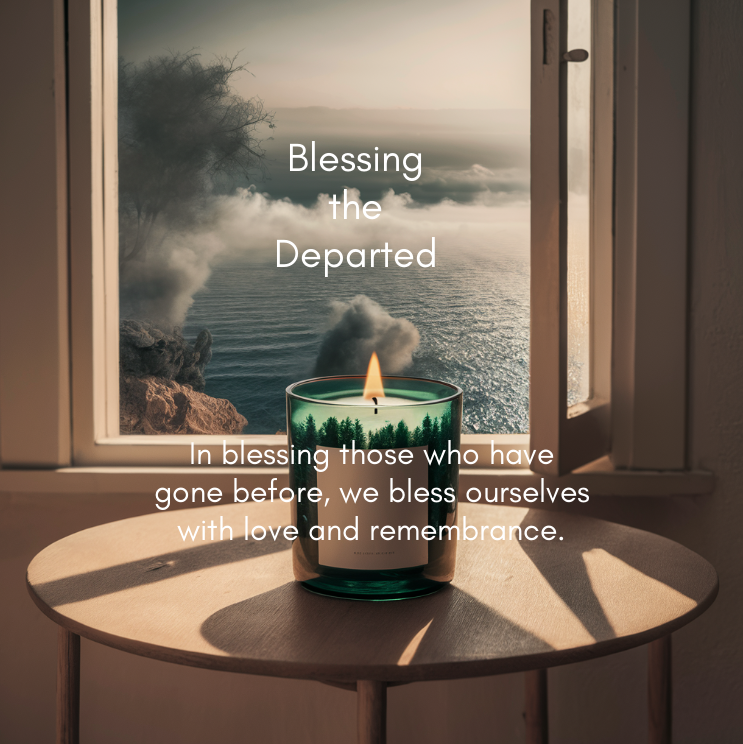
Right at the start of the discussion, Lynda invited listeners to place a hand on their heart and simply bless those who are gone. That small act inspired my new morning ritual.
Blessing the Departed
Now, at the beginning of my morning meditation, as soon as I’ve lit my candle, I place my hand on my heart, gaze into the flame and send a blessing to my ancestors, loved ones, and all those who have departed from my world.
In blessing those who have gone before, we bless ourselves with love and remembrance.
This practice resonates deeply within me and with what I teach in my 8 week The ReWrite Journey online course: the importance of learning and trying new things. Embracing ‘the new’, reminding ourselves of our capacity to continually learn and grow, helps us break free from routine and the stultifying belief ‘we’ve done it all’, keeping us vibrant, energetic, and full of life.
“Blessing the Departed” is not something I’d ever considered before, but after doing it for just two days, I feel the soft, ethereal beauty of the blessing enveloping me with love.
An Invitation
I invite you to try this simple yet powerful ritual. It’s a lovely form of self-nourishment and a beautiful way to start the day, connecting with those who came before us and sending love into the world.
One Seed. One Life. One Being.
by Louise Gallagher

Awe
-a one in a million seed planted
one sacred womb nurturing life into becoming
an infant’s first cry announcing their existence.

Humility
-a heart broken open in love
one life becoming the all of life evolving
joy awakening with a child’s first laugh.

Trust
-a tiny hand grasping a finger extended, holding on
one lifeline extended across generations
a tapestry woven with golden threads of Love.

Truth
-a bridge of love spanning all humanity.
one seed connecting life again and again
divinely orchestrated.

What will you plant with your one seed?
Awakening before the sun, a tendril of a dream drifts through my mind. I lay in bed sensing the wonder and awe of life. It’s ineffable beauty. Luminiscent presence.
Images of my daughters. First cries. First laughs. First steps. So many first leading to lifetimes of joy, love, laughter and possibility.
I lay in bed and felt the poignancy and fleeting nature of life envelop me.
And gratitude awakened.
And Love consumed me.
And the muse whispered, “Write of awe.”
This poem began with 4:00am stirrings of awe and wonder.
I have learned it’s best not to ignore the early morning whispered flutterings of the muse. She is persistent in her flowing nature and does not condone well my resistance to her urgings.
Knowing well the ephemeral nature of her visits, I arise, pad barefoot to my desk and begin to scribble in my journal.
“Joy transcends age; it’s not confined to youth. It’s a universal treasure that spans all ages, reminding us that to experience joy we must embrace the journey of life with love, laughter, gratitude and compassion every day.” Louise Gallagher
As I sit before my computer navigating various sites to launch thep of unveiling another chapter of the Radiant Bold Aging Masterclass, and transforming my two-month ReEnvision Your Journey program into a six-month quest to champion women in crafting the life of their dreams, age notwithstanding, my journal pages have blossomed with musings on JOY.
What essence it holds, whence it springs. What, if anything, fills its void when it gently slips away? In its absence, where do I seek refuge? And why, oh why, does joy hold such paramount importance?
These existential ponderings, to me, are not just intriguing—they are essential quests for understanding.
Today, merrily working in my studio, with the melody of birdsong heralding spring to the barren branches of the trees that line the riverbank, and sunlight dancing on the snow-blanketed earth of our backyard, I found myself cradled in the sheer joy of the present.
Joy—like an ocean wave—envelops me, washing away the remnants of turmoil. It saturates my being when I cease to engage with joy’s thieves: resentment, regret, anger, sorrow, and the mundane grievances against the world’s bad drivers and the monotony of customer service scripts. Ah, those familiar foes.
I’ve come to realize that irrespective of age, emotions crash upon the shores of my consciousness, uninvited. To truly know Joy, I must allow these feelings to be swallowed by the temporal tides, and in their stead, embrace love, self-compassion, mindfulness, and the endless possibilities each moment holds.
In such moments, my heart feels lighter, my thoughts as clear as the rainbow stretching across the sky after a storm, and I am embraced once more with Joy.
I still possess The Rubaiyat of Omar Khayyam I gifted my father in October, 1972. I know the date as I wrote it on the inside cover when I gave it to him. A voracious reader, my father had a remarkable knack for recalling passages from beloved texts, often prompting me with, “What does that mean to you, Little One?”
I loved it when he called me by my nickname, a name only he used. It brought me closer to the enigma I always saw him as.
A not very patient man himself, whenever I displayed hints of my own impatience, he loved to quote from The Rubaiyat. “The Bird of Time has but a little way To fly — and Lo! the Bird is on the Wing.” I’d sigh and say, “Slow down. Enjoy the moment.”
He never just skimmed the surface of words; he delved deeper, seeking their core meaning. He also never gave me the deeper meaning, asking always to probe, to think about it, to consider the possibilities.
It is this legacy of questionning and probing I cherish most. His reverence for the written word gave me glimpses into worlds I never could have imagined. Books were sacred in our home, so sacred, he never marred their pages, except to inscribe a note inside the cover when gifting one.
In contrast, as the youngest of four, often feeling overshadowed by my only brother, the son upon whom the sun rose and set, or so I thought, my small acts of rebellion included annotating my books. This habit, perhaps a way to feel connected to my father, persists despite his admonitions I not do it.
This morning, as a flock of geese echoed over the river, my mind wandered to my father, his adoration for words, and the Rubaiyat. Inspired by Val Boyko’s inquiry on her blog, Find Your Middle Ground, “What brings a spring in your step these days?” I went in search of my father’s copy of The Rubaiyat and crafted this haiku.
Spring is on the wing, Geese sing nature’s symphony— In rest, time flows on.
Opening the book, I discovered my youthful dedication: signed, “The Brat.” This nickname, bestowed by my mother, was one she urged me to outgrow as I neared the end of my teenage years. “You’re not a child anymore,” she remarked once, with a wistful sigh, “though sometimes I wonder.”
That period marked a significant year—I had presented my father with The Rubaiyat and embarked on a bold attempt to attend university in Moscow. This move drew the attention of the Canadian security service, sparking a series of interrogations fueled by concerns over potential communist ties. Immersed in the world of my father’s spy novels, I found the situation amusing rather than alarming, cheekily inquiring, “Do you think I’m a spy? How thrilling!”
Thankfully, my father was acquainted with the interrogators and eased their concerns. “She’s merely pushing boundaries,” he assured them. “It’s just her way.”
Now at 70, it remains my way: to constantly challenge myself, to push boundaries, and to explore how high I can soar without wings.
This morning, geese rest upon the frozen river bank. And though I cannot ascertain the remaining flight left in their wings, I vow to extend my horizon until time rests.
Four years ago today, my mother drew her last breath, stilled her heart and surrendered to the ever-after.
It has been four years of healing, growth, transforming pain into wisdom, opening to the spiritual nature of life and death and moving deeper into being embodied in this one life I am living now.
I wrote the poem below a year after mom’s death, still in thick of Covid’s thrall, and still aligning to this expected yet, still surprising role as, as a motherless child
At the time, I shared it on my Facebook page and this morning FB Memories brought it forward. I am grateful. In the wake of my sister’s death last November 24, it is a comforting and welcome reminder of grief’s erratic and capricious nature If you are walking within grief’s aura, I hope it brings you comfort too.
Grief is Messy.
by Louise Gallagher

Grief is messy.
It follows no well-known path
travelling to the beat
of its own drum
as it pummels your defences
pushing its way through the boundaries
you desperately put in place
to keep its presence at bay.

Grief is stealthy
It dresses up in familiar clothing
masquerading as your best friend
while it sneaks in through the side door
of memory, stealing into
the broken places
of your heart
you want desperately to avoid touching.

There is no taming grief.
There is only its heavy cloak
of companionship
wearing you down
until one day
you find yourself arriving at that place
where moments spent wrapped
in grief’s company
die away
as softly as the sweet melody
of the voice
of the one who is gone
fading into memory.
And for life on ther lighter side, I’ve posted one of Beau’s blogs on Sundays with Beaumont this morning. As always, he wins! 🙂




 Dare Boldly