Not in my backyard?

Photo by Thomas Le on Unsplash

Let’s be clear. Homelessness does not belong in our backyards. It does not belong on our streets. It actually doesn’t belong in our society.

Homelessness doesn’t create better communities.

Not having people experiencing homelessness does.

The challenge is, when we think of homelessness, we see the person as the ‘homeless entity’ and don’t see the social issues beneath the stereotypes that keep us believing that speaking out against the person who is experiencing homelessness is actually making a difference.

That’s not how homelessness ends.

Homelessness ends when we as a society take better care of those who do not have the same privilege or same opportunities as we do to create better in their lives.

Homelessness ends when we stop targeting people and start addressing social issues that continue to create the very thing we don’t want on our streets or in our backyards, homelessness.

Because here’s the deal. Someone experiencing homelessness doesn’t want to be in your backyard. They don’t want to be on our streets. Being belittled and demeaned, ignored and shamed is not fun.

Years ago I got stuck in New York City because when I tried to fly out, the attendant noticed I’d entered on an expired passport. Yup. It was a surprise to me too but somehow, my expired passport had passed through two scanners and four different sets of hands as I exited Canada. And nobody noticed.

“Sorry, I can’t let you go home,” the attendant informed me as I tried to check into my flight. “You’ll have to go to the Canadian Consulate and get an extension so you can fly home tomorrow.”

Needless to say, I was the first person in line when the Consulate opened. Except. It didn’t matter. They didn’t give extensions and as my valid passport wasn’t lost (it was at home in Calgary), they couldn’t issue me a new one.

For 24 hours I waited for my passport to arrive. And while I waited I aimlessly wandered the streets of NYC. I couldn’t focus. I couldn’t think. I couldn’t do anything but wait for my passport and hope it got there without incident.

I eventually made it home but not without feeling traumatized by the whole incident. Yes, it was my mistake that lead to my being stuck in New York but there were a whole bunch of contributors to the saga of my not being able to make it home as planned.

Now, imagine if you made a mistake and the penalty was losing your home. Maybe you lost your job and didn’t have any savings. Maybe your spouse left you and cleaned out your bank account. Maybe, in the process, you got to feeling so badly about yourself and your life, you turned to substances to numb your pain. Believe me, I drank a fair amount of wine while I waited for my passport to arrive if only to quell my fears, no matter how unrealistic, that I’d never make it home.

See, people aren’t homeless because they aren’t willing to change, or to address their mistakes, or let go of the substances that are helping them cope. They’re homeless because the resources they need to create change in their lives are not easily/readily available. Like the Consulate office that didn’t provide passport extensions, doors keep closing in their face, and despair keeps rising with every ‘no’. Eventually, the despair outweighs their hope and they sink listlessly to the ground, letting go of any hope they’ll make it out of the darkness that is homelessness. Getting up again becomes harder and harder until one day, up is no longer an option. Staying down just hurts less.

And that’s the challenge. The longer someone remains in homelessness, the greater the impact on their resiliency, health and mental well-being. Not only must they face the challenges of finding their way home, they must deal with the mental and health issues that have arisen because of long-term exposure to the toxic stress and trauma of homelessness.

Homelessness hurts. People. Families. Communities. Society.

Let’s stop blaming the people and start doing the things that ensure people don’t fall through the cracks because there are lots of exists leading away from the danger of homelessness before they fall.

Let’s stop blaming and shaming the people. Let’s start looking at our systems and how we can make them better so they open doors, not close them.

Let’s ensure our social services are deep enough and rich enough to give those with limited options enough supports so that if they do fall into a hole, they have enough resources to climb out before they get trapped in homelessness.

Let’s speak up to create a more fair and equitable society where those on the margins don’t get locked out of possibility for a better life simply because they never had the coin to pay the entrance fee to a better future in the first place.


When we fear what we do not know…

Recently, in Calgary, we’ve had an ongoing debate around a Supervised Consumption Site, both a fixed address and proposed mobile facility. As part of the debate, the phrase most used to describe its necessity is ‘harm reduction’.

To those not accustomed to working in the areas of addictions or homelessness, harm reduction can be a scary thought. Partially because unless you do work in this field, you don’t really understand it (even those who work in it sometimes struggle with it), and secondly, because it immediately suggests there is harm to someone, we just don’t know who and being naturally egotistical humans, we fear what we do not understand and assume it is us at risk of the harm.

Harm reduction is about lessening opportunities for self-harm by creating safe practices and spaces for those engaged in drug use. Someone with an addiction is going to use. That’s what addictions do. They steal ‘common sense’ and override our entire beings with this burning desire to have the thing we desire, even when we know it’s not good for us. We don’t really think about the dying part. We think about the relieving ‘the itch’ by using the thing that gives us relief.

But, we say, they choose to be addicts, why can’t they take care of themselves? Or as one person commented on a news article online, Why can’t we just let them all die?

I don’t know about you but people dying on my watch, when I have the capacity to make a difference, even if it’s only by accepting a Supervised Consumption site in my area is better than being complicit in someone dying of a drug overdose anywhere.

On average, 2 people die of opioid poisoning in Alberta every day with Calgary experiencing the highest number of overdoses in the province.

This is a complex issue. Lives are being lost. And we are afraid. The challenge is, I’m not sure we know what it is we fear.

Do we fear encountering someone on a high on the street?

Do we fear someone dying in front of us?

Do we fear we won’t know what to do if we encounter someone overdosing?

Do we fear the unknown?

All of these are real fears.

Are they real enough for us to take action by learning more, by carrying a Naloxone kit for example, or by volunteering at an organization that works with people with addictions or who are experiencing homelessness?

Or, do we just complain, criticize and condemn those who are doing their best, even when we don’t understand what they’re doing or why, to keep fellow human beings alive.

There is a narrative in our society about addictions that is not healthy.

Addiction is a choice.

People should just stop.

If they’re going to use,  it’s not my job to save them.

There’s nothing I can do.

Actually, there’s lots each of us can do. We can become advocates for kindness, compassion, acceptance of our fellow human beings, in all their many facets, in all the expressions of our shared human condition.

Ultimately, by creating a kinder more forgiving and tolerant world, we create opportunities for everyone to live free of labels, free to experience what it means to be human in a world that does not judge or find others lacking simply because they’re different than us. A world that sees our differences as vital parts of the fascinating and beautiful mosaic that is our human condition.

In such a world, anything and everything is possible.

______________________________________________

Please note:  This post is not to create a debate on supervised consumption sites or addictions or the opioid crisis. My words are my effort to understand better what it means for me, and what I can do, create, change.

If my words stir something in you, please do share your thoughts. Your thoughts will help me understand more, create common ground, increase the field upon which we share understanding.

Please be respectful. Kind. I reserve the right to delete comments that denigrate or belittle human beings.

Every voice has value.

Awhile ago, I had coffee with a dear friend, He is one of my oldest friends here in this city. I needed his guidance on something and he gladly offered up his time.
As we sat and talked and laughed and shared our hopes and dreams and challenges I was struck by how much we have both been ‘made different’ through this friendship.

My friend is pragmatic. He can always serve up a pretty bleak perspective on life and the economy, on government’s and social movements that states, ‘we are all going to hell in a handbasket’. In his pragmatic approach I have learned to listen deeply to the underlying message. To not take words at face value but to ask questions, dive in to gain understanding. I have learned to make space for someone else’s point of view. There is always something to be learned, gained, understood. Through this friendship, I have learned to let go of criticism, and the need to change the other to my point of view and open up to learning and growing on the common ground of respect for one another.

I am less pragmatic, taking a more Pollyanna approach to life and living. I want him to see the goodness in all mankind, the possibility of ‘better’, the imperative of kindness and letting people be their experiences while ensuring no one dies on our streets. His response has generally been, “Then let them experience cleaning up, getting a job, getting on with life. It’s not a free-ride.”

When I worked at a single’s homeless shelter, I struggled to convince him to see the world of homelessness through my eyes. And he resisted my insistence he was wrong to view the world his way. Go figure. Over time, I quit insisting he see it my way  – by admitting the errors of his way –  and moved into a place where his way had equal voice. And in that shift, everything shifted. We were both made different. We both let go of our intransigent views and opened up to the possibilities of another way — another way that lead to the building of common ground for the mutual benefit of all. Where once the line was drawn and we could not cross the barriers of our convictions, the light has filtered in, creating softness in those places where once only hard rock theories abounded.

To make a difference in the world I must let go of my insistence that my way is the only way. There are a thousand paths to get to the place we want to be. Every path matters.

To make a difference in the world I must stop judging where others are at and find the common ground of where we all live in a world where everyone has value and every point of view creates a world we can live in without fear.

The Courage to Fly

Sometime ago, I attended a workshop at a hotel downtown. When I arrived, I wasn’t sure where to go and approached a waitress I saw setting up a table in the lobby restaurant. As I approached, she looked at me, smiled and said, “Louise. How wonderful to see you.”
“Hi!” I replied, glancing at her name tag. “Claire*. I know I know you but I can’t remember from where.”

She smiled. Glanced around to see if anyone was within earshot. “From the shelter,” she said. “I was a client there years ago.”

My eyes widened in wonder. “Wow! I wouldn’t have recognized you. You look fabulous,” I told her.

And she did. Her once gaunt face had filled out. Her eyes sparkled. Claire, when I knew her many years ago at the shelter was a crack addict. While there, she drifted in and out of sobriety, in and out of rehab with never a stint of sobriety lasting longer than a couple of weeks.

When high, she flitted like a butterfly, laughing and joking with everyone.

When coming down, she drifted through the room like a wounded sparrow, dragging a broken wing, fluttering feebly, fearful it would never fly again.

When sober, she volunteered. Helped out where ever she could, constantly staying busy in the hope she would not succumb to the call of the drugs eating at her peace of mind. “I want to be sober,” she told me often. “I really want it, but I’m too scared to let go of the drugs.”

She’s been clean and sober for several years.

“I’m loving it,” she told me. “Love being sober. Love getting to know me again,” she laughed. “I was too afraid to do that before.” She glanced upwards, pointed above. “It’s a miracle. I’d be dead by now if He hadn’t found me lying in the dirt and picked me up. I am so grateful for His Love.”

Claire’s sobriety was hard work. Rehab. Fall. Rehab. Fall. Until one day, there was no more falling. No more rehab.

“There were so many people who made a difference on my journey,” she said. “I say thank you every day.”

We chatted for a bit. My eyes welled up several times as she told me about her journey, her letting go and surrendering to Love.

As we said good-bye, she gave me a hug. “I’ve always wanted to thank you for being so kind. You always treated everyone with respect. It meant a lot. You reminded me of what was possible even when I was high and running scared.”

I wanted to brush off her compliment. To slip away and let it slide off me.

I chose not to. I chose instead to let her words lift me up and to give her my appreciation for sharing her story with me.

“Thank you,” I said. “Your words mean a lot to me. Seeing you has reminded me to never let go of hope. To always believe in the beauty of the human spirit. I’m so glad you are alive.”

There are no accidents even though running into Claire felt like one at the time.

In Claire’s story I was reminded of the magnificence of the human spirit when it soars free of limiting thoughts and behaviours that tie us to the belief we do not deserve Love. Chatting with Claire reminded that we are all at times like a bird with a broken wing, desperately trying to take flight. It is only when we do the hard work of letting go and falling into Love, that we set ourselves free.

In Love’s embrace, we are safe in our humanity. In Love, even broken wings find the courage to fly.

Namaste.

* not her real name

No one is meant to be alone. Especially in the end.

I told your story yesterday old friend. I told your story and shared your voice with strangers. Just like you wanted. Just like you knew I would those days when you shared stories of your life on the road and laughed and teased and flirted.

Remember? You said you wanted to be remembered. Oh. Not for the word you carried that named you. Oh no. Never that harsh and judgmental label – homeless. It didn’t sit well with you. Call me anything but that, you said.

And then you laughed. Because I’m not, you know. I’ve got a home. Here. And your rheumy eyes glistened and I saw the longing for home shining.

I told them of your brother. Of your reuniting. Of the missing years that had no need of filling in. Of the tears and the joy. And finally, I told these strangers who had never met you, but wished they had, of your brother’s hand holding yours in those final moments. Of your passing over filled with grace in the love of a brother who never forgot you and never gave up on finding you before it was too late.

You blessed my world my friend. You blessed me with your laughter and your words and your insistence you would fight this. You would win. You would beat it. Not even life can beat me down you said. And it didn’t. At least not life itself. You were so full of it. So completely engaged in it. And then, you were gone.

In the end, you won. In the beauty and the tragedy of your life, you found the thing you most sought. That thing we all yearn for. That place we all want to be. Held forever in the arms of Love.

Yesterday I told your story and I smiled and laughed and remembered you just the way you wanted to be remembered. Determined. Feisty. Laughing and just a little bit naughty.

Tell them about the man I was, you said. Tell them about the man with dreams and big ideas and an eye for the ladies.

You winked when you said that. You always winked when you flirted.

Tell them about the man who could lift bales of hay with one hand and change a flat tire in three minutes flat. Don’t tell them about the skin and bones, the skeleton rattling around a small cubicle room where all I own fits into a 2×6 foot locker. Leave the ending out, would you?

Remember me for the man I was. The man who did it his way. The one who told himself he never needed anyone and found out, in the end, he was grateful to be wrong. Make sure they know that, you said. Make sure they know. No one is meant to be alone. Especially in the end.

I told your story yesterday old friend and you were remembered and eyes glistened and hearts drew near and warmed their hands in the glow of your closeness and I knew, you were there. Laughing. Caring. Sharing your stories and your funny jokes and not so delicate ones too.

You are not forgotten my friend.

It is cold and frosty outside today. Inside, my world is warm and toasty. Beaumont sleeps on the chaise behind me. My beloved lays in our bed. The furnace hums. The river flows past, its ripples glistening in the light that shines from the bridge above. The bridge that connects two sides of the river flowing past.

The world outside my window is wintry white as once the screen lay flat and white before me. Until your memory filled it.

____________________________________________________________

I ran into an old work colleague yesterday. We laughed and chatted and talked about people we knew. Those who are still with us. Those who are gone.

“It’s good to remember the good of that place,” my colleague said. “That way we let go of what we do not need to carry.”

Wise words, I thought. And I remembered a man who once stayed at that place. His name was Terry. He is gone but the lesson he taught remains.

In remembering, I searched for something I’d written of him a year after he passed.

No one is meant to be alone., he said. Especially in the end.

The air is frigid outside my window. Arctic air encompasses the city.

There are those who are outside in this cold, struggling to survive.

If you are in Calgary and see someone in distress, please call the DOAP team — 403-998-7388

If you are in another city, please check with your local shelters if there’s a number you can call, or call 9-1-1

When children are stressed, the world is not a happy place.

Yesterday, in a comment on my post, To Be Happy, We Need Boundaries, Mark Kolke wrote,

“Kids without clear lines wander/experiment in ways that can lead to confusion and unhealthy behaviour […]

We all want to do good but don’t always do good – so it is important we have a deep early grounding in what is OK vs. what we should have twinges of discomfort about. These things, clear or fuzzy, stay with us all our lives.”

Every day at the family emergency shelter where I work, I see this statement in action.

Kids under stress doing things kids under stress do.

Add in stressed parents and the challenge becomes even greater. How do you cope effectively with your children’s under stress behaviours when you are experiencing extreme stress too?

Being in an emergency shelter is stressful for everyone, so there is little opportunity for the stress to be eased. Thus, little opportunity for the kids to not be doing things kids do under stress.

The brain science is simple. The solution isn’t.

Stress impairs a child’s brain development.

Continual stress creates toxic stress = compromised brain development

(factor in)

human growing process,

(end result)

Emotional, mental, physical impoverishment into teenage years and adulthood.

We can’t end adult homelessness if we don’t end homelessness for children.

A family emergency shelter is not the problem. Nor is it the solution.

A stable, predictable home environment is the solution, but how do you create ‘home’ when the parents themselves have never had the benefit of an environment conducive to healthy brain development?

See, that’s the crux of it. For many of the families we serve at the shelter, poverty is an intergenerational cycle. They have never known anything other than the stress of living in a home where everyone is struggling to make ends meet, lessen the pressure of never having enough and coping with the instability and limitations that come with parents under stress.

What parents do. Children do.

Every parent wants to do what is right and best for their children. Every parent wants to ‘do better’. But, when your starting point is so far below the poverty line, you can’t see beyond the stress of never having enough, it becomes even more daunting to rise above the line to do better for your children.

I wish some days I had a magic wand that would heal all the wounds we cannot see but are so clearly evident in the behaviours of the children we see at the shelter.

I don’t have a magic wand.

What I do have is the opportunity to create better so that those families who do come to the emergency shelter for support, find a more inviting path out of the stress of poverty and  homelessness into a world that is more supportive of their desire to provide a better world for their children.

Namaste.


We are all players in homelessness

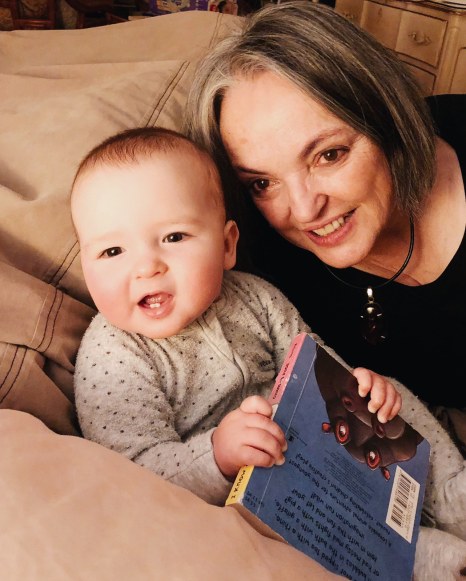
I was in Vancouver over the weekend visiting my daughter, her husband and my grandson. He’s 8 months old, his life a beautiful big slate of possibilities not yet explored or even imagined.

Three weeks ago, my daughter and her family, along with 43 other tenants who lived in the same apartment building in downtown Vancouver, were summarily evicted the day after a fire destroyed 10 units completely and caused extensive damage in the building.

My daughter and her husband had insurance. They have family they can stay with while searching for a new place. They have the means to afford to find and move into a new place, and they have the resilience that comes from a lifetime of relative privilege that has given them emotional reserves to fall back on to hold them up as they journey through these difficult days post fire.

So many others in the building don’t have those same opportunities. They are senior’s, single mom’s and dad’s faced with enormous damages and losses plus the challenge of having to find a place to live in Canada’s second most expensive renter’s market.

At the family emergency homeless shelter where I work, families arrive at our doors every day seeking shelter after a housing crisis has hit.

Like my daughter and her neighbours, they didn’t plan on the crisis and are doing whatever they can to weather the storm. In this case, bringing their family to an emergency shelter. What is essential to the families we serve is what is essential to my daughter and her neighbours – finding safe, temporary shelter while they seek new housing. Housing that is safe and sustainable. Housing where they can once again be at home in that place where their stories of new possibilities begin.

Everyday families come to the emergency shelter seeking shelter. Like my daughter and her family who are staying at his parents, or their neighbours who are staying with family, in motels or on friend’s couches, the shelter is not their home. It is the place they are staying as they navigate their path back home.

As my daughter and I wandered the streets of Vancouver, checking out shops for furniture and baby supplies for their new home, we talked about the unexpectedness of this event in their lives and its impact. They are moving to a new neighbourhood. Her son will no longer be swimming every week at the Y around the corner or sitting in the park with her across the street watching the puppies play or the birds in the trees.

“Will my son remember what happened?” my daughter wondered. “I just want to get him back into a routine. Get him settled in his own room.”

It has not been easy, but they are doing their best.

I am sure her thoughts are similar to those of the parents who come to the shelter. How much will their children remember? How will they be impacted? How do they get them settled quickly in a new home?

Faced with the crisis of being without a home, they are doing their best to ensure their families are safe. On their journey home, some people will need a little bit of extra help and support to make it happen.  But no matter what, every family needs a place to call home for their children where a better future is always possible.

It is easy in homelessness for those of us looking ‘in’ to think the crisis is all the fault of the adults involved. That it is their choices that caused the problem.

No one caused the fire that resulted in my daughter and her neighbours being evicted, and not having insurance is not the problem either. The same is true of the families who come to a family emergency shelter. No one human caused their homelessness. Lack of a social network, lack of social policies that protect the vulnerable from greed and the man-made attributes that contribute to a highly-overpriced housing market are all players. Our human condition’s need to accumulate wealth, to build bigger and more without thought for those who are not able to take advantage of the same opportunities are also contributors.

And the part that is so daunting, that makes it so hard to witness children experiencing homelessness day after day is the fact, it is the children who pay the ultimate price. They are the one’s who suffer the consequences.

Homelessness is not the problem, just as those experiencing it are not the problem.

We all are contributors and benefactors of its root causes. We all buy into and pay forward the creation of this state called homelessness through the things we do to create ‘better’ in our own worlds that have unintended consequences, and sometimes intended consequences, in another’s world. In our complicity, whether overt or covert through our silence, we are all impacting the futures of the children who are its innocent victims.

________________________________________

If you would like to help the families who were impacted by the Thurlow Street Fire that resulted in my daughter and her family and neighbour’s evictions, you can support their GoFundMe campaign HERE.

Sleep is worth the time!

Beaumont never worries about sleep

I don’t often give sleep its due.

I tend to ignore it or at least take it for granted.

A life-long early-riser, I struggle to sleep in, to keep sleep as a priority, regardless of how tired I am.

Sleep was on my mind this morning as I struggled to get out of bed and move into my day.

Fighting a cold puts me on the other side of tired. You know, that place where your bones feel weary and your head heavier than the rest of your body.

I don’t always give sleep its due.

Sleep was also on my mind as I was reading the over night shift reports this morning from the family emergency shelter where I work.

It’s hard to get a good night’s sleep in a homeless shelter.

There is constant movement, emergency lights in the hallways, unfamiliar surroundings, noises on the other side of your cubicle wall as children whimper and parents struggle to calm their anxious states of mind.

Sleep is not part of the homeless experience. At least, a good night’s sleep isn’t.

The challenge is, without sleep it’s hard to think clearly, to process and plan. to remain positive and hopeful.

When sleep is at a premium, sleep is always on our minds.

Like new parents, sleep is often absent when you need it the most.

Yesterday, my eldest daughter called all excited. She’d had a good night’s sleep! My grandson isn’t big on sleeping, yet. Since the fire that tore them from their home on October 4th, his sleep has been even more disjointed with the turning upside down of his world.

For my daughter, this has caused more angst at a time when there’s lots of it to go around.

Suddenly being evicted from their home. Staying with her husband’s family. Having to find a new place to live, dealing with movers and cleaners and insurance companies while also trying to advocate for the other tenants in the building who have not been well-treated and in many instances, are faced with the loss of everything as they didn’t have insurance. All of this has caused her sleepless nights.

A good night’s sleep is a gift.

I’ve been thinking about sleep recently. I’ve been teaching myself to give into it a little more and be a little less judgmental of myself in my need of its healing grace.

Sleep is restorative. Sleep is healing. Sleep is vital.

I hope you all had a good night’s sleep.


Early morning light and other awakenings

From where I sit

Sunrise comes later in the lengthening shadows of autumn days growing shorter and nights longer.

My body wants to stay in bed, to remain snugly curled up under the covers just a little bit longer.

My brain says, ‘get up. It may be dark but it’s morning. The day is awaiting.’

And so I arise.

I make my latte, take Beaumont out and settle at my desk as he settles on the floor beside me. Outside, the light from the walking bridge I can see from my window shimmers on the surface of the river flowing beneath it. the room behind me is reflected in the glass. The blanket of night that engulfs the world is broken by dark leaves on the trees that line the water’s edge. They stir gently in the early morning stillness, their dark silhouettes etched upon the surface of the shimmering water flowing in the night like a delicate filigree of lace. The headlights of a car moves through the darkness, crossing over the bridge that spans the river further to the south. The sky is dark.

I am wrapped in the warm cocoon of our home. A candle burns on my desk. A floor lamp casts a halo of light around me. Soft piano music plays. I am safe. I am warm. I am content.

At the family emergency homeless shelter where I work, morning has begun. Wake-up call is long past. Staff are turning on the hallway lights and families are stirring. Children grumble about the darkness of the morning, begging to sleep just a little bit longer. There are soft whispers, crying, a burst of laughter, the sound of a book falling to the floor from where it slipped off someone’s bed. Parents stretch and crawl out from beneath their covers, one rush to gather their things and reach the showers before someone else, the other rushes to get their children ready for the day. They prod and chide their children, telling them to ‘wake up. Hurry up. Get dressed. Get moving. And don’t forget to brush your teeth.

Morning has broken.

A new day has begun.

For many of the families who found safety at the shelter last night, the day will be a continuation of the last. Endless rounds of speaking to their case manager, connecting with other agencies and support workers, seeking housing, jobs, supports of every kind..

And waiting. Lots of waiting. for someone. Something. Nothing. Just waiting.

They’ll feel tired. Depressed. Like they want to give up. But they can’t. Their children are counting on them to find their way out of this mess called ‘homeless’ back to the place where they belong. Home.

At some point, possibly, a worker will ask them for a piece of paper they will realize they’ve forgotten, or lost, or simply misplaced in the turmoil of homelessness. And the process of filling in whatever form they were filling in will have to stop, and wait, for the right piece of paper to be found.

At some point, possibly, they’ll open a door that leads to another and then another only to find, that first door was the wrong one. They don’t quality or fit the criteria of that program. And they’ll return to their starting point and begin again. Waiting.

it is a daunting task this trying to end homelessness for your family, even with the support of case managers and other workers. It is daunting.

Not because it’s impossible. It’s not. There is help to be had. Supports to be gained. Homes to be found. People willing to guide you through the paperwork and tasks.

What’s daunting is waiting and the sheer overwhelming sense that pervades every pore of your body when your entire life has felt like one continuous struggle to not just get ahead, but to get your head even a tiny bit above the ‘poverty line’. To get enough food, education, health care, child care, money to support your family.

Dreams are lost in the darkness when the dreamer cannot fall asleep with the peace of mind necessary to calm troubled spirits and anxious thoughts. Dreaming doesn’t happen when the dreamer knows the roof above their head is insecure, there isn’t enough food  in the cupboard to stretch beyond the next morning or enough money under their pillow to meet the number of days remaining in the month.

Dreamers don’t sleep soundly in the midst of poverty grinding away at every fibre of their body stretched out in a bed they never knew how to make more comfortable for their family. Not because they didn’t want to, but rather, because they’ve never known the comfort of having enough to dream about what true comfort could feel like.

Morning has broken.

I am grateful for the quiet of my morning. The peacefulness that surrounds me. The slow quiet awakening of my day.

And I am grateful that on this morning, just like every morning of the year, there are those who are willing to walk with the children and parents who awaken in the early morning darkness of a shelter and help them turn on the lights so they can find their way home.

Namaste.

What does ‘Homefullness’ mean to you?

Photo by Hajran Pambudi on Unsplash

When my daughters were pre-teens I decided to volunteer with an organization that worked with troubled teens.

One of my first meetings with a director of one of their programs was at a building where they provided short-term housing for youth in crisis because of relationships at home. On this day, as I walked up the stairs towards the building, a young girl was exiting. She saw me, stopped and asked me where I was going.

“I’m going to meet someone,” I replied.

She grabbed one of my hands, dug her nails into the flesh and stated forcefully, “You can’t go in there.”

As calmly as I could, I looked into her eyes and said, “Please let go of my hand.”

She kept digging her nails into my flesh so deeply she drew blood. And all the while she kept looking into my eyes and repeated, “You can’t go in there.”

I calmly kept looking into her eyes as I repeated, “Please let go of my hand.”

She paused, looked at me and I repeated, “Please let go of my hand.”

Finally, she did.

She walked away and I walked into the building.

Shaken by the encounter, I told the man I was meeting with what had happened.

He sighed and smiled sadly and told me that she had just been informed she was going home that afternoon. She didn’t want to and had probably done what she did to draw attention to herself and to create a situation where they wouldn’t let her leave yet.

How tragic that home did not feel like a safe haven for her. How sad she wanted to stay and not return to her family.

I’ve thought about that young woman many times over the intervening 20 years since that incident. I’ve wondered what happened to her. Where she ended up. Did she have a safe, secure home today?

Yesterday at a meeting, we were asked to consider the question, “What does ‘homefullness’ mean to you?”

Is ‘homefullness the opposite of ‘homelessness’? As in, instead of being considered ‘less than’ because you don’t have a home, you’re full of possibilities and potential because you have a home.

For me, it’s a word bigger than just a place to lay your head, to come home to everyday. It’s about belonging. Security. Feeling welcomed, wanted. Safe. A place where dreams are planted and love grows.

I work in a world where home is none of those things for the people we serve because home is not part of their reality.

For many, home doesn’t even feel like a dream because the only vision of home they have is what they’ve seen on some TV comedy show where everyone laughs at the exploits of the main character and everything always ends up well.

In their worlds, things don’t always end up well. In fact, their entire existence has been built upon the reality that nothing ends up well for them. Nothing. Ever.

And I wonder… how many of the parents we serve today are like that young girl I encountered on those steps many years ago?

Without ever having known what it means to feel safe at home, without understanding how home, and family, are nurturing, caring, safe spaces, how do you create ‘home’ where you children feel safe and nurtured?

Child homelessness is a complex issue. But there is one fundamental fact that cannot be ignored. Without a safe and caring home, a child will struggle to find a safe and caring place to belong in the world. In that struggle, they will act out in order to get the things their heart so desperately yearns for.

It is only human. We act out when we don’t know what else to do to get the things we most desperately want. To feel safe. To know Love. To have a sense of Belonging.


Namaste.