There is tragedy, there is hope, in homelessness

On Tuesday evening we held the 20th Anniversary Annual General Meeting for Inn from the Cold, where I work.

It is important to celebrate all the good work that has happened over the past twenty years. It is good to mark the anniversary, yet, it can be hard sometimes to consciously align the good deeds done with the fact, we need an Inn, no matter how sweet, to save children and families from homelessness.

Last week, as we geared up for the AGM, we passed a marker that is tragic in its enormity, yet hopeful in its presence.

Last week, we registered the 70,000th person into the city’s homeless database (HMIS) which has only been up and running for the past five years. The person who became the 70,000th entry was a 7 year old boy who entered the Inn with his mother and family.

It is tragic that it was a child who took our community across the threshold of 70,000 people having experienced homelessness over the past five years. In that same week, just before the 70,000th entry, a one day old baby received their number from the database too.

Sometimes, it is beyond my comprehension how we can  have children experiencing homelessness on our streets.

Sometimes, it boggles my mind that a child needs a number to represent their homelessness.

The tragedy lies in their being homeless. The hope begins in their finding their way home through accessing our services.

It’s about more than the numbers.

Yes, 70,000 is a big number. And yes, a one day old child having a number in a system that tracks homelessness seems, on the surface, to be incomprehensible.

What difference do those numbers make?

The fact we can actually track who is entering the system of care is remarkable. Ten years ago, before Calgary launched its Plan to End Homelessness on January 28, 2018, we had no idea who was accessing the services of the 100+ agencies providing homeless supports in our city. Now we do.

Ten years ago, people went from agency to agency, asking for supports, help, information. They told their story again and again, sometimes adding trauma to an already traumatic journey in the continuous re-telling of the poverty and tragedy in their lives.

Ten years ago, agencies were so busy just serving the people coming to their doors, they didn’t have time to think about a coordinated response. They only had time to figure out their next response; person by person, family by family.

Today, there’s one entry point, a common entry form and a coordinated system that tracks people and the resources they access so that there’s only one telling of their story to put them on their journey to the place where they belong, home.

Today, the homeless-serving system of care is just that — a system. It’s coordinated. Planned. Collaborative. It’s focused on the bigger picture of ending homelessness as a pressing social issue, while taking care of the day to day needs of those whose lives have been impacted by the harsh realities of poverty and homelessness.

Today, we recognize there is a problem and are working together, not just as a city but as a province and a nation, to find solutions that honour the dignity and humanity of everyone and that make real and lasting difference in the lives of vulnerable children, families and individuals, and our communities.

A 7 year old boy and one day old child got a number from HMIS last week.

The hope is — they never ever have to use that number again as they move beyond the trauma of homelessness into the place where they belong, HOME.

___________________________________

To mark our 20th anniversary, we created a video that speaks to the courage of those who first set up Community Inns in Church basements 20 years ago, and to the evolution of hope, dignity, respect and possibility to create the Inn as it is today.

Thank you to the amazing Comms and Event teams at the Inn and Paul Long of Paul Long and Associates for your creative brilliance. Thank you Andrea and the team at Six Degrees Music Studio for sharing your gifts and talents. We invite you to share in our story and to share it with your social networks. Thank you.
 

When we don’t take action, children’s lives are at stake.

I felt my heart break yesterday.

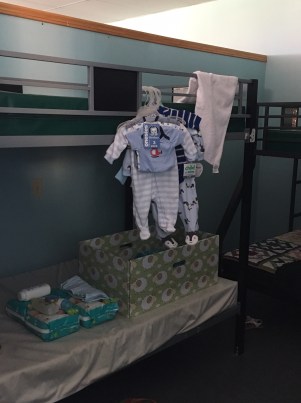
It took just a glimpse of baby clothes hanging from a rail. A box of infant diapers in a box and I felt the piercing melancholy of sadness and sorrow sear my heart.

It happened at work.

I was giving a tour of one of the the emergency shelter floors at Inn from the Cold. One of the amazing frontline shelter staff had just finished telling the visitors about the shelter floors, when he shared the story of a mother who had given birth the day before. “She’ll be back tomorrow,” he said.

Staff had prepared a welcome home package for her and her infant.

But a shelter is not a home, my heart whispered. A shelter is not home.

I walked our visitors through the shelter area and when I came to the cubicle where this woman will return to with her baby, I paused. And that’s when I felt my heart break.

Hanging from the railing of one of the bunkbeds in her cubicle was a baby sleeper. It looked so sweet and innocent. So precious and full of possibility.

And she is returning with this precious being to a family emergency shelter.

I wondered if she was afraid. Scared. Worried that she was bringing this child into such an uncertain future.

Yes, she knows we are doing our utmost to ensure she and her children are connected to the right resources to be able to move beyond the shelter quickly. And yes, she knows, just as we know, this housing crisis she is experiencing is only a temporary space in her journey. But she must feel fear and anxiety. She still must feel lost and frightened, worried for her child and the future.

I lay in bed this morning thinking about this mother and her infant. Beside me, my loving husband slept peacefully. Between us, Marley the Great Cat lay stretched out snoring. And on the floor at the end of the bed, Beaumont the Sheepadoodle slept soundly. Outside the open window, darkness was turning gently to light, distant traffic hummed as the city awoke.

I lay safely enveloped in my bed, breathing deeply into my ‘love bubble’ as I like to think of my early morning laying awake before I get up time.

And a tear trickled silently down my face.

What of this woman and her child?

What of the other three women who gave birth last week?

What are they feeling?

I felt anger rising within me.

We at the community level do everything we can to ease the burden of homelessness on each family’s life. We work hard to ensure we have the right resources, right supports, right people in place to help each family as they enter our doors. We do not want anyone to become trapped in homelessness and do whatever it takes to support them on the journey home.

The average length of stay at the shelter is thirty-five days. It’s not a long time, but in the eyes of a child, it can feel like forever. In the arms of a mother holding her newborn child, it can feel like a life sentence.

National plans are made and provincial plans follow and still the money does not flow. Land is set aside, architectural designs are created and still communities lobby against the housing that will end the crisis in so many lives. Agencies on the ground wait for the green light to get building, to get moving people out of homelessness back home and still, there is not enough of the right housing with the right supports to move them into.

Pundits talk about big picture planning and taking the long view of how best to alleviate the crisis in affordable housing in Canada while children and families keep knocking at the door of the shelter hoping it will open. Hoping a way home will appear.

We do not, cannot, turn a family away.

There are lives at stake. Fragile minds in development.

To turn children away is to risk the very future of our country.

So we do what we can. And it is not enough.

We must stop talking about the crisis in affordable housing and get building. We must stop talking about the need for guaranteed income as if it’s a drag on the economic report card of our country and see it through the lens of giving vulnerable families the stability they need to build brighter futures for their children.

We must stop looking at the agencies doing the heavy lifting at the front lines as the ‘last resort’ and see them as the only resort families have when facing a housing crisis — not because that’s what they planned for — but rather, because we as a country, as a society, have not planned well for this future we are living today where social and economic inequities keep people trapped in poverty.

The children and families who come to our door didn’t plan on being at the shelter.

But we, the society and community in which they lived, sure did plan on having the shelter there to catch them.

Let’s stop looking at how to catch people when they fall and start building the system of care that takes care of people so they don’t fall.

Namaste.

disclaimer


Worthy cause. Hopeless case. What’s the difference?

Some time ago, as we entered the city on a drive back from the mountains, we stopped at an intersection waiting for a red light to turn green. On the cement divider between east and west traffic a young woman stood, hat in hand, looking for handouts. She smiled. She waved. She greeted people with shouts of, “Hey! It’s all for a good cause.” And, people complied. They rolled down their windows and tossed their coins into the bright orange cap she extended towards them. The light turned green and everyone continued on their way feeling good about themselves. They’d supported a good cause.

And they had. It was a worthy cause. Parked on the grassy corner of the intersection, the big blue and orange organization’s van was plastered with banners encouraging people to Give to the Cause. Volunteers leaped up and down, cheering, waving at the passing cars, encouraging those at red lights to open their wallets and support the panhandlers walking beside them. Drivers honked their horns. Waved. Called out cheers. It was a lively intersection filled with purpose — and a cause.

On another corner, a homeless man walked between the waiting cars at the red light, a handmade cardboard sign held up against his chest. “Please help. Homeless. Hungry. God Bless.” The drivers stared steadfastly forward, watching the light, wishing it would turn faster so that they could get away from this sign of decay in our society. No one rolled down their window. No one smiled at the scruffy-looking, dark haired, bearded man as he shuffled along the roadway, asking for help.

On one corner, a worthy cause. On the other? A hopeless case? Undeserving drug-addict breaking the law?

One deserves our support. What about the other?

Yes, the funds raised to support research into finding cures for horrible diseases are important. But what about their tactics? By mimicking the methods used by vulnerable individuals, are they not legitimizing the very tactic we deplore? The one police hand out tickets for to deter the unacceptable practice of panhandling?

Someone empties their car ashtray on the street and drives on, leaving behind their garbage. We don’t give a lot of thought to their passing by other than to possibly mutter under our breath, “some people’s children” — or words to that effect. We sweep away the garbage and continue on with our day.

A  person experiencing homelessness leaves their garbage on the sidewalk and disappears from our sight. We gather up all signs of their passing by and sweep away their unsightly mess. We’ve got a lot to say about what they’ve done. A lot of names to call them. But hey! What can we do? They’re just the homeless, good-for-nothing, lazy drug addict. They’ve made choices. It’s all their fault. Why can’t they get a job or at least clean up their own garbage?

Watching two different scenarios on the street unfold I found evidence of the thin line that divides us. We’re all human beings. We’re all under stress. We’re all capable of magnificence. We’re all worthy of a chance to make a difference — and we are all guilty of labelling difference-making both positive and negative.

Sometimes, what we do is not that different. It’s just the label we attach to our efforts that legitimizes what side of the street we’re on. Good cause. Hopeless case. It’s all in our perceptions.

Family homelessness is not a family issue.

A family arrives at Inn from the Cold, the family emergency shelter where I work. A mother. Father. Three, four, maybe five children ranging in age from 4 to 12.

Life so many, they have come from ‘the reserve’. One of over 3,100 tracts of land set aside by treaty with the Government of Canada. A place that was designed to give Indigenous people ‘security of place’ in this land they once roamed freely. long before ‘First Contact’ with the white man.

The reserve is not an easy place to live. Vestiges of colonialism, inter-generational trauma, lack of housing, lack of safe drinking water, high rates of school drop-outs, drug use and suicides all paint an uncertain future for children.

This family came to the city months ago to find work, a home, and that better future they so desperately want. After wearing out their welcome on the couches and in the basements of family and friends they have come here, to the only place they can think of where they might just find a way out of despair, poverty, homelessness.

The Inn is not a home, but it is shelter. Safety. Refuge. It is a place where they can catch their breath, get help, find support to plug into the resources they need to move beyond housing crisis to a home. To step beyond instability to stability so their children can go to school, grow up and live the future they deserve.

Like so many who come to our city seeking a better future, they were not prepared for the realities and challenges of life and the cost of living here. They were not prepared for the discrimination, the racism, the hostility they found festering at the edges of our society or the lack of understanding of what it means to be Indigenous in our country.

We hold so many untruths about Indigenous people and culture. Like believing every Indigenous person gets thousands of dollars a year for doing nothing. Or that they’re all lazy and just looking for a free hand out. Or all drunks and unwilling to get sober.

It is hard to walk down the street with your head held proud when racial slurs are slung at you like nuclear fallout; just because of your heritage.

It is hard to get a job when you are judged first by the colour of your skin, not your credentials.

It is hard to find housing when the welcome mat is swept away because your skin is not white.

And it’s hard to see a better future for your children when the road you travel is strewn with man-made obstacles blocking your progress. It takes superhuman strength to throw the obstacles to the side of the road, a superhuman strength few of us possess, let alone a family searching for a better future.

Of the 1,000+ families the Inn will serve in a year, 60% are Indigenous, 25% new Canadians.

This is not a family issue, or an Indigenous issues, or an immigrant issue. It is a societal issue caused by our human practices.

Regardless of the colour of their skin, or the land of their birth, family homelessness isn’t about a mother and father and their children losing a home. It’s about society losing its way.

To build better futures we must start today to clear the road of the obstacles that prevent some members of our society from experiencing the same benefits, the same opportunities, the same freedoms we do.

And it begins with letting go of our beliefs of who ‘those people’ are and seeing them instead as fellow citizens who have not had the same opportunities as we do, even though they deserve them.

It means looking through eyes of caring and compassion, seeing the burden of the past not as a judgement of somebody’s worth today, but as a reflection of what happens when we believe ‘those people’ are not equal and because of their differences, must be put in their place.

The families who come to the Inn do not come because life is easy and they just want a free ride. They come because life has been hard and they have run out of options.

When the only road to a better future leads through that place called, ‘homeless’, a mother and father will do anything to help their children get there. And sometimes that means carrying a label that doesn’t sit well on your psyche or your skin, but is all you can carry to the Inn, ‘Homeless’.

Where hope burns eternal for all humankind

Robert the Magician gets lots of oohs & aaahs! and How did he do that?

At the family emergency shelter where I work, 25% of the families we serve are new immigrants to Canada. For many of those families, the past was filled with uncertainty, turmoil, fear of death by starvation, violence, or war.

On Friday night, along with my amazing friend Wendy C., I acted as Host for the monthly birthday party we hold for the children at the shelter. Thanks to the generosity of the Children’s Hospital Aid Society who cover the cost of the parties and volunteers who come in to put the party on, the event is a fun-filled hour and half of birthday party games, cake, and ice cream supplied by Fiasco Gelatto.

On Friday night, as I watched the guests and volunteers intermingle, play games, eat cake and laugh at the antics of a magician who came in to entertain them, I was struck by how much alike we are, in-spite of our differences in skin tone, height, colour of hair, faith, place of birth, and a host of other visible differences within the human form.

Everyone loves birthday cake!

We are more alike than different.

We all want to celebrate the birth of our children. We all want to create happy memories for them. A world where they will grow up to be strong and free.

And, like parents the world over, we all like to remind our children to say please and thank you. To not make a mess. To ‘use our manners’.

We adults spend an inordinate amount of time talking about what makes us different than them. In some cases, we frame it in language of ‘better than’, more deserving, more entitled.

Yet, when we scratch beneath the surface of the human body, we are more alike than different. When we dig into what motivates us, what drives us in the world, we share so much in common. And, when we stretch beyond the circumstances of our birthplace, we find ourselves on the common ground of our sharing this human condition where ever we are, no matter where we go.

On Friday night, as I served up cake and passed out little tubs of ice cream, I wasn’t serving homeless children and their families. I was part of the joy and hope a child’s birthday brings into the world. I was part of creating a memory for children whose family circumstances have brought them to a place they wish, for so many reasons, they’d never had to visit, but while they are there, are determined to make as safe and caring and memorable for their children as they can.

It may not have been the perfect place, but for those mothers and fathers for whom the shelter is currently their safe respite, it was the place where their children will remember how much fun, laughter and cake they got to enjoy!

I witnessed humanity on Friday night. It had many skin tones. Many sizes. Many beliefs. And like humanity the world over, the thing that brought us all together was the celebration of a child’s birthday. In that celebration, hope burns eternal for all humankind.


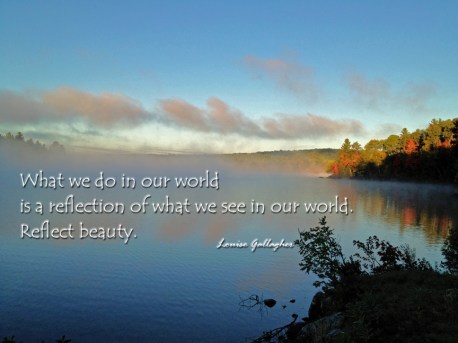
Reflect Beauty

When all we see is hatred, all we do is based on the hatred we perceive to be real, necessary, unavoidable.

When we see kindness, caring, compassion, empathy, we do things that enhance the things we see.

Working in a family emergency shelter, it is easy to see the stress and turmoil, fear and anxiety of homelessness and the crises it brings into people’s lives and how they respond to those crises.

It is also easy to see the caring, kindness, compassion that people show to one another every day. As long as I seek to see the beauty.

Yesterday, while washing out my coffee cup in the dining area, I overheard three mothers gathered around a table chatting about their struggles to find housing.

“My kids are sitting with me and they are asking all these personal questions,” one woman said.

Another woman chimed in. “Yeah. It’s like your entire life gets laid out and they get to judge it while your kids listen in. It’s just not right.”

The third woman sat quietly listening and said, “Why don’t we arrange to take each other’s kids when we go to these interviews?”

And the conversation took a different tact as they began to talk about the things they could do to create better in their lives.

It would have been so easy for these women to get mired in the limitations of their situation, complaining about ‘the system’, seeing only the negatives. Instead, they focused on solutions and how they could help one another.

In their willingness to move beyond the limitations, their world became a reflection of friendship, community, possibility.

It’s easy in every day living to see the darkness, the limitations, the impossibilities of anything changing for the better.

It’s easy to feel trapped by current circumstances and our present world view into believing, there’s no way out of this mess.

Sometimes, when it looks like there’s no light at the end of the tunnel it’s because we’re not looking ahead, we’re only peering into the darkness and reflecting it back upon ourselves.

To see the light, we must open our eyes to the possibility of its presence, and never give into the darkness.

And the best way to do that is to do as those three women did. Seek possibilities. Find solutions. Build community.

In-to-me-see

I am standing by the Navel Orange bin, focused on picking just the right ones when I feel someone watching me. I look up and see a man walking towards me, his eyes focused intently on my face. I recognize him as he approaches. Smile and give him a wave.

“I know you,” he says. The rubber stopper on the bottom of his multi-coloured metallic cane makes a soft thump as he plants himself in front of me. “Why do I know you?”

I know him from the homeless shelter where I used to work.

In a public place like a grocery store, it’s not always caring of the other to tell them that.

“I was the spokesperson for the DI (the street name for the shelter where I used to work),” I tell him. “I was on television a lot. Maybe you recognize my face from there?”

He gives his head a quick shake from side to side. Then nods it up and down. “Yeah. That’s why I remember you. You were one of the nice ones.” He pauses, lifts his cane and thumps it on the ground. Not loudly. Just a gentle statement of fact to punctuate his words. “I didn’t like it there. Who could? Full of drunks and drug addicts. And the staff…”

He looks away.

“Glad I’m out of there now.” He finishes his statement and looks me in the eyes. “I’m gone you know.”

“So am I,” I tell him. “How are you doing?”

And he rushes into a story about an accident that broke his hip. A two month hospital stay. A landlord who ripped him off and a host of other sad events that have brought him down.

And  I listen. It is all I can do. Listen. Deeply.

It is what he wants. Someone to listen to him. To give him space to give voice to his pain, his fears, his sorrow. And, his possibilities.

“I worked construction you know,” he tells me. “That’s over with now. But I can cook. Got a friend who’s got a friend who owns a restaurant that’s just opening up. Gonna go submit my resume. You could come visit if you want.” And he gives me the approximate location of the restaurant. “I can’t remember the name. But I’m sure you can’t miss it. It’s the pub right beside the gas station.”

I tell him that I’ll check it out.

“What I really need is better housing,” he says. “Someplace where I’m not sharing space with others. I talked to Calgary Housing but their wait list is too long.”

“Have you visited SORCe?” I ask.

“What’s that?”

And I explain about their ‘one stop shop’ concept of many agencies working out of one location to connect people to housing programs and services in order to end homelessness. I find a piece of paper, write down their number and pass it to him.

He’s excited. Another path to explore. Another possibility opening up.

We part and I am grateful for our encounter. He has reminded me of the importance of looking into someone, not just at them. It is a form of intimacy or, In-to-me-see. A way of honouring the human being through creating space for story-telling to happen, of listening to the stories that are shared with an open mind and loving heart and a belief in the sacredness of honouring the truths that are revealed when we take time to see and listen to the story-tellers.

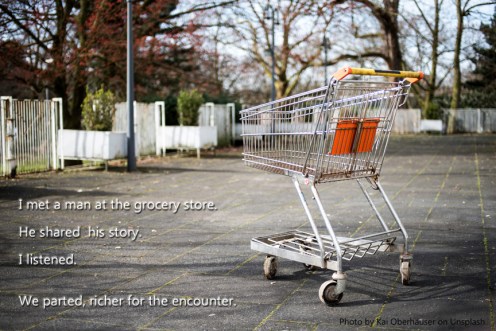
I met a man at the grocery store.

He shared  his story.

I listened.

We parted, richer for the encounter.

______________________

This post is an edited repost of a blog that I wrote in 2012.

When the only answer is, I survived.


No. 37 — #shepersisted series
http://louisegallagher.ca/shepersisted

A woman arrives at Inn from the Cold, the family emergency shelter where I work, seeking refuge. She is pregnant, alone, scared.

Her life has not been easy.

Poverty. Abuse. Addictions.

They’ve all taken their toll.

She’s had other children. All have been apprehended by Family Services.

She desperately wants to keep this one. She desperately wants this time to be different.

She has known no other way than the hard road.

Will she find a softer landing this time? Will she find the help she desperately needs so she can proudly call herself a mother, without the shame of the past haunting her?

Will she be able to hold her child in her arms? Watch her go off to her first day of school, graduate from high school, go to college, get married? Be there for the significant milestones? The milestones at which no one was ever there for her.

There is hope.

For this mother and so many other mothers like her who have only known the hard road and are now, finding shelter, sanctuary, healing at The Inn.

Every day mothers like this mother, and fathers and grandparents too, who have not had an easy road find their way to the Inn seeking that one thing they seem to have lost completely, hope.

And at the Inn, they find it. Along with the possibility of a better tomorrow for them and their children.

It’s not easy work. But then, being born into poverty, moving thousands of miles from a war torn land only to find yourself destitute, without a place to call home, is not the easy road either.

See, we all want to be good parents. We all want to believe we are doing our best to provide for our children, to create safe and loving homes where they can grow up knowing life is not as hard as we’ve known it.

We all want to believe.

And then life hits. And we stumble and get back up. Sometimes, if we don’t have the resiliency to withstand life’s stumbles, the getting back up is not far enough to bring us out of where we were. And we stay trapped.

And then, as we struggle to rise up, judgement from others hits too.

It’s your own fault, they say. You’re an addict. You have no education. No skillset. Look at you. What have you done to improve yourself? What have you done to make it better? My parents were immigrants, they managed. Why can’t you?

Sometimes, the only answer is, I’ve survived.

I’ve survived to this moment, right now, where I am reaching out for help.

I’ve survived whatever life has thrown in my path until this moment, right now, where I am able to see the possibility of a different path.

I’ve survived, war, famine, terrifying journeys in a small boat where I had to pay my entire life savings to cross an angry sea so that my family could have hope for a better future.

I’ve survived. And now I’m here. Can you help me?

Every day, children and their families come to the Inn seeking hope for a better future.

They’re not seeking fame and fortune, the keys to the city, a pulpit to stand on.

They are seeking hope, possibility, a future.

And everyday we provide shelter, sanctuary and healing so that better is possible. So that the future is not as grim, or hard, or bleak as the past.

We take the long-view. The view that says, to create better we have to start with the small steps right now that will move a family back home as quickly as possible without too much disruption to the delicate fabric of a child’s developing mind and body. From the sanctuary of home, we can work together to create healthy relationships, healthy parenting, healthy eating habits… whatever is needed to create a healthy environment for children and their parents to thrive and live without the fear of homelessness rearing its head on some dark and terrifying horizon.

For that mother, the one who yearns to see her child grow up, hope is there. Possibility exists. But only if we create a path for her to be safe at home without fearing the past will always be her future.

She’s at home now this mother, but there are hundreds more like her, yearning to revel in the joy of watching their children grow up free of the past that brought them to their knees.

We can’t do this work alone. We don’t. There are others working with us, committed to making a difference. Committed to helping children and their families find their way home.

Everyone can help. Everyone can make a difference.

It begins with changing our minds about why people fall, because if we believe it’s their fault they fell, whose fault is it they survived?


We Can All Be That Village

I am 4, maybe 5 years old.

We are living in central France. My father loves to take Sunday drives to Belgium, to the monastery, D’Orval, where the Trappist monks make his favourite beer.

I remember it is a beautiful place, this D’Orval. Serene. Tranquil. Surrounded by fields of hops and wheat. Filled with gardens of herbs and vegetables and flowers. Even though visitors were only allowed in certain places, I like to think I skipped amongst the flowers. It was something I loved to do.

I think we must have been returning from D’Orval the day my family forgot me at a gas station. They were down the road only a couple of minutes when they realized there was an unusual silence in the car. I imagine someone asked, “What’s that silence?” Followed by, “Louise, why are you so quiet?” Followed by a startled, “Where’s Louise?”

They turned around immediately at that point. Though I’m sure my siblings may have suggested leaving me behind, my mother would have worried all the way back to where they found me. I was standing by one of the gas pumps with tears rolling down my cheeks. The most likely explanation is I had skipped off somewhere to check out a flower, a flying leaf, a piece of interesting grass… When I returned from my adventures, my family was gone and I was alone.

In real time, being left behind that day may only have been a few minutes. In my child’s mind, it felt like a lifetime.

It is one of the challenges of homelessness for children. Everything feels like a lifetime. And losing all your belongings, your special places, your own room and toys, has life time impacts.

At Inn from the Cold where I work, helping children understand and cope with the trauma of homelessness is integral to the work we do of providing children and their families shelter, sanctuary and healing.

We know that the longer homelessness lasts, the greater the impact on adults. The same is exponentially true for children.

To offset the trauma, early childhood development practitioners work with children to help them develop healthy coping skills that will serve them well, at the shelter and throughout their lives. They use play and art therapy and a host of programs and practices designed to engage children in understanding and identifying their emotions, and providing them practical tools to help them find healthy ways to express them.

No one wants their child to feel lost, frightened, confused. No one wants their child to feel the trauma of homelessness. Yet, it happens. In the past 6 months at the Inn, over 250 children have stayed under our roof. As an emergency family shelter, we do everything we can to make it feel like a welcoming, safe, environment.

But it isn’t home.

And so, we must work even harder to help the children learn healthy ways to weather life’s storms as we work with their parents to guide them on their journey home. And once home, we must continue to support the children and their families to ensure homelessness does not repeat itself in their lives.

When I was 4 or 5, I got left behind at a gas station. It was just a few moments of trauma, but the ripple effect of that moment set up a refrain in my life that sometimes caused me to feel like I was not wanted, did not belong or fit in. I am lucky. I have had access to the resources and the knowledge on how to overcome those feelings so that I can be a change-maker in the world today.

Imagine the trauma of homelessness on a four or five year old. Imagine the stories they will create in their fragile minds as they try to understand what is happening to them, their siblings, their parents.

Imagine if, we did nothing.

The future would not be changed for the better and the likelihood of their being homeless as adults would grow with them as they journey into adulthood.

We can end child and family homelessness. It takes all of us working together to ensure families have access to the right resources at the right time to help them navigate life’s storms and find their way back home.

We can’t all work at a shelter, but we can all contribute our time, donate our treasures and offer our talents to help make homelessness a short-lived experience for every child who enters a shelter’s doors.

It is said that it takes a village to raise a child.

It takes an entire community to raise a family out of poverty and homelessness.

We can be that village. We can be that community.

Namaste.


Building a path out at The Inn

Photo by Clem Onojeghuo on Unsplash

She arrives via taxi at the door of “The Inn”* in the early morning hours. Her two year old in tow, another child due in six months. One hand grips her child’s hand. In the other she carries a few plastic bags of belongings. That’s all she has.

She came to Canada a couple of years ago when she married her husband. His brother knew her father. It was all arranged. He came to her village to make her his bride. He’d been in Canada for several years and wanted a wife from his country of origin.

She didn’t know him. She didn’t know what the future held. But she knew that to stay in the famine and discord of her homeland would mean an uncertain and terrifying future.

Since being here she has barely been let out of their home. She cannot speak English. She has no friends. No family. No support.

At first, she takes the beatings her husband regularly doles out as part of being here. But then, he threatens her child. She cannot stay and does what women the world over do, every day, every night. She flees to save her child.

At ‘The Inn”, staff quickly kick into gear to find a translator. To create a safety barrier between this woman and child and her husband who has arrived to take them home. Though she cannot speak English, her desires are clear. She will not go.

A translator is found via a phone service. Staff work with other agencies, government reps and the translator to build a path to safety for the woman.

The Inn is a family emergency shelter. It does not have the same level of security as a domestic violence shelter and staff are concerned the husband will return. The woman, through the translator, is adamant. She wants to stay.

A plan is created and space is found for her on the second floor with the 7 other women and their children who are already staying there.

For now, she is safe.

Unless, the government steps in. Because that’s her new challenge.

When she fled her abusive husband she also left the man who was her immigration sponsor. Without him, her immigration status is in jeopardy.

Again, staff work with the translation service to find help. Legal Guidance is called in. The lawyers go to work.

For now, she is safe. From abuse. From deportation.

For now, she is receiving support. Her child is being provided early childhood development coaching to mitigate against the effects of so much uncertainty, so much fear, and the abuse he witnessed in his father’s home.

It is imperative, this work. To ensure his young mind is not permanently scarred, that his healthy development from childhood to adulthood is not impaired by the trauma, he must be given tools and opportunities to find healthy ways to express his emotions and grow into a loving man.

His mother still lives in fear and uncertainty. Will she and her child be allowed to stay in Canada? Will she be forced to leave her Canadian born son behind with his father? What is the future?

Stories like this unfold many times a month at Inn from the Cold. Families arrive seeking shelter, sanctuary, healing. They come with their children clutching a toy, their hands full of their few belongings, sometimes several suitcases. They have run out of places to go that will let them stay for a night or two. They have run out of options. They need support. Help. Guidance.

Family homelessness is not a choice. It is an outcome of diverse and challenging circumstances that lead children and their parent, or parents, to the Inn’s door. They don’t want to be there but once there, they quickly discover a place where they can sit with their children at a dinner table and feed them healthy meals. They find a place where help for their children is readily available. Where they can obtain parenting and vital life skills that will help them navigate their current uncertain times into a more sustainable, livable future.

The goal is to move children and their families out of shelter into housing as quickly as possible. When the stars align, when the right housing, the right job, income and other supports can be put in place, it can happen quickly.

Sometimes, not being able to find the right housing or lack of access to income lengthens the journey.

At the Inn, family advocates and case managers work as a team to pave the way to all the pieces falling into place so that children can grow beyond the trauma of homelessness in a family space where love, kindness, caring and support create the pathway they deserve to a brighter future.

I am in my second month of being at Inn from the Cold.

I am blessed to be surrounded by so many passionate and committed people who see a future where family homelessness is no longer the reality for children and their families.

Namaste.

*To protect identity, this woman’s story is a combination of several stories.