When I was a little girl, I had a deep fascination with riddles. It was my father who helped me develop it by sharing his passion for riddles and puzzles, particularly for math-based ones. It was the math based ones that always presented me with unique and often daunting challenges. He’d present a riddle, and I’d spend hours engrossed in solving it, using basic arithmetic at first, and later delving into more complex operations as I learned the intricacies of multiplication and division tables. Sometimes, the satisfaction of uncovering the answer came naturally, while other times, he had to offer hints – sometimes one, two, and sometimes more – before I could reach the solution.

Our family road trips were often marked by my father’s determination to ‘reach the destination,’ leading us to drive late into the night. My mother, aware of my curiosity and love for riddles, would seat me in the front beside my dad in our trusty VW Vanagon. There, I would keep him alert, peppering him with questions and attempting to crack the riddles he posed.

My fondness for riddles and puzzles persists to this day. I remain an inquisitive soul, constantly seeking answers and unafraid of challenges, especially when they involve words and language, which I find more accessible than numbers.

This morning, as part of my daily ritual, I tackled the New York Times puzzles — at least the word based ones; Wordle, Spelling Bee, The Mini, Letter Boxed and the newest one which I really like, Connections. This morning, on a whim I decided to venture into Sudoku, a realm I rarely explore, given my preference for words over numbers. Surprisingly, I realized that my initial misconception was that Sudoku was all about numbers, when in fact, it’s all about patterns.

Patterns have always held a special allure for me. I can perceive them, intuitively understand them, and appreciate their significance. Patterns resonate with me on a deep level.

So, here’s what I learned venturing into turf I usually avoid. When I think something is all about ‘one thing’ and thus, avoid it, I am limiting my experience of things outside of what I know. And, while familiarity can be a good thing, to really stretch your imagination, your mind and thinking, to move you outside your comfort zone, stepping into the the things you say, you can’t do, don’t like, have no understanding of or whatever you tell yourself to avoid experiencing something new or different, you must challenge your perceptions and inner beliefs.

If, like me, you’re captivated by the idea of unraveling the intricate puzzle that is your inner self and embarking on a journey to discover who you truly are and all you’re capable of, imagine this — Adventure. Hidden Treasure. Boundless riches await! This voyage you’re embarking on into the vast limitless mystery of your true potential is the adventure of your lifetime! You are about to set sail into the uncharted waters of your own being, delving into the depths of what you don’t yet know about yourself—those undiscovered territories you’ve never dared to explore. Much like Christopher Columbus daringly voyaged to discover new lands, you, too, must have the courage to navigate the unexplored aspects of your own beliefs and truths.

Because, when we risk divine into the unknown, life opens up in all its wonder, possibility, and awe, inviting us to explore the infinite realms of our own potential.

“What about you? Are you drawn to the intrigue of puzzles? Do you have a curiosity that beckons you to explore the depths of your existence beyond what you think you know? Are you ready to embark on a voyage into your own undiscovered patterns, embracing the wonder and awe that await?

I invite you to share your thoughts in the comments below. I relish the opportunity to learn about the unique, fascinating, and magnificent aspects that make each of us who we are.

And if you’re intrigued by the idea of rewriting the story of your life and bringing alive all your potential, by delving into your inner landscape through creative exploration, I invite you to join me on January 8th for an exciting journey. Through the use of art-making, creative expression, self-reflection, and a collective approach, ‘The ReWrite Journey’ still has a space available for one more ‘priestess’ to enter and co-create a circle of endless possibilities!

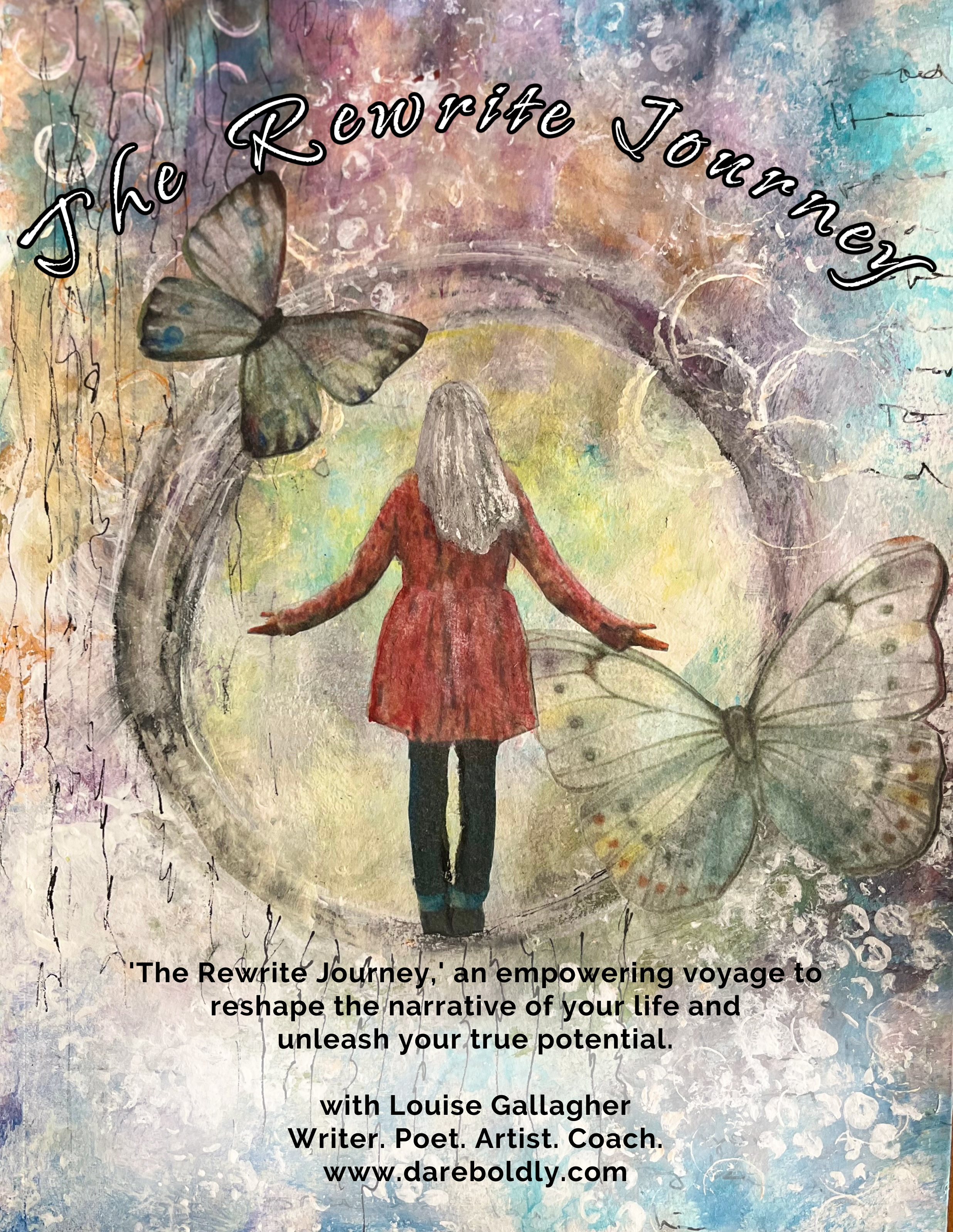
The Rewrite Journey – Transforming the stories we tell on ourselves.

Years ago, I received an invitation to speak at a conference for crisis support workers in the gender-based violence sector. The organizers informed me that my talk would be a part of the ‘Survivor’s Stories’ segment of the conference.

I hesitated. “Thank you, but no thanks,” I replied. “I was a victim of abuse, and yes, I survived. But to label me, or anyone who has endured violence and emerged from it with their life, as a ‘survivor’ denies the truth of who we are and all we’re capable of. I was undoubtedly a victim of his abuse. However, beyond all he did to try to diminish me, I must step into my power by claiming my role as a victor. Victors have agency, power, strength, and courage. Believe me, it takes courage not only to walk away but also to reclaim and rebuild your life after abuse. It takes a victor’s mentality.”

The organizers agreed not to introduce me as a victim or survivor.

I felt victorious.

Each day, life presents opportunities to rewrite the narrative of our lives, to shift the story we tell ourselves and others from victimhood to victory, victim to victor.

What’s your narrative?

What stories do you tell yourself? Do they pave the way for a life filled with fulfillment, abundance, joy, and love? Or do they keep you anchored down in regret, playing small and feeling unfulfilled or worthless?

If it’s the latter, perhaps it’s time to consider rewriting your narrative.

The art of rewriting your narrative is a journey of self-discovery and transformation. It’s a journey where you become both the author and the protagonist—a voyage to rediscover the poetry of your soul and craft a narrative that reflects your true magnificent essence.

In a world that often confines us within predefined roles and expectations, reshaping our stories empowers us to unlock our full potential. Crafting a new story of your life starts with a willingness to shed labels, no matter how comforting or familiar they may be, and to journey unlabelled and unburdened by limiting beliefs that would otherwise hinder you from living life on your terms.

Here are seven steps you can take to rewrite your narrative to tell your victor story.

  1. Self-Reflection and Awareness: Sit quietly. Breathe. Reflect on your life journey, on the stories you’ve told yourself about who you are and what you’re capable of. Identify any negative or limiting narratives that have held you back. Awareness is the first step toward change.
  2. Challenge Negative Beliefs: Once you’ve identified the negative beliefs that have shaped your narrative, challenge them with kindness and curiosity. Ask yourself, “Do these beliefs lift me up or pull me down?” Explore if they’re ‘fact based’ or assumption-riddled or inherited expectations. Replace them with affirming and empowering thoughts.
  3. Set Empowering Intentions: Craft a clear vision of the human-being you want to become. Set intentions that reflect your true desires and values. Define the qualities, strengths, and achievements that resonate with your authentic self. Visualize this new narrative as if it has already become your reality.
  4. Take Action and Embrace Growth: Rewrite your narrative by taking deliberate actions aligned with your new intentions. Step out of your comfort zone, embrace challenges, and welcome personal growth. Every step you take toward your aspirations reinforces your rewritten narrative.
  5. Surround Yourself with Supportive Allies: Seek out a supportive community of friends, mentors, or therapists who can provide encouragement and guidance on your journey. Share your rewritten narrative with those who believe in your potential and can help you stay on track. Their support will bolster your confidence.
  6. Celebrate Your Achievements: As you make progress, celebrate your achievements along the way, no matter how small they may seem. Acknowledge your successes and use them as evidence that your new narrative is becoming a reality. This positive reinforcement can be a powerful motivator.
  7. Practice Self-Compassion: Remember that rewriting your narrative is a process that may involve setbacks and moments of self-doubt. Be gentle with yourself during these times. Practice self-compassion and remind yourself that change takes time and effort. Treat yourself with the same kindness you would offer a friend facing a similar challenge.