
I had an OpEd published in our local newspaper on the weekend. It was about homelessness and choice.
There were many voices of support. Of people applauding me for my words and insight.
I like feeling connected to people who agree with me. It’s immensely human and makes me feel good!
But what about those who wrote in to disagree? Who believe, even though I wrote that homelessness is not a choice, it’s a lack of choice, a lack of resilience, a lack of many things — that homelessness is a choice. That if people just got jobs and cleaned up, their lives would be all better.
In the face of their words, I don’t feel so connected.
Their words cause me despair.
Their view of the world causes me consternation.
In the face of their differing worldview there is a part of me that would really just like to call them names, tell them they’re wrong, tell them to ‘get a life’.
Yet, their views have as much right to be heard as mine. Their views are equally as important to the conversation as mine because in their words the truth of the world according to their view rings true.
What will I choose?
Will I choose to condemn and complain?
Or will I choose compassion.?
Will I listen to understand, not to judge?
Will I create space for common ground, rather than a battleground?
In those moments of dissent, finding compassion, acting with integrity, being present is vital.
Because if I lash back, if I choose to discount or ignore their voices, then I am creating a world where us versus them is the norm. Where my voice is the only voice that matters to me and they can damn well go… blah blah blah.
Bottomline, when I respond from a place of condemnation, I am contributing my worst, not my best.
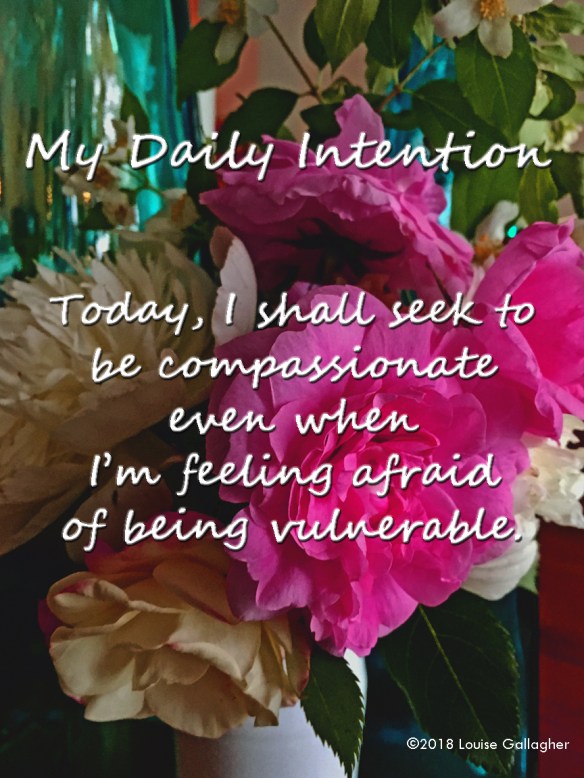
To understand another’s point of view, to find common ground, we must stand with open mind and heart. We must listen deeply without judgement and be willing to be vulnerable.
To be vulnerable, we must choose compassion.
Namaste.





 Dare Boldly