What is home?

Yesterday, I watched a woman receive the news she was getting housed.

It was emotional. Moving. Humbling.

A single mother, she arrived at the homeless shelter, two young children in tow, with no other options, nowhere else to go.

“It’s been a long month,” she told me when we chatted after she received the news. “And now this part is over.”

She moves out this weekend. Into her own place where she and her children can begin to rebuild their lives after the trauma of the past.

When her case worker told her the news she broke down. Crying. She hugged her children. Her case worker. Everyone in sight.

She jumped up and down. Did a crazy dance. Laughed and cried all at the same time.

And I remembered.

A time years ago when I received a box of kitchen supplies.

I had been living with my sister and her husband in North Vancouver for the months after the relationship that had almost killed me ended.

Finally, I was moving into my own place. Albeit the ground floor suite of their home, but it was my own place.

I had few possessions.

Everything my daughters and I owned had been put into storage a year and a half before when we first left our home in anticipation of moving into the house ‘that man’ had promised we’d bought together.

The house never materialized. The money disappeared and so did all our belongings.

Auctioned off eventually as the monthly rental he’d told me he paid had never been paid.

My sister had a friend who was moving to the states and was giving away a bunch of her kitchen stuff.

She gave it to me.

I remember sitting in my bedroom at my sister’s home and opening that box. I started to cry. Suddenly, all that I’d lost came sweeping in. The beautiful set of china my mother had given me. The hand-painted glass plates I’d brought back from Greece. The carefully collected and cherished possessions of a lifetime of living and growing and building a home and a life with my daughters.

Gone.

In that one box I was reminded of what was lost, and what could be.

Suddenly, I had ‘things’ again. The lightness of being devoid of household possessions was gone and I was grounded at home.

Since that day so many years ago, I have gone on to rebuild my home.

This morning, I sit at my desk by the window at the front of our home, overlooking yard and trees and river. The window is open. Birds sing. The leaves rustle in the gentle morning breeze. The river flows with the depth and constancy of the Love that surrounds me and fills my world with such beauty.

Dishes, appliances, household clutter can be replaced, but what could not be taken away, and never needed replacing, was the love that constantly sustained me and carried me through those dark days, the Love that is present every day of my life.

I watched a mother begin her journey home yesterday.

She was elated. Excited. Happy.

She too does not have many possessions, and while she doesn’t have a sister helping her rebuild her household, she does have an incredible network of agencies working with her to ensure she and her children have a solid foundation upon which to build a better future.

A future where fear and abuse, uncertainty and trauma do not have to be the focal point of her journey.

A future where her children can go to bed at night confident they will not be awoken in the dark by screaming and crying and broken dishes on the floor.

A future where tomorrow has the possibility of being better than today because every day gets better when you live without fear of never having enough, of not being able to pay the rent, or put food on the table.

A future where your mother has room to breathe freely, to dream and to plan on how to make her dreams come true so that her children can grow up strong and free, living the lives she’s always dreamed they would have.

I witnessed a mother get the news she was going home yesterday.

My heart took flight.

Namaste.
Kairos Blanket Exercise

I am standing on a blanket. This blanket is one of six spread out on the floor, each one touching the next. They represent Turtle Island, or North America as it’s called today.

I am standing on this blanket as a participant in the Kairos Blanket Exercise. I am excited to begin this learning journey. I am unaware of the power of the next two hours in front of me.

Take up all the space of the blankets the facilitator urges us. Claim your land.

There are about 30 of us standing on the blankets. We all work for Inn from the Cold, the family emergency shelter where I work.

Most of us are non-Indigenous. Some are immigrants. Others born on Canadian soil of ‘settler’ families.

And the story begins.

For the next two hours we become more and more cramped on the blankets as one blanket after another disappears as do some of the participants.

“You are a child who was sent to Residential School,” the facilitator tells one of my co-workers. And they move off the blanket to stand at the edge of the circle.

“Your child was taken from your arms,” a woman is told who is holding a doll. And the facilitator grabs the doll from the woman’s arms and puts it on the floor at the edge of the circle.

“You were swept up in the 60s scoop,” another participant is told and they too join the others standing outside the circle.

Smallpox. Other diseases. Poor nutrition. Suicide. Land appropriation. Adoption. Assimilation. Slowly people disappear from the constantly reducing area the blankets cover until only a handful of us remain on a tiny blanket in the middle of the room.

“You are the survivors,” we are told.

I do not want to cheer. I do not want to clap. I want only to cry.

So much carnage. So much loss. So much pain.

“We do not do this exercise to make people feel guilty, or to make them sad or angry. We do it to raise awareness. To educate. To share the story of Canada through an Indigenous lens,” the facilitator tells us.

It is a story not told in schools. Or text books. Or movies.

It is a story of a nation’s past where fairness, equity, freedom of all people was not for everyone, just the civilized. Indigenous Peoples were not considered civilized. They were deemed savages.

It is a story of the stealing away of an entire people’s lands, dignity, pride, way of life. Of forcing new culture over an existing one in order to make them more like us. To make them seem less different. Unique. Connected to one another.

It is told in a way that makes it possible to understand why, ‘getting over it’ is not so easy, not so possible.

This story.

I am familiar with it. I have read the Truth and Reconciliation recommendations. Participated in other Indigenous learning circles. I have worked in this sector for over 12 years. In this sector, unlike on Turtle Island, Indigenous Peoples are over-represented.

They carry the scars, the wounds, the trauma of a past where their way of life and who they were was deemed unfit by those who usurped power and claimed a land as their own, even though it was already claimed.

This is my country.

It is the land upon which I was born. On which I live today.

We call it Canada.

Once upon a time, it was called Turtle Island.

Our history is not a clean white page in a book unmarred by trauma or dark deeds. It is not a history of treating everyone with dignity, fairness, respect, even though that is the history we’d like to tell.

We have this shared story of our past which we must be willing to talk about, to understand so that we can move beyond the things we don’t want to see, to create a country we do want to have, together. As one people.

A country where the past is not a shadow marred by the darkness of what was done. It is a place where all people’s know, no matter their place in the past, today we are all of one land, one country, one humanity, and one shared story.

“Meegwetch” (Thank you in the language of the Haudensaunee, the Peoples of the traditional territory upon which I was born).


What will happen to the unborn child?

They come because they are scared.

They come because they have nowhere else to go.

They come because if they don’t, what will happen to their unborn child?

At Inn from the Cold right now, there are nine pregnant women staying under the shelter’s roof.

Nine.

I can’t imagine what the soon-to-be-moms are feeling. Thinking. Experiencing.

Becoming a mom is fraught with questions. Fears. Insecurities. Uncertainties.

Being homeless and becoming a mom?

I can’t imagine.

But I can imagine why they’re there. I can imagine that whatever the circumstances of their lives, they want their child to have a better chance at life. And having a safe place to stay is a good beginning.

Recently, the Inn changed the parameters around who can stay at the family emergency shelter. In the past, (based mostly on the fact that space is limited and the shelter is constantly full) only adults accompanied by children were invited in.

But what about all the unborn children someone asked? What about the first time, soon-to-be mom without children accompanying her?

It was the grim reality that her unborn child was at risk if we did not provide the mother shelter, sanctuary and healing, regardless of who is accompanying her, that opened the doors to all pregnant women at the Inn, regardless of how at or over capacity we are.

It is an important decision.

A life-giving decision.

In homelessness, self-care is not high on the agenda. The trauma, stress, turmoil, angst and all the other factors that pull someone into the despair and hopelessness associated with homelessness, take a significant toll on an individual’s ability to make good self-care choices.

For women who are homeless and pregnant, homelessness impacts not only their life, but the life of their unborn child; that innocent, precious life that is forming within, unaware of the condition of life outside the womb.

Ensuring the mother receives prenatal care, that risks are minimized, that some stability is instilled into her life is critical to the development of her unborn child.

And so, the Inn opened its doors to pregnant women unaccompanied by children.

It is the right thing to do. The best thing to do to provide these unborn infants the best chance at life.

There is no special funding for supporting pregnant women. No pot of money waiting to be dipped into just for this.

It doesn’t matter.

We will find a way.

Because, if we don’t, what will happen to the unborn children? How will they make their way into this world? How will they know life?

______________________________________________________

Yesterday, the Inn announced the total raised during its 6th Annual Claire’s Campaign. The goal of $900,000 was surpassed with $1,072,708,25 raised by over 750 donors.

Thank you Calgary!

That means, along with being able to provide vital programming for children and their parents, we’ll also be able to provide pre and post-natal care to mothers, like the one I wrote about on Monday.

I am grateful.

And still I am haunted by the question, what will happen to the unborn child?

Being able to access emergency shelter is vital. Receiving prenatal care is critical. But a home is essential.

We need to do better. All of us. Everyone. To ensure we create a community where no child or family is homeless.

Namaste.


.

And still she haunts me.

She is sitting in the lobby of the family emergency homeless shelter where I work. Mid-thirties. Tired looking.

She glances at me as I walk in. I smile. She smiles back and then looks down.

In front of her, a dark blue baby carrier sits on the floor, a pink blanket draped over it.

I walk over, sit down beside her and ask if I can see her baby.

She smiles the smile all mothers give when showing off their infants and lifts the cover.

Inside, a tiny infant lays sleeping. She is beautiful and perfect and so peaceful looking.

I want to cry.

She is fifteen days old.

I tell the woman how beautiful her baby girl is. She smiles at me and whispers a quiet, ‘thank you.’

There are so many questions I want to ask this woman. So much I want to say. But I do not have the right to badger her or pry into her life.

I wish her well and leave.

She haunts me.

This mother and her baby daughter. Sitting silently in the lobby of an emergency homeless shelter.

She haunts me in that place where the heaviness of poverty oozes out like a damp fog rising up from the marshes lining a pond. Dank and cloying, it soaks up the air around it, drowning out all sounds. All hope.

That place where I want only to hold the children close and find safe haven for their mothers.

That place where I want to heal the world and change the trajectory of lives seeped in trauma and despair.

Where I want to rail at politicians and policy-makers to stop talking about ‘what needs to get done’ and get doing it. Now. Right away.

Precious little lives are at stake and we are setting them up for more trauma, more despair, more loss of hope and possibility and dreams.

And I do none of these things.

I continue on my way, doing what I know I can do to raise awareness, raise our consciousness of our capacity to create a better world, a more peaceful place for all the children and all the mothers and fathers too.

I continue on my way doing the things I do best.

And still, she haunts me.

What more can I do?


_________________________________________________________________________________________

You can help end child and family homelessness.

One of the things I can do is ensure that people know how they can make a difference. I work in the homelessness serving sector because it’s where I feel ‘at home’. The cause resonates within me.

For many, working in this sector isn’t possible.

Giving is receiving.

We can each give what we can to ensure the agencies at the front-line are able to support young mothers and their infant baby’s like the one I met the other day.

Every penny makes a difference.

Every penny counts.

If you have any extra coins you’d like to donate, please think about giving to Claire’s Campaign. Until noon tomorrow, your donation will be matched by Gary Nissen who contributed $250,000 matching dollars, Karen Zutter $100,000, the Hutchinson Family $50,000 and Cole Harris and Centron, $50,000.

Your difference will add up to a big difference in the lives of the children, mothers and fathers who come to Inn from the Cold in search of a safe way home.


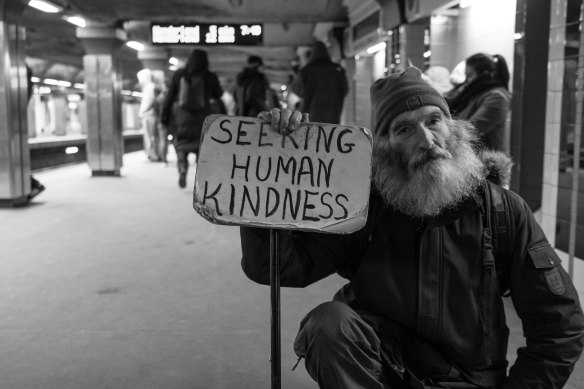
Do you see me? I see you. (a poem)

Photo by Matt Collamer on Unsplash

I see you
walking by, eyes
shifting away
from seeing me
seeing you

you think you know my story
you think you know
how
I
got
here
sitting on a street corner
hands outstretched
hoping you take the time
to stop and share
spare change

spare your judgement
you don’t know
me
you don’t know
my story
you don’t know
how
I
got
here

so let me tell you
it ain’t what you think
it wasn’t some lack of moral character
that could have been strengthened
by eating more fibre
or some weak willed spirit
that could have been stretched taller
by getting off the sauce
and getting a job.

no. I got here
backed into a corner
no way out
but down and out
because I didn’t have
what you took for granted
when you were born
on the other side
of never having enough
to make the money stretch
the whole month long

poverty’s a grind man
so keep your judgements
keep your dime
and go ahead
walk on by
like you don’t see me
sitting here
silently watching
like I’ve always done
your back
walking away
to the other side
of the street
where I don’t sit
watching you
walk on by.


______________________________

Photo by Matt Collamer on Unsplash

Racism in My Canada? Yes. It’s true.

I speak three languages. No longer fluently. But I still can understand French and German and speak it to be understood if the subject is relatively simple and about daily matters.

I once took a course in speaking Mandarin. Another in Japanese. And one in Spanish.

What I’ve never done is considered taking a course in learning how to speak  Cree. Or Blackfoot. Or any of the other 60 distinct Indigenous languages of Canada.

And that’s what I find so disappointing — and at the same time possible — for myself. I can change that fact. I can choose to learn another language — and this time, I can choose to learn a language that will not only give me another way to understand my neighbours, but will give me an opportunity to play my part in Reconciliation.

Because if there’s one thing I’ve learned working the homeless-serving sector for the past 12 years, it’s that there is a lot of Reconciliation needed if we are to make a dent in the racism Canada’s Indigenous Peoples face everyday at the hands, and words, and actions, of non-Indigenous Canadians.

We are a country with a Big Problem.

And it’s not ‘Those Indians’, as someone called Indigenous Peoples at a dinner party awhile back, who’ve got the problem (though their lives are tragically impacted by it every day in every way and have been for generations).

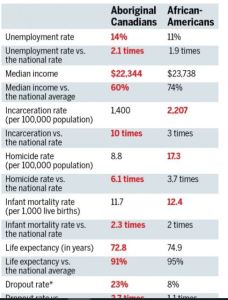
It’s OUR problem. It’s Our Racism. Our intolerance. Our desire to pretend we don’t have a National crisis where infant mortality is higher for some than others. Where certain peoples are incarcerated at higher rates than the rest and life expectancy shortened by at least 10 years.

The problem is, we don’t want to face the fact, it’s OUR problem. We like to say,  “Look at us! We’re not as bad as the US and the way they treat African Americans. No. We’re better than that.”

No. We’re Not.

Better than that.

Just a quick glance at the chart to the left from a recent article in MacLean’s Magazine, “Canada’s Race Problem? It’s even worse than America’s.” shows just how serious the issue is in Canada.

The challenge?  As the article goes on to explain, “our Fergusons are hidden deep in the bush, accessible only by chartered float plane: 49 per cent of First Nations members live on remote reserves.”

I am having trouble reconciling that view of Canada with My Canada. The land of tolerance, equality, inclusivity.

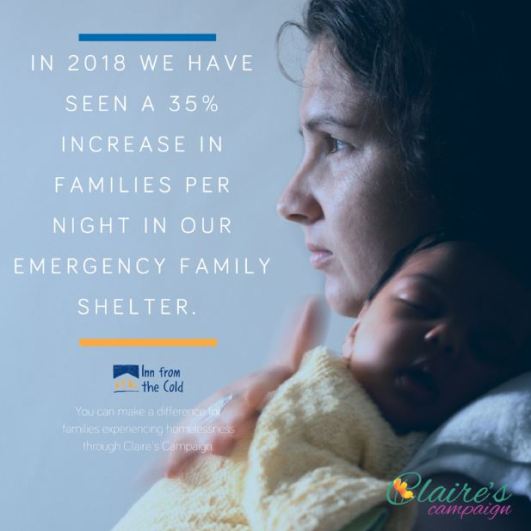
But then, every day at work in a family homeless shelter, I struggle to align My Canada with the lives of the families I see coming to the shelter. They are 60% Indigenous. 25% new Canadians/immigrants.

They come with their hopes and dreams of building better lives for their children. They come fleeing the violence they’ve experienced on Reserves, Reserves we, the settlers, created and forced them to live on. They come fleeing hopelessness, desperate to create opportunity for their children so that they do not have to carry the burdens of poverty, racism, discrimination.

And what do they find in the city?

The very things they fled.

What’s their Canada look like?

It sure isn’t the same as mine.

So rather than expect someone else for whom trust has been broken again and again to step towards me, I think it’s time I took a step towards Reconciliation.

And one way to do that is to learn a language that will help me understand better what their Canada looks like.

Because one thing I know for sure… their Canada does not treat them the same way My Canada treats me. And that’s something I want to help change.


What do you do when staring discrimination in the face?

It is a clear case of ‘profiling’. Of targeting a group of people based on knowing where they come from.
It stinks.

Last week, shelter staff organized an outing for the families staying at Inn from the Cold’s emergency family shelter. A company has generously donated funds for field trips on school PD Days, so for this particular school-free day, the staff decided to take the families bowling.

They contacted the bowling alley weeks in advance. Reserved 7 lanes for 2 hours and on Friday morning, the families climbed onto buses and set off for their adventure.

The children were excited. The parents grateful for an outing where they could spend time having fun with their kids.

It did not go well.

When staff told me how the families had been treated I was saddened. I was angry. I was disappointed.

My feelings are nothing compared to what the children and parents must have felt. Though when one mother explained it away with, “We’re used to this treatment,” I realized there is one emotion many of the families felt that because of my privileged position doesn’t resonate within me.  “Resigned.”

I am not Indigenous. I am not a visible ethnic minority. I am not staying at a homeless shelter. I am not trapped in poverty.

For the families on the outing, all of this is true. This is their reality, as is the discrimination they face everyday, every where.

Discrimination. It’s what people do when confronted with ‘others’ who are different than their view of the world.

The 2 hour bowling fest was chopped in half by staff at the bowling hall. No explanation. Just a curt, “You can have one hour and then we’ll see if we give you a second.” When staff reminded the manager that they’d reserved a full two hours and would gladly pay up front, there was no change in attitude. The families would have to prove themselves worthy of being granted the second hour.

At the end of the first hour the shelter staff and guests were told they had to leave. They had been deemed unworthy. There was no recourse.

They handed in their shoes and the families left, only to have to wait an hour in the stairwell for the buses to arrive.

Throughout the one hour of bowling, the bowling alley staff stood at the edge of the area where the families were bowling and stared. Continuously. They rolled their eyes. Made snide comments about ‘those people’ and even went so far as to banish two young children from the lanes when they sent two balls down the alley. As one staff member exclaimed, “My son goes to birthday parties at that bowling alley. He and his friends are always doing silly things. They don’t have their bowling shoes taken off their feet and their privileges rescinded. If there’s an issue, management talks to the parents who talk to their kids. They work it out.”

That didn’t happen on Friday.

Respect. Consideration. Thoughtfulness. Kindness. Acceptance. Courtesy. Customer service.

None of those were present.

What was present? Discrimination. Racism. Mistreatment. Rudeness. Intolerance. Judgement.

And a host of human affects that do not reflect well on those employing them as a means to shame and shun people who are already marginalized and excluded from societal norms and considerations.

I wonder if the bowling alley staff have any idea how shameful their behaviour was? I’m pretty sure they don’t.

Because that’s the thing about discrimination and intolerance. Blinded by our beliefs, we don’t know we’re acting under its influence. We are simply acting out from an internal script that makes it okay to do what we believe is necessary to protect our perceived right to be judge and jury of others. And that includes believing we have the right to be who we are and act how we do, even if it means trampling upon the rights of others to be who they are.

Under the cloud of discrimination and intolerance, we don’t assess our beliefs. We express them. No matter who gets hurt.

I wish I had a magic wand that I could wave and make hate and injustice go away.

I know I don’t.

Instead, I must use the tools I have available to create better.

Shaming the staff at the bowling alley will not make them more tolerant, less discriminatory.

Inviting them into a conversation where compassion for our differing opinions and points of view is present will create space for understanding to begin. Perhaps neither side will change their positions, but in the process, we will have connected as human beings in search of common ground.

And from that place, anything is possible.


From the Archives

This post originally appear, January 24, 2012.  Thank you FB Memories for reminding me.

______________________________________________________________

I was there when he took his last breath. I held his hand and waited in anticipation of an exhalation that never came. And in that one final breath in, the life-force left his body and James A. Bannerman was gone.

James was a client of the homeless shelter where I worked. Just after joining the team, I started an art program. One day, a box of throw-away cameras arrived in my office and I gave them to clients with the request they take pictures of their world. James was one of the ones who agreed to participate. From then on, a camera was never far from his sights. Whenever he wandered the streets of Calgary doing what he did everyday, picking up bottles along the riverbank, he would take photos. “Bottle pickings my civic duty,” he used to tell me when I’d pass him as I walked into work in the mornings. “I’m helping keep the city clean.”

Photography became his way of life.

That little box of a camera became a conduit for him to express the light and darkness of the city all around him. He became indefatigable in his ‘picture-taking’ as he liked to call it.  Homeless for over 15 years when he received that first camera, picture-taking became his passion and, he laughed, maybe even his retirement plan. He became so immersed in his art that eventually, he saved up enough money from his odd jobs and bottle collecting to buy himself a digital camera, and then a laptop. And his picture-taking became an insatiable desire to express his awe of the world around him. Whenever we held art shows James would always turn up. A man of view words, he struggled to connect through words to those who passed his booth. He didn’t need words to speak. His photos spoke for him and to the hearts of those who purchased his work and gave it a home.

And then, cancer came and within months he was gone.

But not his photography. Not his view of the world  he inhabited that he captured tirelessly where ever he went throughout our city. He didn’t take photos of people. He only took photos of buildings and bridges and water flowing in the river and frozen footprints in ice and the patterns of a manhole cover and an image of a street through the broken glass of a bus shelter.

James A. Bannerman had an eye for beauty and next week, on the day that would have been his fifty-fourth birthday James A. Bannerman’s first solo exhibit will open.

Yesterday, I met with the curator of the exhibit from The New Gallery (TNG) and two individuals who are part of hosting this year’s inaugural, This is My City Festival to finalize the selection of photos that will appear in the exhibit. As we sorted through Jame’s photos, looking for just the right one’s to include in the Plus 15 TNG Window Gallery that will be their home for the next two months, I shared stories of James and his indefatigable spirit and felt connected once again to this man who touched my heart in so many ways.

James would be pleased. His photos are out of retirement.

This is a difference worth making. This is a difference I have held in my heart since I sat and held Jame’s hand and listened to the last intake of his breath rattling through his lungs in the early morning hours of December 8, 2009. This is a dream I’ve breathed life into throughout the intervening days, a dream other’s have joined with me in bringing to light.

I am happy and I am grateful.

Namaste.


Dream INN Big! Gala — WOW Mateys!

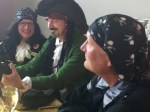
Beaumont didn’t need an eye patch — he already has one!

We laughed. We talked. We gawked and admired one another’s costumes.

We ate good food. Shared a sip of grog or two and sampled tasty chocolate concoctions that soothed the cravings.

And we laughed some more.

Saturday night was the 5th annual Dream Inn Big! Gala for Inn from the Cold, the family resource centre I work for which includes a 24/7 emergency family shelter.

Almost 500 people, (297 adults and 175 children under 12 – the majority dressed up as pirates) ate and talked and listened to speeches and bid on silent auction items and raffles and all in all had a spectacularly great time! The children (including the adults who were children at heart) had fun playing games and making gooey gobby goop and finding their pirate names and sailing down the slide of a giant bouncy castle while wandering the rooms of the TELUS SPARK Science Centre. It was organized chaos with lots of Ahoy Mateys and time to walk the plank and shiver me timbers!

And when it was all over, we went home, our bellies full and our hearts fuller.

And when it was all over, a team of community volunteers, staff volunteers and staff dismantled the decorations, took down the decor and hauled evidence of the Gala away.

We raised over $217k on Saturday night.

Gratitude. Thankfulness. Humbleness. They fill our hearts and minds.

It’s still not enough though.

We have to do better.

Because when it was all over on Saturday night, the Inn emergency shelter was still full. In fact, on Saturday night we had to activate our emergency overflow shelter at Knox Inn to provide shelter for 8 children and their parents.

As an organization, we believe we can create a community where no child or family is homeless.

We believe that aside from a housing crisis, we can create the powerful and strong network of services and supports necessary to ensure every family has access to the right resources at the right time to prevent their falling into homelessness. And should a housing crisis arise, we believe we can quickly and compassionately provide the right supports to ensure homelessness does not become a long-term or recurring event in their lives.

We believe we can do it.

And that’s why events like Saturday night are so important. Not only do we raise much needed funds to support us in our vision, we also raise awareness and shift perceptions and increase support for our mission of helping children and their families in homelessness achieve independence.

Because, no matter where someone slept that night, the need to ensure we have the right family-serving system of care for vulnerable children and families is vital.

It’s often said that it takes a village to raise a child. Well, putting on an event like the Dream Inn Big! Gala takes a whole community of committed staff and volunteers and generous sponsors

Since I joined the Inn team at the end of May, Gala has been a big part of the Communications, Volunteer Resources and Resource Development teams’ focus. They have lived and breathed and dreamed it into reality. Add to their roster the other staff who chipped in where ever needed, who came to volunteer on the night of the event to help set-up, oversee the evening’s numerous activities and tear down, the Dream Inn Big! Gala’s success is because of their commitment and heartfelt passion to ensure no detail was missed and every guest had a magical evening complete with pirate mayhem and laughter!

It worked. Thanks to staff, countless volunteers, sponsors and all those who came out, the evening is one I won’t soon forget, and neither will our guests.

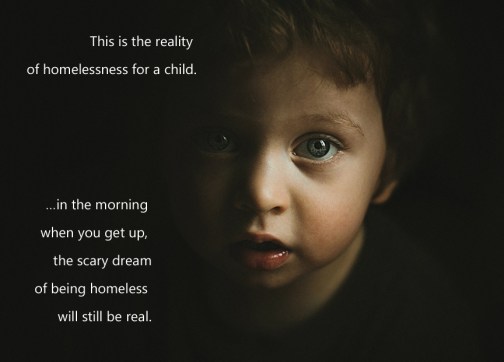
In the morning when a homeless child wakes up, the scary dream is still too real.

What is reality when you’re homeless?

What does it feel  like to not have a home?

The reality of homelessness is, you do not have the resources to have a place to call your own. It means all your belongings, everything you own is lost, or in storage, waiting, hoping that soon, very soon, you will be able to open the boxes, unwrap the furniture and place them all where they belong in that place you call home.

While the reality of what homelessness means may be similar for all, the feeling is very different for each person.

It can feel scary. Lost. Frightening.

It cal feel like the world is unsafe, uninviting, unwelcoming.

It can feel desperate. Confusing. Unbelievably hard.

It can feel hopeless.

For a child, whose world view is seen through the lens of the experiences of their family, being homeless can be all those things and more. Because as a child, understanding is limited to the experience of your parents, the circle around you. And in family homelessness, where the adults are also feeling lost and scared and hopeless, the child feels the confusion and fear of not understanding what is happening to their parents, their world.

Why are they angry? Tense. Unusually abrupt, inpatient, tired all the time, cranky, and always there?

When we live at home, we do things that are part of our daily life without really thinking about the things we do.

We get up, make coffee, tea, breakfast. We let the dog out. Cat in. Wake the family. Get the children ready for school Make lunches.

The rituals of a daily life routine.

In homelessness, the children still get up to go to school. They still grab a bag of lunch and climb onto the school bus each morning and return every afternoon.

The difference is, they are doing this in the noise and chaos of a communal system. They are eating breakfast someone else prepared with 60 other children and their parents. They are waiting in a crowded lobby with 60 other children and their parents.

Perhaps, there was a new family who arrived last night. They don’t know anyone, and no one knows them.

Those children are even more frightened, more afraid because it is all new to them. The fear is maybe not yet so deep. The uncertainty not yet settled in because they’re still trying to figure out their new world order. And their parents are still trying to put on a good face for them. But it is scary none the less because they have figured out the fundamental difference in their world — they are not at home, or whatever the place was they called home yesterday.

They do know that this place is busy, crowded, noisy. And no matter how badly they want to quiet down the noise, to break away from the chaos, there is nowhere to go.

They are living in a homeless shelter.

What does that mean?

For some, the word ‘homeless’ is that word used to describe that old guy on the street who is sitting leaning up against a wall, head nodding forward as he dozes, an upturned cap on his lap, hopeful for a few coins to be dropped into it.

For some, homeless means the youth you saw on the C-train platform playing her guitar in exchange for coins dropped into the empty guitar case. You knew she was homeless because she had a sign your big brother read to you: “Please help. Homeless. Hungry. Playing for change.” Your brother called her a loser that day. Are you a loser now?

Homeless is that word that once was shorter and now, because you have to tack on the extra four letters, means your life is less than what it used to be.

And you wonder, how long will you be less a home? How long will you live this way?

To a child, now feels like forever. Will this homelessness last forever?

And you hope it doesn’t. Because more than anything, you miss having a bed to crawl into in the room you shared with your sister where, when the lights went out, you whispered in the dark, sharing secrets and stories of your day, safe in the knowledge your older siblings slept in the room next door and your parents were in the big room down the hall where you could patter to in your bare feet if a scary dream woke you in the night.

In this place, you share a bunk with your sister on top of the bunk where your parents sleep. In the rooms on either sound of you, you can hear the sounds of strangers.

And in the morning when you get up, the scary dream of being homeless will still be real.

____________________

Photo by Ilya Yakover on Unsplash