Tug-A-War

Caregiving and the Illusion of Control

Dark green cedars stand silent, sentinels against the heaviness of the rain laden sky over Nanaimo harbor. Today, the water is a mirror, promising a smooth voyage to Vancouver. From there, we fly to Calgary, back to the muted tones of early spring still sleeping beneath winter’s blanket. 

I want to pull the blankets over my head and pretend the purpose of our visit is purely fun. The times insist I wake up. 

Reluctantly I accept the reality of this trip. My husband has a swathe of  medical appointments and I am essential to his ease and comfort while travelling. Wife, advocate, Sherpa, and now, caregiver; my role is to ensure any barriers to travel are removed from his path. It’s a role I navigate with a mix of love and reluctance. 

This is a journey far removed from the life we imagined when we said “I do.” Ten years ago. Back then, he was a force of vitality: golf, hockey, hiking, and the boundless joy of the Rockies.

Five years later, COPD, an incurable disease that is slowly stealing his breath, and reshaping our lives, changed everything.

I wrestle with those changes every day.  Like two opposing tug-a-war teams, I am constantly losing ground to the disease’s demands I give up control. I desperately try to dictate the terms of our uncomfortable co-existence yet know, this disease is the true master. In the starkness of its immutability, I am becoming a living contradiction and predestining myself to a tumultuous journey. 

Today’s calm waters offer a stark contrast to the turbulent emotional landscape of caregiving. I resist surrendering to vulnerability, dig my heels in like the proverbial horse being dragged to water when it comes to letting go of the illusion of control. How do you truly inhabit this role when the path is uncertain? How do you find strength when faced with unanswerable questions? 

The waters remain calm. Enigmatic. I stand and gaze out at the sea’s glassy surface. I cannot see into its depths yet still, I search for a deeper understanding, a way to find peace amidst the shifting tides. 

Perhaps, the true strength of a caregiver lies not in control, but in the quiet acceptance of what is and the certitude that all is as it is meant to be. 
COPD: Stealer of Breath and Peace of Mind

When my beloved was diagnosed with Chronic Obstructive Pulmonary Disease (COPD), I was initially clueless—about the disease itself, and more importantly, about the profound impact it would have on our shared existence.

Fast forward a few years, and the ripples of COPD are unmistakably felt in C.C.’s daily life. While the overt signs of COPD are clearly visible in the laboured steps and shortness of breaths, the repercussions on a caregiver, such as myself, are far more nuanced. These repercussions aren’t so much physical, but mental. They emerge subtly, like fog rolling in off the river, clouding my thoughts with layers of anxiety, trepidation, and dread. Left unchecked, I feel at times like an emotional mist is threatening to overwhelm me with resentment, sadness, and a mélange of feelings that blur my peace of mind and clarity of thought and action.

I confess, I’m struggling—struggling with the omnipresence of this disease and its ramifications on our lives. In my confusion and fear, I am reminded of my Auntie Maggie, who left us last year shortly after her 92nd birthday. When faced with life’s dilemmas she would often ponder, “What to do? What to do?”

The fact is, the paths to ‘What to do?’ are many, and I have investigated few of them. This digital age offers countless resources and communities extending support and guidance. Physical and virtual support groups, practical advice for managing COPD’s challenges—not just for the one gasping for breath but also for caregivers like me, who watch as the disease stealthily alters the one they love and the dynamics of their shared existence.

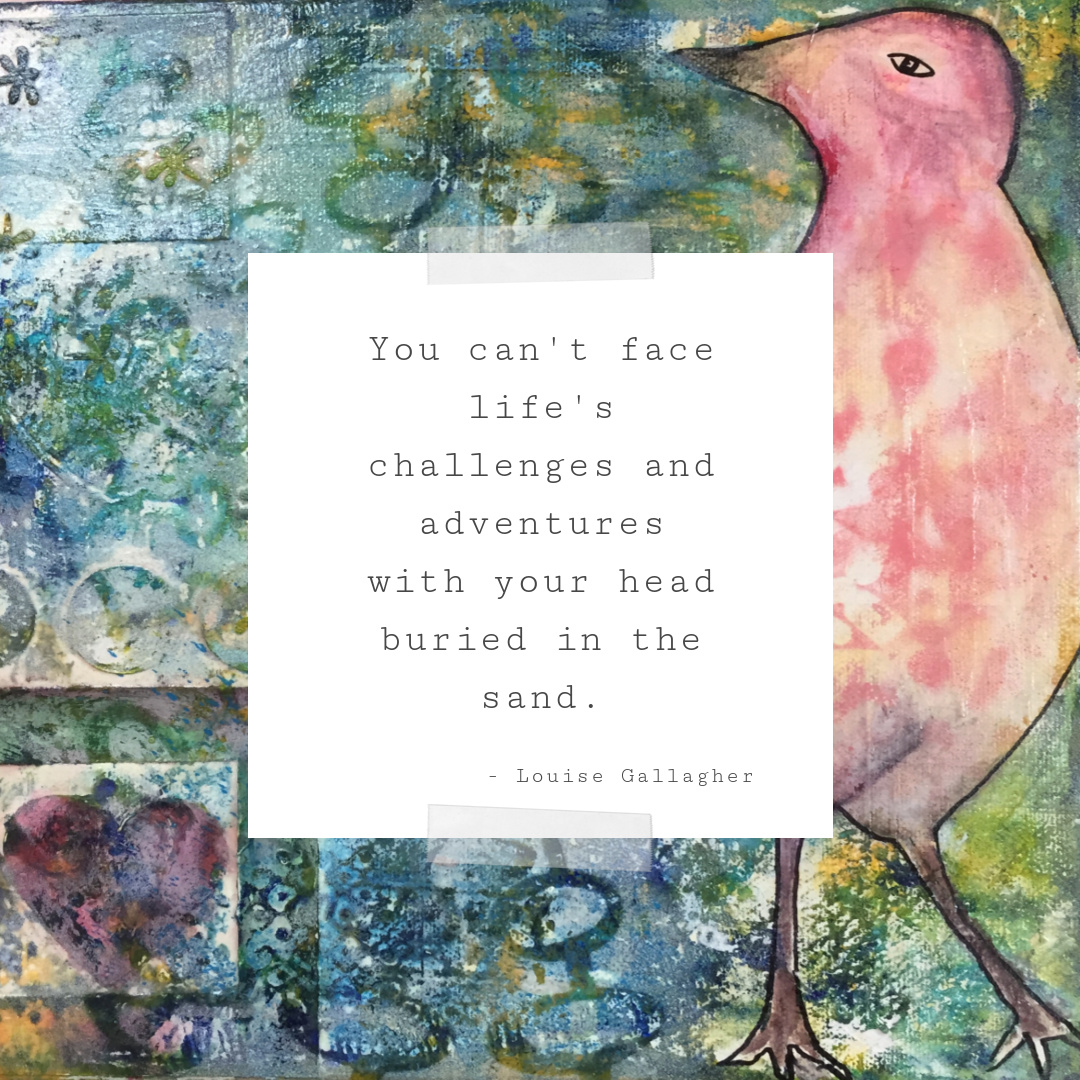
I think it’s the haunting specter of the ‘used to be’ that keeps me trapped in inertia. I’ve long recognized the burden of undigested worries and fears. Yet, mirroring the ostrich, I’ve buried my apprehensions, yearning for them to dissipate.

This tactic isn’t working for me anymore. Does it ever?.

We both need proactive measures to restore balance in our lives—measures that will usher in joy and harmony amidst the ambient tumult, both external and from within C.C.’s laboring lungs.

Reflecting upon the years, as COPD both subtly and overtly stripped away facets of C.C.’s identity—especially his image as an energetic athlete and man of action—I can’t help but wonder. Did he feel isolated in his silent battle? Did our single-minded concentration on the physical toll unwittingly reinforce his solitude, especially as we sidestepped the emotional cost the disease exacted on us?

Were we both embodying the proverbial ostrich?

But there’s hope, and there’s promise. For every question I’ve left unasked, for every emotion I’ve sidestepped, there’s an opportunity to bridge the gaps, to heal, and to grow stronger.

Starting today, I’m done being the ostrich and am donning my lionness’ robe to recommit myself: to open dialogue, to seeking understanding, and to rediscovering joy amidst adversity. Starting today, I am choosing to pull my head out of the sand, face reality, and actively seek ways to better navigate our shared journey.

Starting today, three things I can do are:

  • educate myself further
  • seek support when needed
  • initiate those challenging yet crucial conversations with my beloved.

The disease may be in his body, but we are one body in this union.

And on my path forward I will also remember to take care of myself. To continue to live my life fiercely, daring boldly to be loving, kind, compassionate and true to myself and our love.

The road ahead might be challenging, but I’m determined to walk it with clarity, purpose, and love.

Namaste