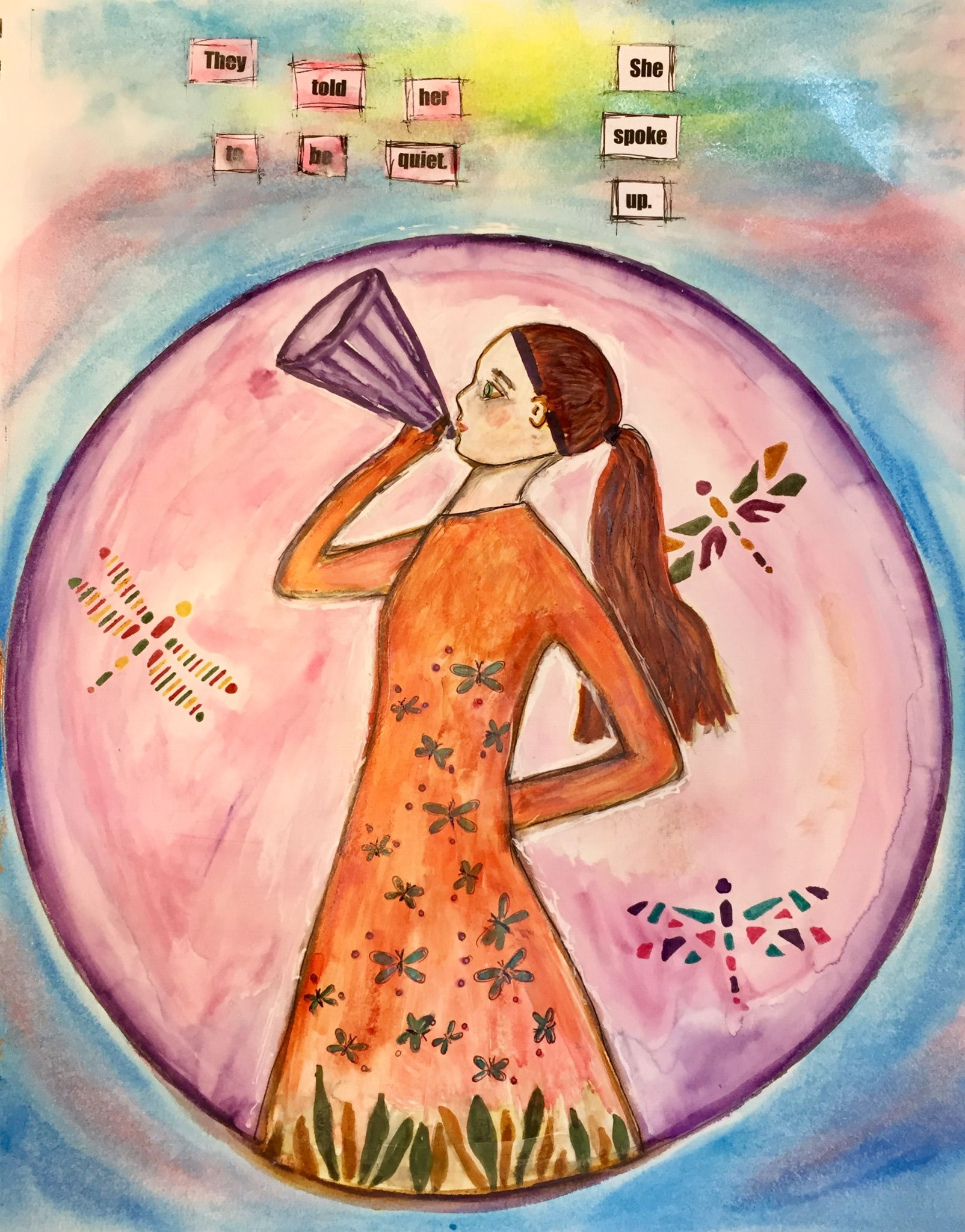
Acts of Contrition

We are back from the “Middle Kingdom” as my friend Iwona calls it (that would be Ontario — and in particular Ottawa and area – we just spent two weeks in Barry’s Bay on beautiful Lake Kamiskeg.

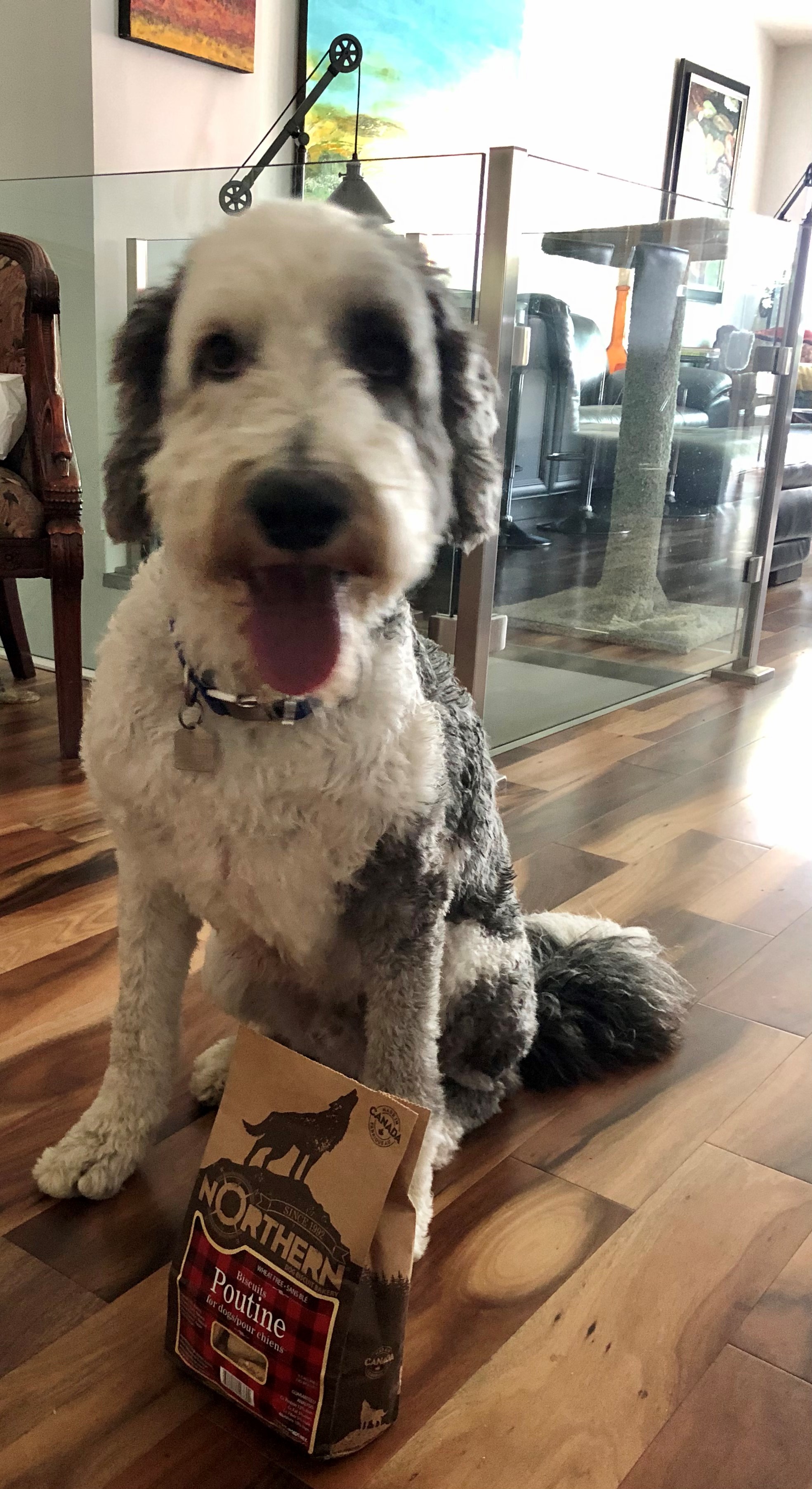
Iwona sent home a gift for Beaumont the Sheepadoodle. He really likes Poutine flavoured biscuits. He also really likes Iwona.

The problem begins when he realizes…. I didn’t bring home something special for my spectacularly special Beau!

Oh dawg! Am I in trouble now! He’s looking for Acts of Contrition to make up for my ‘oversight’.

Come and join Beau on his blog today to read all about my necessary Acts of Contrition!

Just put your paws on the link and CLICK HERE!

Photosynthesis

The view from where I sit

This is a land of trees. Trees that march across valley bottoms, up rolling hills to merge, somewhere far off in the distance, with the horizon falling down towards earth.

“It’s easy to see how someone could get lost in the woods here,” I mention to my beloved as we drive east, across the TransCanada Highway that has only been a link from east to west and west to east since 1965.

The trees sprawl out in every direction stopping only at the shores of the mighty Lake Superior whose northern edge we traverse in our eastward drive.

Thirty-four hours and over 3500 kilometers later, we reach Georgian Bay glittering like a pale sapphire under the hot July sun. We spend two delightful days visiting with C.C.’s oldest brother and his wife and then move further east, through Algonquin Park to Barry’s Bay.

We are here now at the shore of Kamaniskeg Lake where we will visit with our dear friends U and A for the next week before flying home.

And I feel it all.

Permeating my skin.

Sinking deep into my bones.

Infusing my senses with its beauty.

The silence.

The quiet of the lake.

The birds twittering in the trees.

The stillness.

Soft. Sensuous. Sibilance.

There is no breeze caressing the leaves, stirring them into story-telling.

No tell-tale gusts of wind rippling the water’s surface.

There is only green. Miles and miles of green caressing the deep blue waters of the lake which the trees surround like lovers merging their bodies into one as they lay entwined on a bed of leaves beneath a hot summer sun.

And in the presence of the silence, in the depth of this stillness and the narrowing of the distance between my body and nature, I find myself breathing. Deep.

I am here. Present. Embodied in the stillness of it all.

Photosynthesis
by Louise Gallagher


The quiet enduring embrace
of nature
fills
   my spirit
calming
   my city-riddled nerves
easing
   my busy-minded thoughts
into the silence
  immersing me 
    like the trees
     conspiring  
with the sun
to transform carbon dioxide 
into life
   giving 
     birth
      to life
again and again.

In the presence of trees
silently standing sentinel
to nature’s ways
    I find 
      myself
         falling
with grace
   sliding softly
into nature’s 
    quiet 
       enduring
          embrace
again and again.

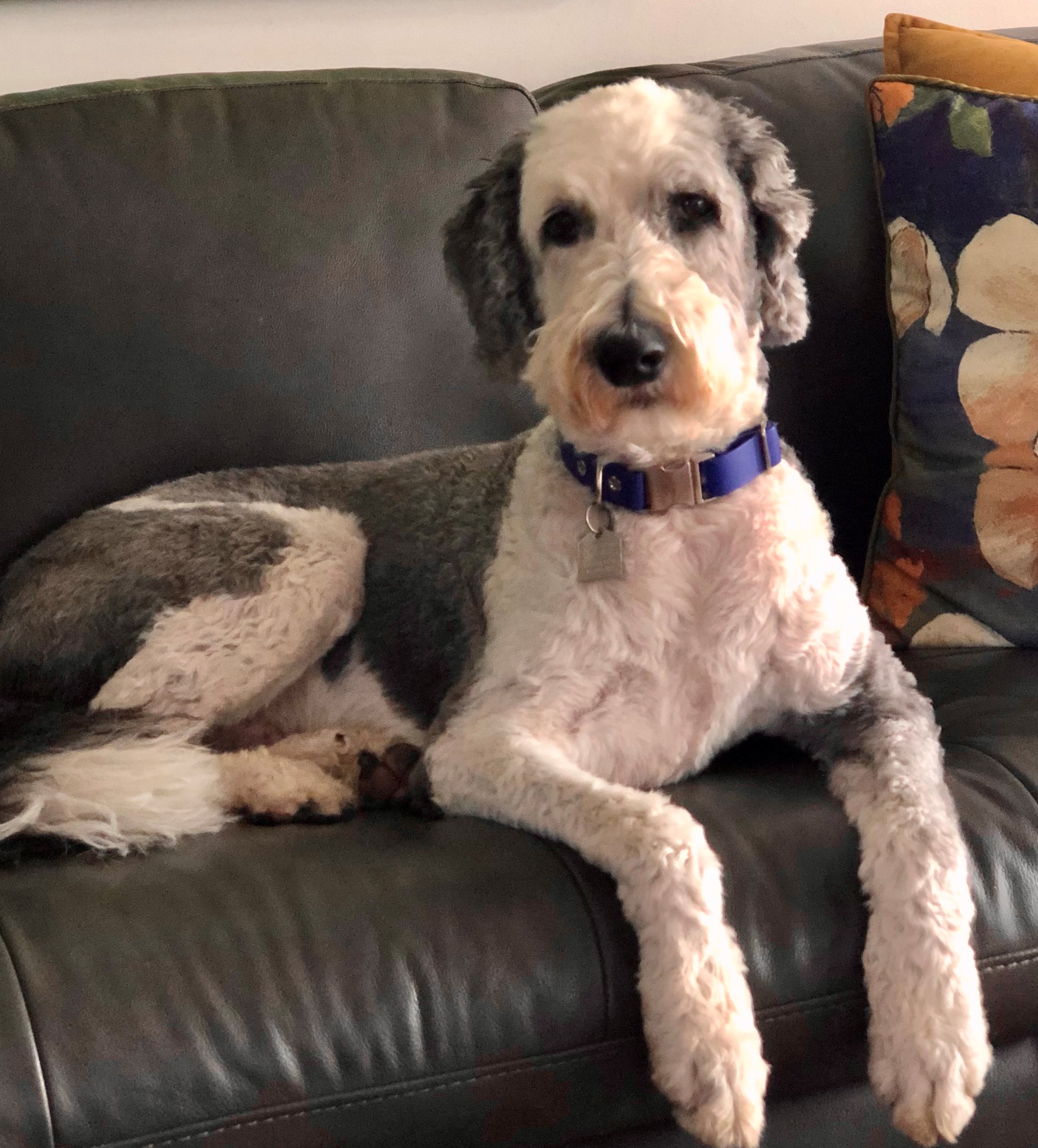
Hey Peeps! It’s me Beaumont! And I’m so confused. I’m in need of some impartial hooman guidance. So…. tell me I’m not out of line. Tell me I’m being real considerate ’cause honest, I understand why they’ve gone off for two weeks without me, but I do draw the line at Louise putting photos of some other dawggone dawg on my here blog!

It’s called, Sundays with Beaumont for a reason.

It’s my blog. My place to reign supreme, to be Top Dawg, Beaumont the Magnificent, the King of this here digital domaine!

But hey. I’m magnificent and generous. Right? So…

CLICK HERE and PLEASE> PLEASE PLEASE come to my rescue!

Thanks peeps. Beaumont the magnificently magnanimous…

This Anger Runs Deep

This Anger Runs Deep
by Louise Gallagher

This anger 
fuelled by centuries 

of abuse and cruelty, 
colonization, 
and attempted genocide

of the peoples who walked these lands
long before the settlers came

this anger runs deep
deep 
and fierce

and red
like the salmon
pushing upstream
fighting for life.


This anger
runs deep

pushing against the river
of settlers who raced
to claim these lands from sea to sea
these lands 
the people who once walked

proud and free

never tried to claim
because they held
deep within their bodies

deep within their ways 

the knowing,
no one could own the land
or the rivers

or the trees

or the wild life that ran

free
through the forests
 of these lands
they once walked
and hunted and gathered
proud and free.


This anger
runs red 
like the salmon

pushing upstream
in a fight for survival
and the right

to once again be of this land
proud and free
and to stand tall
like their ancestors
who once walked
these lands

before the settlers came
and washed away their ways

to leave this anger
running deep.

Magnificently Magnanimous Beau

Beaumont: So…. when are you going to get straight with me and tell me about the change in plans Louise?

Me: Oh dear. You heard.

Beau: Hello! I have ears. How could I not have heard. You’re telling the world. Except me of course.

Me: I didn’t want to upset you.

Beau: So… how is not being straight with me not upsetting?

Me: I figured when the time came you’d be ready.

To read more on how Beaumont the Sheepadoodle — ooops Beaumont the Magnificently Magnanimous Sheepadoodle — sets me straight… do come join him on his blog today. He loves company.

Click HERE

The Best You Can Do

The Best You Can Do.
by Louise Gallagher

You ask me to believe
you are doing your best
even when your best

is not true
for another.


And I do

believe
you are doing
your best.


And I do wonder,
can you believe

that in doing your best

you are limited 
by your belief
your best

is true for others?


What if

your best 
could be better?

What if

you stopped believing
you know what is best
for others?


Would you then choose 
to believe
what is true 
for another

is best
for them

even if it’s not
true for you?


Would you then choose
to believe
their truth
is the best way to create
something better than
what you believe
is the best
you can do?


Time To Return Home

7 Rue Suffren, Pondicherry, India
In the weeks before my mother’s death
she didn’t speak of her adopted land, Canada.
She hadn’t chosen to come here. Had never really acclimatized
to the cold and the four seasons marking the passage of time.
In her final days, as she drifted in and out of the present and the past, 
far from the cold and snow that covered the ground outside 
the frosted up window of her room where 
she lay quietly inhaling and exhaling her final breaths
in the too hot air she preferred, as if in keeping
the room so hot she was once again walking the beaches
of her childhood, she smiled often, contentedly.
And I wondered...
was she seeing again the places of her childhood where once she’d told me
she'd only ever known true happiness?

When she spoke and waved her hands in the air around her face 
like a moth fluttering around a light on a dark night 
spent sitting on the veranda of her childhood home in Pondicherry, India 
as barefoot servants wrapped in cotton saris 
dyed the colours of bougainvillea, jasmine and marigold,
serving food and lemonade to the family spread out 
on wicker divans and settees set beneath giant
fans twirling and spinning in the air above,
her eyes sparkled like the jewels her mother gave her
when she left so long ago to travel south, then west, then north
across a vast ocean separating her from the life she’d always known.

Pondicherry was her Shrangri-la she once told me while reciting
her life story into my tiny Dictaphone that I would later leave behind in a taxi in New York City along with the tape of her words. 
As she spoke, tears floated down her cheeks like a veil
of woven jasmine flowers lining the walkways of her journey
from young maiden to married woman, a journey only remembered now
in the corridors of her mind seen through the veil of memory. 
There was family, and servants and her Amah, 
ah yes, her Amah who took care of her every need. 
There were journeys into the hills near Bangalore when the monsoons came
and rickshaw rides through the colonial inspired streets of the city
her father had helped design. 
There were picnics on the beach and visits to the cathedral 
where she knelt and prayed with the nuns every day.
The nuns she prayed to join one day in their devotion
as Brides of Christ.

The war was far away in those long ago days. 
Sadness. Fear. Loneliness. Grief. They were yet to come
just as leaving the land of her birth was a story waiting to unfold
with the arrival of a soldier boy travelling on a train, looking for a place to spend two weeks furlough far from the guns and war 
that had trapped the world in its grasp until he landed here, 
in Pondicherry, she said, where there was only
laughter, and singing and dancing and voices chanting in Hindi and Tamil
and French. In Pondicherry there were only sunny days and sultry nights
lit with fireflies and redolent with the smell of jasmine and romance. 
Ah yes. Romance.

She was 22 when they married, 25 when she left India after the guns had stopped and peace was declared and he returned to claim his bride.
For three quarters of a century she travelled the world with her soldier boy returning only once to Pondicherry 
when she was in her fifties and her mother lay dying.
Three quarters of a century spent missing 
the Shangri-la of her childhood until she lay dying, 
remembering the streets of Pondicherry, her hands grasping the rosary 
her father had given her those many years ago when she left to follow 
the soldier boy who had captured her heart and returned at war’s end 
to take her away from everything she knew.

Canada never felt like home, she’d told me that time 
she recited her life story through her tears, 
marriage and having children were never her dream, she said,
they just happened.
Life mostly does that, she often said. It just happens 
and we have to find a way to let God’s will be done.
She’d touched the feet of Jesus on the crucifix that stood on the mantel after she said that. The crucifix that had been with her those almost 75 years since leaving India. 
And to be safe, she’d also touched the belly of the Buddha that sat on the windowsill. She never saw the irony of her hands fluttering from feet to belly. 

And as she lay on her bed in those final days 
reciting her prayers and gripping her rosary tight,
her eyes opened briefly and she looked straight at the wall 
somewhere far beyond the end of the bed. 
“Je viens, mon cher”, she whispered into the dark night where outside her over-heated room snow fell silently to the ground. 
And she gave a little gasp of joy as she saw them all waiting for her.  
Her Louis and mother and father and all her ancestors gone before her.
They were standing at the doorway of No. 7  Rue Suffren.
Waiting to welcome her home.

It was then that I knew, she had never really left India behind.
Just as India had never really let her go. 
She had just been letting life happen until it was time
for her to return home.
Let God's will be done, she whispered into the night as she stepped lightly across the threshold into her home.

The Heaviness of The Past

I feel heavy with the news. Heavy with the learning of more bodies found buried. Heavy with thoughts anticipating more discoveries.

I don’t want to be writing of this again. I don’t want to be revisiting a past I know cannot be changed, a past that has not treated Indigenous peoples kindly, fairly, humanely. It cannot be changed but it must be spoken of, acknowledged and addressed.

To honour the lives of those buried beneath the ground. To honour those who stand today above unmarked graves. To honour Indigenous peoples everywhere. To make reparations. For reconciliation.

I feel heavy with loss. Heavy with the truth.

And if I feel heavy sitting here at my desk reading the news, standing on the periphery, learning of these things through media outlets and social media feeds, imagine how heavy this history must sit upon those whose lives have been directly impacted. Impacted, not just by these recent discoveries but by generations of abuse. The knowing their people, their way of life, their skin colour, their presence here on this land where they have lived and walked and hunted and roamed for centuries before we, the settlers, arrived, has never been considered acceptable, never been tolerated, never been viewed as ‘worthy’.

Yesterday, when the news broke, I read a news story on the CBC website, It began with a warning in bold black letters:

WARNING: This story contains distressing details.

And then, the article went on to reveal that 751 bodies had been found in unmarked graves on the site of a former residential school in Saskatchewan.

It should be distressing. To all of us. To everyone. To the world.

It should be distressing and act as a warning. Not against the details being potentially distressing, but that we are all of us, First World. Emerging World. Third World. – we are all of us capable of such atrocities and, capable of attempting to hide the facts, to cover them up, to disavow them. To cast blame. To point fingers. To look the other way.

To not look the other way, we must read and learn and acknowledge and speak up and vow — to make amends. To do whatever it takes to ensure that our history does not remain twisted in a story riddled with lies where we are positioned as lily white settlers with maybe a bit of dirt along the edges of our past while the truth remains buried beneath the earth and the victims remain silenced by our deafness to their cries for truth and reconciliation.

We must ensure the names of those who are buried do not remain buried beneath our apathy, and fear of the truth.

We cannot bury the past. We can no longer remain silent. We must act now to change the future. We must ensure our children and their children do not carry the burden of the truth we have denied too long.

The tragedy is not just the horrendous circumstances that have lead to the truth being unearthed. It is that through our inability to acknowledge the truth and our desire to hide behind the cloak of a church and the power of a government that has refused to be held accountable for a century and a half, we are forcing Indigenous Peoples into having to unearth their ancestors.

We are forcing them to lift the bodies of their children, their people out of the ground and to mourn them while we stand by waiting for change to happen – to them.

We are forcing them to face the trauma of what we did to their loved one’s, their friends, their neighbours, their people while we stand on the sidelines and do not change.

Just as Indigenous Peoples have always had to own the trauma and the truth because we refused to acknowledge it, if we do not own what we as a nation did, our children and their children and their children for generations to come, will have to live with it until some future generation finds the courage to acknowledge and heal what must be changed so that a better future can be created for everyone.

Healing cannot happen when we stand on the edges of our own darkness defending against the truth.

We have a choice Canada. Let go of our prejudices. Our assumptions about who ‘they’ are and what happened to ‘them’ and about who is responsible and acknowledge — We are responsible. Our prejudices. Our privileges. Our belief in the superiority of our race and ways, our lack of compassion, understanding, and tolerance has led to today’s tragedies.

And then, do the heavy lifting to create better without forcing the victims to carry the load as we stand by and watch and ask… How could this have happened?

The ‘how’ is no longer the issue. What we do now is.
Page 40. Line 8.

Sometimes, when she thought no one was looking, she would sprinkle fairy dust on the flowers in her garden and watch the colours flow, wild and free, cascading like a stream pouring over a waterfall, onto the ground, turning the world into all the colours of the rainbow. 

Delighted by her creation, she'd splash with joyful abandon amidst the running colours until exhausted, she fell into a pool of cherry red and periwinkle blue and sunshine yellow and viridian green swirling all around her. Content to be amongst the living colours dancing in harmony, she'd fall asleep and drift into dreamland.  

It was there, floating upon a cloud of shimmering violet, she dreamt of flying high in the sky, sprinkling fairy dust all over the world. And as the colours ran free, pouring their beauty into the hearts and minds of everyone, notes of harmony and joy rang out amongst the hills and valleys, from mountain tops and deep from beneath the ocean beds. And all around the world, the animals danced and the people leapt for joy, and the trees swayed in the beauty, harmony and peace of the world around them.

Satisfied with her creation, she fell deeper and deeper into sleep, wishing and hoping she never had to wake up to a world without colours running free and mountains singing for joy and harmony ringing out in all the voices of humankind.

And so it was. And so it is. And so she sleeps on and on and on.

I have started a new morning practice. I read it on a thread in an art website to which I belong and felt so inspired by the idea, I immediately jumped in.

The process is simple — Close your eyes. Pick a book from your collection. Open your eyes. Open the book to Page 40. Go to Line 8 — read it — now let whatever is on Line 8 be your writing prompt. Set your timer for 6 minutes and begin to write.

The book that picked me this morning (my first morning of entering into this morning practice) was, CREATRIX: She Who Makes by Lucy H. Pearce.

Line 8 on Page 40 reads: “Because, while my own creativity scared me, I knew subconsciously that I still had to be around the magic somehow.”

I set my timer for 6 minutes and began to write.

There was a time when my creativity scared me, when I let what others think (or at least what I thought others were thinking) dictate how I expressed my creativity. Not that I expressed it much. Mostly I tried to hide it, shield it from outside eyes, keep it buried within me. For some reason, being ‘creative’, or acknowledging that I was creative felt foolish, uncomfortable. I was embarrassed by my own nature. It was as if the very word, ‘creative’ was a dirty word, never to be spoken out loud...

Released by my 6 minute writing flow, the ‘story’ above appeared and flowed out of my fingertips as I began to write this post.

I wasn’t thinking them.

I wasn’t wishing them into being.

They simply flowed.

I hope you try it — pick a book, any book and turn to a page (I like the symmetry of page 40 but you can use any number – your age, house number, day of the week…) go to a specific line number – and use that as a prompt.

Important caveat — have your number scheme organized before you begin. It helps stave off confusion, worry and the possibility of changing your mind to find ‘something better’ to use as your prompt. Part of the magic and beauty of the prompt is its randomness and its consistency.

I hope you do give it a go and let me know how it worked/works for you!

Oh… and do remember to stay out of self-judgement and criticism. Magic only works when we let go of telling ourselves it’s just not possible, or no good or… all that jazz.

Have a colourful, joyful and peace-filled day.

Namaste.

When Life Hit Hard – a poem

No. 2 #ShePersisted Series — They said, be quiet. She spoke up.

This poem came to me this morning as I sat at my desk watching the river flow past.

Earlier, my daughter and I and our pups had walked at a park near their house and while walking along a trail through the woods came upon a large encampment.

It wasn’t there just a few days ago when we walked the same path, but now, it is well ensconced and easily visible. A bright blue tarp is draped across trees providing both shelter and privacy to the occupants. The smell of food cooking on an open fire permeates the air.

I understand the desire to build such an encampment, particularly if someone has no place to call home.

But there are challenges and dangers.

Community residents might not look favourably upon such an encampment and might decide to take matters into their own hands. Or, might call upon the City and insist something be done. In the past, this has sometimes resulted in City Parks staff dismantling and removing the encampment without showing much concern for the belongings or needs of the campers.

And, an open fire in the dense woods where this encampment is situated is problematic.

We are fortunate in Calgary to have the Downtown Outreach Addictions Partnership (DOAP) and the Encampment Team through Alpha House Society, an agency serving vulnerable, at risk Calgarians. Their focus is to interact with individuals where they’re at, and to support them in addressing their needs. The Encampment Team, in partnership with City-ByLaw, supports ‘rough sleepers’ to help them address their safety, well-being and housing needs.

For Calgarians, the benefit of these teams is that it gives everyone an opportunity to reach out and support someone in distress or in need of housing supports, knowing the response will be compassionate and humane.

I have phoned the Encampment team to alert them of the situation. I know that their response will honour the individuals involved and provide them support in a way that reflects their humanity and their needs and their rights.

If you have concern for someone on the street in Calgary who is intoxicated or in distress, please call the DOAP Team first. The number is: 403.998.7388

If you have a concern about an Encampment – call the Encampment Team. Their number is: 403.805.7388

It can be hard sometimes to know what the most humane response is. The DOAP and Encampment Teams are the right response.

And… if like me you need to give voice to what you experience, witness, hear and see, write a poem, speak up, volunteer…

And support the agencies doing the work on the front lines. They need our help to do the important work they do supporting vulnerable people in our communities.

When Life Hit Hard
by Louise Gallagher

When life hit
     hard
she stumbled 
and fell
     hard

She got back 
     up
and when life tripped her
     up
again
she fell
     not so hard
this time
but getting up
     was harder.

Life kept happening
and she kept falling
until the falling
     down
     was easier
than the getting up
until the staying 
     down
     was safer
than trying to find
     a way 
     to stop
falling
.

She no longer
     cries
     out
for help
when she falls

She no longer 
     reaches
     out
for help
to get back up

Trapped
between the fall
and getting up
she lies
     silent
dreaming
of a hand reaching
     out 
to help her
     get back up.