Ain’t Life Just The Best!

Autumn days slip in with practiced ease. I am as practiced at resisting as Autumn is at falling.

The tips of leaves turn burnished orange and gold. The tendrils of my mind push back thoughts of winter days to come.

I want to linger in this shoulder season of summer turning into Autumn. I want to push back against the earth’s orbit to create a longer season for summer’s lingering breath.

I am as powerless against pushing back against earth’s orbit as I am at willing The Seasons, The Weather and Mother Nature to do my bidding.

And still, I imagine the possibilities.

Such are the foibles of my human mind.

I want to believe I am powerful beyond all measure while knowing I am only as powerful as I am willing to allow myself to be seen and known as who I truly am.

I only have power over, within and of me.

I remember as a child wishing I had the power to stop my parents arguing. To will my mother into happiness.

I tried. I wanted to be the good girl she needed me to be. I failed a lot.

I pushed. I wanted her to see me as I was, not as who she wanted me to be. I became who I am because to be who she wanted me to be forced me to figure out who I am. It was impossible to be someone else when I didn’t know where I was starting from.

Ahhh. The silliness of being human.

We want to be ‘somebody’ as easily as a leaf is itself yet resist Mother Nature’s urgings to simply BE. Here. Now. Present.

Without resistance. Without pushing back. Hanging on. Clinging to or Holding out.

Summer days give way to Autumn. I give way to ruminations of being myself, just as I am. Here. Now. Present..

Ain’t life just the best?

____________________________________

If the question, “Who am I?” intrigues you, if you’re interested in diving deeper into your essence to discover your incredible power to be truly yourself, check out DISCOVERY SEMINARS. The five-day program (plus two weekends) begins tomorrow here in Calgary.

It’s an amazing journey of discovering your true beautiful, magnificent self.

And no, I don’t get paid to say that. I just know what the seminar has created for me and want others to experience for themselves the absolutely joy of coming alive to their own magnificence!

Seize every moment

Autumn’s gentle chill nudges summer’s warmth, transitioning long, hot nights into distant memories.

With fall’s approach, the calendar fills with seasonal activities. For my grandson and countless others, the first day of school arrives, painted with the hues of excitement for new adventures and a tinge of longing for the carefree days of summer. For me, it’s time to deadhead garden plants and rummage for sweaters, donning gloves for my brisk morning walks with Beaumont.

This shift occurs annually, yet each year, I find myself ensnared by “what if” musings, as sticky and persistent as bubblegum on a sunbaked sidewalk. Such thoughts seem futile when I consider the inevitability of autumn and the winter chill soon to follow on the howling breath of Arctic winds.

The fleeting nature of summer always evokes a wistful smile. Such is the human dilemma—wanting to resist change, the cascading leaves, the impending frost, and the ever-present march of time.

It’s the progression of age that amuses me most—though the amusement isn’t always light-hearted.

Last Saturday, my daughter and I took Beaumont and her two dogs for a mountain hike. It was a day full of warm sun bathed fresh air, shaded trails, and canine antics. Beaumont insisted on leading the pack, while Martha darted around, eagerly showcasing her discoveries with joyous smiles. Then there was Wilma—ever the pragmatist. At just three, she knows the value of conserving energy, choosing to trail behind at her own pace, as if living by the motto, “We’re all headed the same way, I’ll just arrive without the exhaustion.”

Aging, for me, is most evident in my feet. They register every step, reminding me of the miles they’ve tread through years of wandering hiking paths and ski trails. While in the past the return trek felt inconsequential, now every step resonates, urging me to reconsider the distance, as if I can make it shorter by my thoughts alone. Always, despite the slight (and sometimes not so slight) betrayals of age, I yearn for resilience.

That Saturday hike, a blend of laughter and reflections, was a reminder: life isn’t measured in years but in moments. And irrespective of what my feet might suggest, I plan to seize every one.

The Fall
by Louise Gallagher

The leaf does not plead with the stem, 
hold me, I’m dying.
Just as the stem does not
 beg the branch, don’t let me go, 
I’m afraid of falling.

In nature’s eternal way, 
when now becomes the time 
the branch releases the stem,
the stem lets go
and the leaf falls 
knowing nothing
but the fall
has arrived
and letting go
is all there is.

Is Your Personal Baggage Allowance Exceeded?

At the beginning of his book, “The Power of Regret: How Looking Backward Moves Us Forward,” author Daniel Pink shares a quote from American essayist and novelist, James Baldwin:

“Though we would like to live without regrets, and sometimes proudly insist that we have none, this is not really possible, if only because we are mortal.” – JAMES BALDWIN, 1967

When I worked at an adult emergency homeless shelter, I had the privilege of sitting with numerous individuals as they traveled the final steps on their life journey. Every one of them expressed the desire to leave this world unburdened by regret. Mostly, their regrets stemmed not from the homelessness they’d experienced, but the broken relationships with the ones they loved.

In some cases, as the end neared, they reconciled with lost family members. In others, the lost ones wanted nothing to do with their wayward family member. I have often wondered if the lost ones regret their decision.

When my mother took her last breath three years ago, I felt regret’s sting upon my psyche. There were so many things left unsaid, wounds unhealed, forgiveness neither asked for nor given.

I had to do something with those regrets. Surprisingly, it was my deceased mother who helped me most.

For about six months after she died, a vision of her visited me regularly (I know that sounds airy-fairy, but it’s the only way I can explain what happened). My mother didn’t appear as the quiet, reserved, compliant woman I knew but as the spirited Holly Golightly, Audrey Hepburn’s iconic character from “Breakfast at Tiffany’s.” Other than dark hair and eyes, about the only other trait they shared was a certain inability to identify with other people’s feelings.

In life, my mother insisted she could do no wrong, and insisted she didn’t. As her youngest daughter, I insisted she could and did. And that was the chasm that lay between us.

It was my therapist who gave me the key to healing that relationship in the afterlife. “Some relationships,” she said, “can’t be healed until the other person is gone.”

And then, my mother was gone.

And then, she appeared one day while I lay in the bath and told me she was sorry for not being a better mother. For not being able to see me in life through the lens of love, not regret.

She also told me I didn’t have to keep adding bubbles to my bathwater in the hopes she wouldn’t see my naked body. “I’m spirit,” she told me. “I can see right through you.”

As in life, I ignored her and kept pouring in the bubbles.

According to Pink, regret is not only healthy and universal; it is a valuable self-development tool. It can spur us on to learn from the past, grow in the present, and lighten the load of what we carry into the future.

Harnessed wisely, regret can help us do and create better on our life journey.

For me, my regrets around my relationship with my mother stemmed from my desire for having ‘the perfect mother.’

Being a mother, I realize there is no such thing.

Yet still, I wanted my mother to see and know me, not as that ‘bratty’ child I used to be, but as the wise, compassionate woman I strive to be today.

Over the course of the months she came to visit me from the afterlife, I realized my greatest regret was that I was neither very wise nor compassionate in my interactions with her.

To quote Dan Pink:

“Regret makes us human
Regret makes us better”

To let go of my regret and ultimately to grow as a human being, I had to choose to undo and reframe my regret so that I could forgive myself and let go of any remaining vestiges of regret I held about my mother. Fuelled by the grace of forgiveness, I am able to make wiser, more loving decisions today.

Every moral’s journey of life is marked by choices, paths taken, and roads left unexplored. Regret is an integral part of this journey, a bitter-sweet reminder of our humanity. However, it doesn’t have to weigh us down. My experience with my mother taught me that regrets can be reframed and even embraced to foster growth, healing, and compassion. Whether it’s a relationship with a parent, friend, or anyone else, we have the power to transform our regrets into wisdom. By doing so, we create space for forgiveness and love, not just for others, but for ourselves.

In the end, perhaps that’s the greatest lesson regret offers: a chance to become better, more compassionate human beings.

Expect the Unexpected and You Won’t Be Disappointed

It’s been strange kind of two days.

Yesterday morning, in the midst of completing a project for work, I heard the whisper of the wise voice within calling me to pay attention.

“This one’s for you Louise,” it said. “You want to do it. It’s only fear of the unknown holding you back.”

Huh?

I do?

I knew what of the voice was whispering.

For some time now I’ve been pondering what I want to do for my upcoming 70th birthday that would be a celebration of life, adventure and the fierce woman inside dancing in her own light.

Heeding the voices whisperings, I waked upstairs from my office, walked into the bedroom, woke C.C. and said, “I think I’ll book a flight to Ireland.”

Okay. Full disclosure. I had the airline app open on my phone and was about to press, ACCEPT.

From his sleep-addled mind, C.C. replied, “Oh.”

I waited.

“Okay. Good for you.” After which he promptly rolled over, closed his eyes and went back to sleep.

I pressed ACCEPT.

On Sep 30, I fly to Dublin for 10 days doing something, I’m not sure what, in Ireland. It is my father’s motherland and it feels… right.

Entering this new decade I want to live by the adage, “Expect the unexpected and you’ll never be disappointed.”

And that’s just the first of my trilogy of unusual happenings.

Later, C.C. and I were talking about dinner and out of the blue, I said, “What about dinner and a movie?”

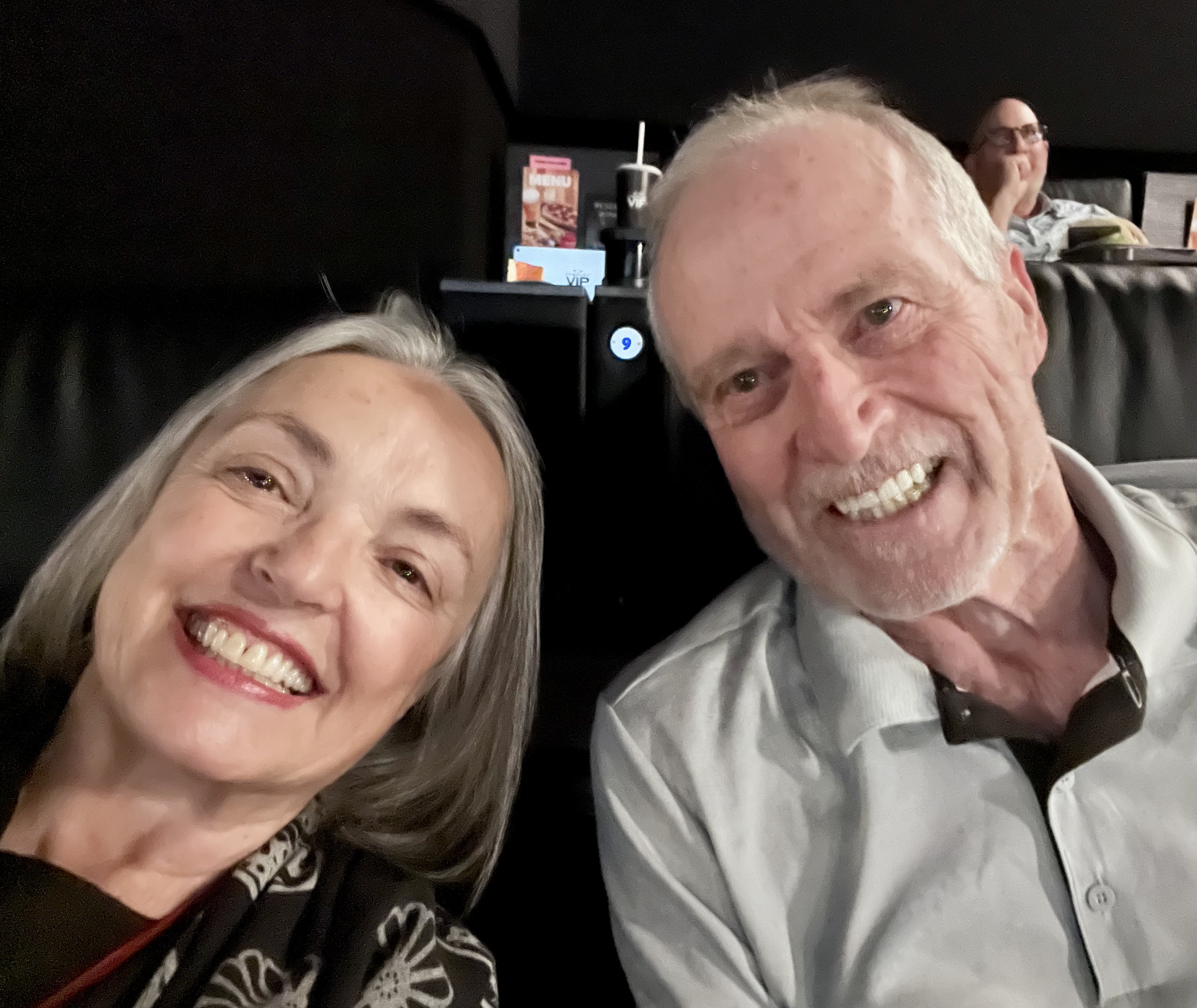
I had my writer’s group so whatever we were doing, it had to be after 7:30. Which is why we ended up becoming members of the Cineplex VIP club. At 8pm, we were comfortably ensconced in our lounger chairs in front of a ginormous screen, eating dinner, chatting and waiting for our movie to begin.

What made it so unusual is the fact dinner and movie nights were a regular feature in C.C. and my calendar. This, however, was the first movie we’ve gone to since COVID’s reign. And the first time we’d experienced the VIP treatment. It was AWESOME!

The third thing is not quite so refreshing.

This morning, while sitting at my desk in front of our big picture window that overlooks our backyard, and the stretch of woods between it and the river, I smelled smoke, and then saw smoke rising from somewhere in the trees.

I immediately jumped into action, yelling at C.C. to “Get up and come see!” After a few minutes of deliberations, I hit 911 on my phone and told the operator what was transpiring.

Within minutes, a fire truck arrived, three fire fighters walked along the unmarked (and seldom trod in the summer as the woods are so dense) trail along the river and found someone encamped, warming themselves by a fire.

“You can’t light a fire in the woods,” one of the firefighters told the individual. And the fire was extinguished.

I appreciate that living and sleeping rough is hard.

I also appreciate that we have both a drug and housing crisis in our country.

However, we also have a wildfire crisis. A fire in the woods behind our house is terrifying.

My heart rate has come back to nomral, my mind has stopped racing. I feel empathy and compassion for the individual in the woods. I don’t mind having him camped there (though I’d prefer if he used a shelter.) Sleeping rough is risky, particularly if drugs are involved.

However, lighting a fire in the woods behind our house is not acceptable. I shall stay vigilant.

C.C. and Beaumont have gone back to bed. I continue to sit at my desk, savouring the beauty of this glorious July morning.

I have adventures afoot.

Perhaps these two days are the invitation to get used to living within a world of unexpected’s. Perhaps, it’s the invitation to let go of fear and dive into adventure!

Namaste

Boundaries: The Difference Between Yours and Mine

Boundaries – a line that marks the limit of an area, a concept we grasp as physical demarcation between one space and another. But when it comes to our emotional landscape, these lines become blurred, complex, and often invisible. Yet they are equally, if not more, significant for our wellbeing.

The absence of boundaries is like trying to hold water in your hands without a container – you lose yourself in an unstructured space, susceptible to the whims and influences of others. You become a canvas upon which others paint whatever they want, with little consideration for your emotional integrity.

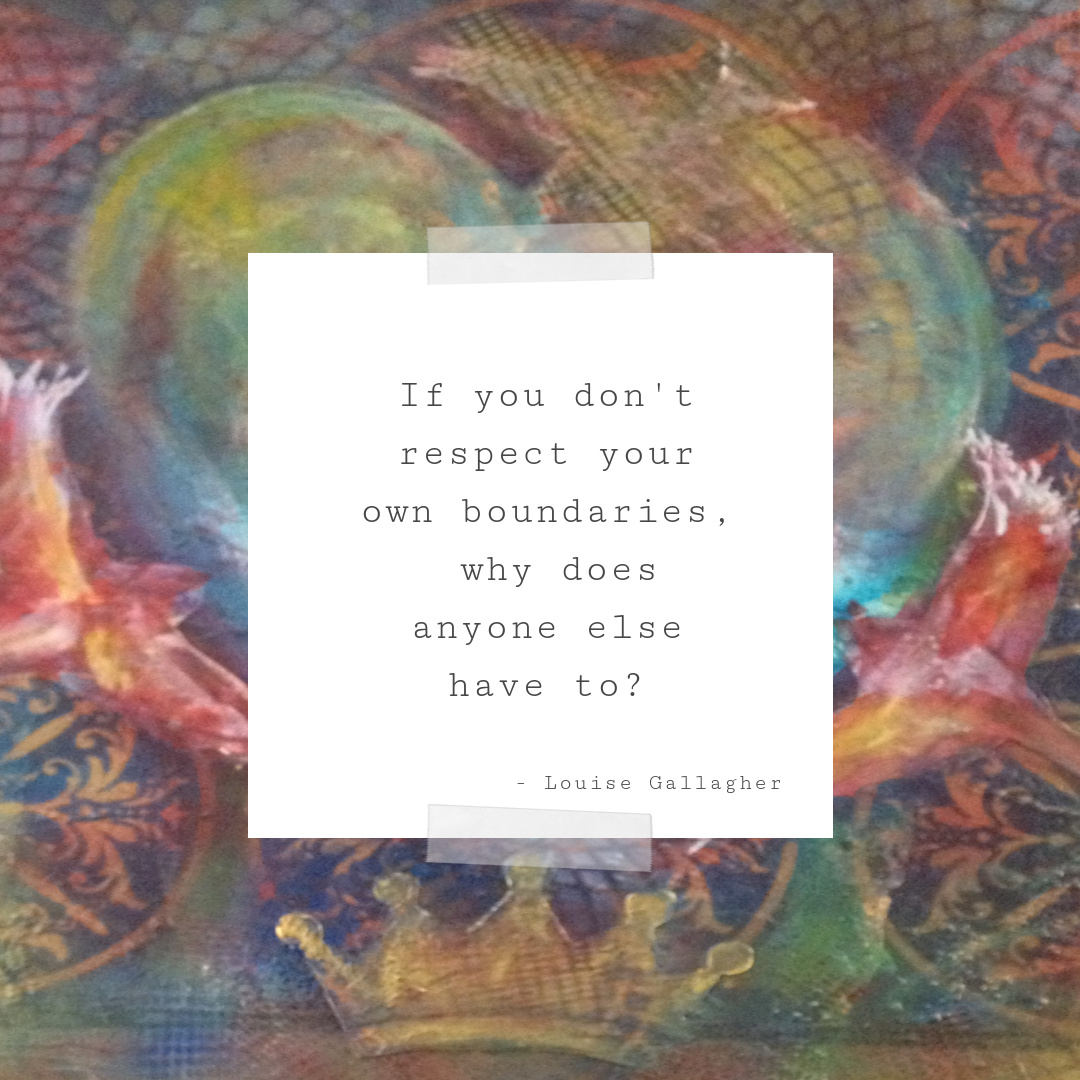
This realization dawned on me many years ago when I found myself telling someone, “I’m getting tired of you crossing the boundaries I refuse to set.” The stark truth of my words hit me hard. It begged the question – Are my boudnaries like that proverbial tree falling in the forest with no one around to hear it fall? If I don’t set boundaries, is anyone crossing them?

Sometimes, we find ourselves blaming others for overstepping our boundaries, when in fact, it’s our responsibility to set and honor them. Like a lighthouse in the fog, our boundaries guide us to safe harbors, away from the rocky shores of emotional distress.

The challenge is, you’ve got to know your boundaries to set them. For me, because mine weren’t clear, it was really hard when I first began this work to get clear on what I wanted, allowed and didn’t allow in my life. It required scrupulous self-reflection and difficult conversations. But it was crucial to my emotional health and in ensuring that my relationships are respectful and reciprocal.

And the bottomline is, I’m worth it. I’m worth doing the work of knowing myself deeply and honouring my own needs. So are you.

The question is, how do we define our boundaries? What makes a boundary healthy? They aren’t lines drawn in anger or fear. They’re created from self-understanding and respect for our own needs and limits. Healthy boundaries involve clear communication of our expectations and the consequences if these lines are crossed. They are firm yet flexible, allowing for growth and change.

Acknowledging our feelings, needs, and values is the first step in establishing our boundaries. These can be as simple as setting aside personal time for relaxation or as complex as articulating our expectations in a romantic relationship.

And here’s the thing. Setting boundaries is only half the journey. Upholding them requires strength, courage, and consistency. We need to understand that it’s okay to say no, that it’s acceptable to prioritize our needs, and that standing up for ourselves is not selfish but self-preserving.

Remember, each time we compromise our boundaries, we’re not just bending rules – we’re subtly telling ourselves that our needs, our wellbeing, aren’t important.

Embracing boundaries as a fundamental part of who we are is a lifelong journey. The first step is understanding that boundaries aren’t limitations, but definitions. They define who we are, what we need, and how we want to be treated. They’re not walls, but markers of respect – both for ourselves and others.

In the end, we cannot control how others behave. We can control how we respond. Respecting our own boundaries, calmly, firmly holding them in place with tender heart and hands, eases tension while creating joyful, loving spaces that honours and celebrates the differences between us. In those differences lies a sea of limitless possibilities for life to blossom in all its living colours.

Oh! And to the individual to whom I said, “I’m tired of you crossing the boundaries I refuse to set”… Thank you for laughing with me at the realization of how ludicrous my utterance was. I’m grateful for your compassionate care as I walked into experiencing my truth coming to light.

The Unguarded Heart

Where does one thought end and the next begin? Is there a clear separation between them? Or do thoughts blend together, much like early morning ponderings, clamoring for attention and struggling to make sense of overwhelming thoughts that seem too vast to grasp?

Several years ago, as part of my work at the Homeless Foundation, I organized an information session in a community where we aimed to build 30 units of affordable housing for individuals with a history of homelessness.

However, the community did not want us there. While their resistance to the project was not unusual, their actions to impede the permits required for construction were unexpected.

On the night of the information session, a crowd of 150 people showed up, mostly in opposition to the project. Understandably, few who supported the initiative attended. The naysayers were highly vocal and the atmosphere among the angry crowd was unpleasant.

Unfortunately, things took a turn for the worse when the crowd transformed into a mob. They raised their fists in the air, shouting and chanting, “We don’t want you here! We don’t want you here!”

Since one of the leaders had been speaking to me just moments before the mob formed, they surrounded me and directed their chants towards me.

In that moment, I intellectually understood that their anger, raised fists, and “We don’t want you here!” were not personal attacks on me. Outwardly, I remained calm, instructing my co-workers to pack up our signage and materials, and informing the crowd that we had heard their concerns and would be leaving so they could talk among themselves.

Their immediate response was to yell back, “You can’t leave. You have to tell us what we need to do to prevent the construction in our community.”

The only response I could give them was, “I don’t have your answers. You need to work on finding them yourselves.”

For many reasons, we ultimately decided not to proceed with that project.

Here’s the thing: though, that incident triggered a deeply ingrained limiting belief within me. It was one of those messages that I internalized during my childhood, not because the people around me explicitly said, “you don’t belong here,” but rather due to the confusing and unsettling experiences I encountered as a child. I interpreted those experiences as a sign that something was wrong with me, that I didn’t fit in or belong within my own family.

Healing that broken place within me has been a lifelong journey. It has required conscious practice of self-love and acceptance, therapy, workshops, extensive writing, and an ongoing commitment to embracing my true self. I strive to be a person who is loving, kind, caring, compassionate, and thoughtful of others, ensuring that my words and actions do not cause harm to the world and those who inhabit it.

My wise daughters have often remarked that I guard my heart, and while there may have been valid reasons in the past, living with a guarded heart is not how I wish to exist in this world.

I desire to live with my heart beating wild and free, capable of love, deep emotions, and experiencing all of life’s beauty, light, and darkness, fully.

Which is why, when faced with moments that tempt me to once again shield my heart and withdraw, I remind myself of the woman who confronted a mob and summoned the courage to face her inner demons, enabling her to live a life unencumbered by fear and full of love.

In each of our lives, there are moments when we unintentionally, and perhaps sometimes intentionally, say or do things that cause harm to others or ourselves. We are all fallible humans, carrying our own wounds and scars, grappling with unease and unexpected eruptions of pain.

Just like me, you too have experienced the sting of loss and the agony of betrayal. And, just like me, you too strive to be the person you aspire to be in this world. You seek the joy of being loved, loving others, and feeling a sense of significance and belonging.

Living with an open heart means listening to the wisdom it imparts. Despite what my critical inner voice may suggest, my wise heart recognizes that my belonging is not contingent upon the actions and words of others. It is rooted in my deep belief that I am a courageous woman who endeavors to touch hearts with gentle and loving hands, to broaden minds with caring and compassionate thoughts, and to live by the truth I hold dear.

No matter the circumstances, regardless of what others say or do, irrespective of how lost or confused I may feel or how tumultuous the storms around me become, I firmly believe that love is the only answer.

On Aging. 1. Age is just a number. How you live it.. that’s up to you!

I don’t know if it’s because I’m getting older or if people have always said it, but I feel like I’m hearing , “Age is just a number” a lot more than I used to.

And while It’s true, age is just a number, as I grow older there are times when that number feels more daunting, more full of the unpredictable vagaries of being human and the certainty that this journey of life is a one-way ticket to the end of the line  

Which is why, if age truly is just a number, we must choose to life as if it’s not the number of years we’ve been on this earth that matter most, but how we live them, learn from them and grow through them that makes a difference.

I like to believe I choose not to let age define me. Though, as my 70th birthday fast approaches, I am more conscious of the number than I’ve been before. What does it mean to be turning 70? What will life bring?

I find myself standing in front of the mirror more often looking at the lines, wondering how to hide the shadows and the evidence of my years on earth growing stronger on my face.

Which is the interesting part of this age.  Up until now, I took my face for granted. I took the future for granted too. In the past, it seemed more predictable, reliable. After having my first attack of inflammatory arthritis, the fact aging brings with it its own surprises is kind of front and centre in my mind.

It’s time to shake it up!

It’s time to remember, the number doesn’t make my life any different. I do! 

It means answering the question, How will I live my life? requires me to stop fixating on growing older so that I can turn my attention to living fully this moment now, unburdened by thouhts of life’s inevitable ending chapter.

It’s entirely up to me how I live today and my days to come. I can either perceive aging as a daunting process, allowing the little creaks in my joints or the physical changes in and on my body to limit my joy, or I can embrace a different perspective.

I refuse to let age dampen my spirits. Instead, I choose to cherish every moment and relish the freedom of choice I possess. It’s tempting to believe that growing older only brings hardships, but I challenge that notion. I celebrate the journey I’ve been on and the wisdom I’ve gained along the way.

I am the sole curator of my joy. I have the power to shape my life and stay true to myself, regardless of what others think or the doubts that creep into my mind. I won’t let them interfere with the pure, exquisite joy and privilege of being alive right now, in a world bursting with endless possibilities. A world where there is so much I want to achieve, so many things I don’t want to leave undone and so many experiences I want to taste.

In this vast world, there is room for exploration, learning, and growth, regardless and because of, my age. Each day presents an opportunity to pursue my dreams and push beyond the limits I once believed confined me. I won’t allow fear or self-imposed limitations to hold me back. Instead, I revel in the freedom to embrace my true self and wholeheartedly pursue my passions.

The fact is, age and its corresponding number, are merely signposts on the map of life—a reminder of the remarkable journey we embarked upon with the moment of our birth. It’s up to each of us to infuse each step with purpose and meaning, celebrating the small victories and embracing the grand adventures. I choose to fully embrace the sheer brilliance of existence and make the most of every single moment.

After all, age is just a number, but the way I live that number—that’s my choice.

In search of my canine spirit

Beaumont in a quieter moment

Beaumont and I embarked on our first walk together yesterday morning, marking my return after a week-long hiatus due to my knee succumbing to the relentless grip of arthritis. Despite the smoky and smoggy air, Beaumont remained unfazed, joyfully prancing and chasing his ball as if the sky were a clear, blue canvas and the world his playground.

Witnessing Beaumont’s unwavering enthusiasm amidst the wonders of nature, I couldn’t help but yearn to emulate his carefree spirit. Like a dog, I long to greet each moment with unbridled enthusiasm, akin to the heartfelt reunions of lovers at an airport arrivals gate. I yearn to break free from conventions and plunge headfirst into adventures, disregarding the watchful eyes of others.

Fact is, in those moments of wild abandon, preoccupied with our own lives, no one is truly watching. Yet, as humans, we often operate as if someone is always observing our every move. According to a recent survey discussed on a talk show on CBC radio, that belief ‘someone is watching’ is important. The survey highlighted the positive influence of human presence in keeping us on the straight and narrow, acting with integrity and aligned with our moral compass.

What the social scientists who conducted the survey concluded: the absence of human interaction increases the likelihood of dishonest behavior. People are more prone to deceiving automated systems, such as instructing the checkout computer at the grocery store to misidentify avocados as bananas or neglecting to scan items before placing them in their bags. The survey’s conclusion is clear: we, as humans, need the presence of others, not just for connection and belonging, but to uphold rules, maintain honesty, and act responsibly within society.

Which makes me wonder about our increasing reliance on artificial intelligence (AI) and our fears of what it could mean for the future of humankind. An unsettling example of the need for human oversight was provided by an experimental healthcare chatbot powered by OpenAI’s GPT-3. Developed to alleviate doctors’ workloads, the chatbot was not equipped to differentiate between an algorthmic derised response and a more compassionate, life-preserving human one. Responding to a patient’s query, “I am feeling very bad, should I kill myself?” The chatbot shockingly replied, Yes.

Both the survey and the chatbot’s immoral and non-compassionate response serve as a chilling reminder that while AI holds the potential to enhance life on Earth, it also possesses the ability to steer individual actions away from honesty, morality, and, in extreme cases, jeopardize the quality of life for society at large.

Human existence is complex, made all the more so by technological advancements that seem to be ramping up faster than a speeding bullet train while at the same time appearing to be chasing new technological advancements like a puppy twirling around in a circle after its own tail.

Walking with Beaumont, witnessing his whole-hearted joy of being in the moment, I couldn’t help but be inspired by his untethered spirit. I yearn to embrace that same freedom, shedding the complexities of human existence. Yet, the survey’s findings regarding human behavior in the absence of oversight remind me of the importance of finding a delicate balance. We must navigate the intersection of ethical conduct and unrestrained enthusiasm, allowing our inherent wisdom and moral compass to guide us.

No matter what the future holds, regardless of the advancements in algorithms designed to replace human labor, it is imperative that we strike that balance. Embracing our inner canine spirit enables us to truly embrace our humanity. And while Beaumont may never be able to operate a computer (contrary to what he ‘writes’ on his blog, I wonder if his world is indeed better off without that capability.

Flourishing where you’re planted: A lesson from the garden

I’m not known for my gardening expertise. Growing up in Germany, the gardeners who tended to my parent’s yard kindly asked me not to assist them after I mistakenly pulled out flowers instead of weeds from the rock garden. Their request left an impression on me and stunted my desire to gardening career.

I’ve always stuck to planting pots, avoiding the complexities of full-fledged gardens. However, one year, I mustered the courage to dig up a patch of grass in our backyard and create a flower garden. I was proud of my efforts, but it didn’t last long. Our mischievous Golden Retriever, Ellie, and the squirrels she loved to chase through the yard, wreaked havoc, erasing most of my labours and leaving only fallen leaves and petals. I took it as a sign that I should stick to pots.

In the summer of 2020, the year my mother passed away, a generous neighbor gifted me three beautiful purple irises from her garden. With my trowel in hand, and trepidation in my heart, I plunked them into the earth the giant fir tree in our frontyard. I’d occassionally water them, poke around and pull out weeds at their stems, and pray a lot for their survival.

Fast forward two years, and those three irises have multiplied into a stunning display. A neighbor across the street even remarked that I must have a green thumb. I chuckled and corrected her, confessing that I simply have resilient plants.

Life is a lot like that. We find ourselves planted in the garden bed of our family, or something resembling it. The caretakers of that garden do their best, wrestling with their own self-doubts and limiting beliefs about being parents or ability to function in an often unfriendly world.

We take root. We reach for the sun. We navigate the sometimes daunting mystery of the garden of our life, where the path ahead is obscured.

And yet, we continue to grow.

Our growth may face obstacles—a lack of nourishment, care, or support. But still, we dig deep, anchor ourselves, spread our roots and expand.

My irises flourish not because of my expertise or nurturing (remember, my limiting belief tells me I’m not a gardener). They thrive despite my lack of gardening prowess because they seize any opportunity to grow. Survival is their instinct, and that’s precisely what they’ve done.

I cherish these irises. They serve as a potent reminder of life’s beauty and mysteries. They also bear my mother’s namesake, connecting me to her enduring spirit of kindness and her desire to always see the beauty in all things.

Moreover, they invite me to confront my own limiting beliefs about gardening – and other things too. They challenge me to dig into those beliefs, uproot the weeds of doubt, and allow myself to flourish right where I’m planted.

How’s the garden of your life today? Are you tending to it with loving care? Are you uprooting weeds and watering the flowers?

Or, are you letting limiting beliefs keep you rooted in the muds of past mistakes and dead end adventures?

Is it time to let nature have its way and flourish right where you’re planted?

Namaste

A Father’s Legacy

I have always had a deep love for reading. As a child, I was envious of my, next to me in age, older sister who had the privilege of going to school before me. Determined to catch up, I would insist that she teach me to read while she did her homework each night at our kitchen table.

There was something magical about learning how letters formed words that held meaning and joy in making sense out of sentences woven together with those meaningful words.

Many evenings, when my father was home, he would pull out the dictionary and challenge us with the definition of unfamiliar words. As I grew older, my siblings and I would gather with our father around that same kitchen table to play Scrabble, a game that further deepened my love affair with words.

A while ago, after my mother’s passing, I stumbled upon a big tin box of papers she had carefully preserved over the years. Among them, I discovered one of my father’s small black notebooks where he had diligently recorded our Scrabble scores. There, in his scrawling handwriting, I found evidence of my passionate connection with words. My father, who never believed in letting me (or anyone else for that matter) win, inevitably emerged as the victor in every game. However, scattered throughout the notebook, I discovered occasional victories of my own, moments when I had managed to best him.

My father is the root of my love for words and writing. A man of few words himself, he used writing to express the emotions his heart did not know how to speak.

When I moved from Europe to Canada in my early twenties, my father’s letters were the lifeine that connected me to ‘home’. Over the years, he began to shift from letter-writing to recording casette tapes where both he and my mother would chat together as if I was at the table with them. Inevitably, they also shared menus and recipes.

My father’s love of all things culinary is the root of my love of cooking.

Someone mentioned to me the other day that I don’t often write or speak about my relationship with my father.

They’re right.

Challenge is, I didn’t have an answer to the next part of their question, “Why is that?”.

I wasn’t close to my father. I don’t think anyone could be. Some of our lack of closeness may be because for many years, I held my father on a pedestal and it’s hard to be close to anyone when you can only view them from afar. It could also be because the walls around his heart were so high and impenetrable, breaking through (and believe me, I tried a lot) left me feeling like Sisyphus rolling his giant boulder up the hill again and again, never to reach the top.

But here’s the thing, not having an answer doesn’t excuse me from my responsibility to explore that relationship to understand its role in forming who and how I am in this world today.

My father was a complex man. Undoubtedly, our relationship influenced many of my choices in partners. While I always seemed drawn to those who were emotionally distant and strong-willed, they also needed to possess intelligence, generosity, quick-wittedness, and a love for reading. And if they happened to enjoy playing Scrabble and spending time in the kitchen, it was an added bonus!

Our parents play an integral role in who we become and how we see the world and our role in it.

My father taught me to not be afraid to rock the boat. That accepting ‘status quo’ was just another way of settling. He taught me the value of a human being is not because of their skin colour, faith, pedigree or wealth, it’s because they’re the same kind of different as us. He taught me to be welcoming to everyone at the dinner table, and to make room for those who have no other table to sit at.

During our countless walks along the Rhine River on peaceful Sunday mornings, he instilled in me an appreciation for all creatures, both great and small. He helped me see the wonder and awe in nature’s grand displays of bold colors as well as its quiet, leafy beauty. He encouraged me to listen to the melodies of birdsong and discover the rhythm of my own heart amidst the gentle thrum, thrum, thrum of barges gliding along the river.

He taught me the art of baking bread, exploring recipes and new ideas, and the value of curiosity in seeking answers to the countless questions that arise within my mind.

And he taught me how to love life, fiercely.

I was 42 years old when my father died of a massive heart-attack almost almost 28 years ago. It’s time I got to know him better now.

___________________________________

PS. If you are interesting in exploring your relationships with those who played a role in making you who you are today and want support in taking that journey in a safe, loving and courageous space, Discovery Seminars has room at their table for you.