A guide to LOVING self-care


guide to loving self-care 1 copy

Recently, in finding myself challenged by what felt like an excessive workload, staff-challenges and unexpected events triggering fear and anxiety, I knew I needed to take care of me — because if I didn’t, I would be even less able to step through each day with grace and calm.

Now, there are a lot of ways to give yourself loving self-care — and I emphasize the ‘loving’ because it’s easy in times of stress to fall into a pattern of convincing yourself self-care includes  doing things that aren’t that healthy — like skipping your workout or vegging out in front of mindless TV eating foods doused with saturated fats and sugar! There’s nothing wrong with watching TV but it’s important to be mindful of the ‘why and what’ of your behaviour; and raw carrots will always trump potato chips on the good for you scale!

Which is the first step to take on the journey to loving self-care:

Step 1:  Get conscious of your patterns.

I have a pattern when feeling an overload of stress to want to veg and graze. My critter mind wants me to believe it’s okay. I ‘deserve’ a break. Giving myself a break to indulge in unhealthy patterns of behaviour is the last thing I need in those situations. All unhealthy self-care does is make me feel more sluggish served with a good dollop of guilt on top. With consciousness comes awareness and the ability to make choices that change my choices for the good.

Step 2:  Reframe the proposition.

Too often we tell ourselves we have no choice, it’s just the way we are. Yet, the choice to not give yourself loving self-care and instead to choose self-indulgence is exactly that — a CHOICE.

Critter-mind is strong. It loves to override conscious thought with its sinister pleas to just give in, this once (like seriously. just this once), to its calling you to act out. When conscious of your critter-mind’s plots to undermine your well-being – Stop. Breathe and instead of focussing on self-indulgence and convincing yourself how what is bad for you is good, reframe it. Before indulging in negative self-care repeat 10x (write it out if it helps):

I choose to treat myself with LOVING self-care for the benefit of…..  (not feeling guilty, having more energy, filling my well, being proud of me…)

Focus on the benefits of taking loving care of yourself by taking a pause between the thought and the action.

Step 3:  Take your finger off the trigger.

Take a look at your triggers. Does TV automatically make you want to reach for the sugars and/or fats? Does it automatically cause you to go mindless?

Then unplug the TV. If it’s in a central area of your home, move it to a room with a door that you can close. And if it’s in your bedroom, get it out.

Taking your finger off the trigger means removing the objects with the trigger.

And yes, it’s hard work. But don’t you deserve the benefits?

Step 4:  Stop the chitter-chatter.

Critter mind is an endless stream of chitter-chatter. That’s its nature. Stopping it takes a conscious decision to not listen. I’m not saying it’s easy. I am saying, Yes, you can. Stop the chatter. You have that power.

Imagine you have a stop sign in your mind. A thought about why you don’t need to go to the gym or eat a banana instead of a cookie enters. Quickly. Put up your stop sign in your mind. or Imagine your hand goes up automatically in front of the thought and your inner voice says, Talk to the Hand.  Keep doing it every time the chitter-chatter ramps up. Believe me. Critter-mind will get the point of who’s boss — and in case you’re wondering — You are the boss of you!

Step 5:  Baby steps.

It can feel daunting to think about breaking a pattern of negative behaviour that your critter mind has convinced you is good for you. Baby steps are important. If you get one night in without giving into the desire to veg and graze, celebrate your progress. Be cautious, celebrating doesn’t mean giving into the urge the next night. It means giving yourself some congratulatory self-talk and building on the first baby-step with the next baby-step (or leap) towards shifting the pattern. If your habit is to veg and graze 5 nights of the week, start with limiting it to 4 the first week, then 3 the next, then 2 and if you dare, 1 or none!

 Baby steps shorten the distance between NOT taking care and TAKING caring of yourself. And every step towards loving self-care counts.

As you take steps towards loving care, let me know how you’re doing. I am on this path with you. I am shifting my patterns from the negative to the positive, from the dark side to the light.

And don’t forget, if you trip-up or fall off the path, loving self-care means you don’t beat yourself up. You simply, Begin again.

Always Begin Again.
Letting go of hiding out in normal.

Whew I made it

Have you ever been told to ‘just let it go’? To ‘get over it’? Let it be.

There is value in letting go to let it be over with. There is also danger.

When bad things happen in life, letting go does not mean closing your eyes to what happened, accepting the unacceptable and moving on so that you don’t think about it, deal with it or feel it.

Letting go means moving through it. Digging into your emotions and feelings so that you can live free of the emotional trauma of what happened, versus, burying the emotional trauma within and moving on still carrying the debris.

Recently, several events created discord within me. From a mistake that solicited unwarranted feelings of disgrace and embarrassment by someone’s response to what happened (causing me to wonder, what’s that all about?), to a couple of work-related events where I had to face an angry mob (causing me to wonder, what’s the normal here?). The sequence and timing of these events triggered emotions deep within me, stirring up feelings of confusion, unease, unrest…

I have a choice.

Swallow my feelings and emotional responses or face them and free me.

Sure, it is easy to say, those events are done with. They don’t matter — the ‘others’ were wrong and I was wronged and I need to let it go and get on with it.

There is also a place that says, those events uncovered pockets of unhealed spaces within me. I can step lovingly into their midst and find the source of their unease and heal it so that I can grow even deeper in my understanding of how to be authentically me in the world, or not.

I have chosen to not say, ‘Not’ and instead say ‘Yes’ to delving into the opportunity to grow through healing what I did not know was causing inner distress.

It ain’t easy.

In fact, blind submission to the past would be preferred if only… I didn’t know better.

Just as I know that anger that lasts more than 10 minutes is no longer anger about the event but my emotions around past events, when my emotional responses cause me unease that lasts longer than the event warrants, shutting them off by simply rationalizing my way back to an even keel does not lead to inner peace. It simply leads to my walking blindly through life, pretending ‘it doesn’t matter’, everything is back to normal.

You gotta let go of hiding out in normal to get through to what matters most; joy, peace, freedom, love…

I went to see a therapist yesterday. As I told her when she asked me why I was there, “I am really good at bullying me with my own bullsh*t.”

It is a learned behaviour. Self-bullying.

And while intellectually I know that what happened is not a measure of my worth, what happened revealed places within me that lay hidden for a long, long time.

Now that I see them, I get to shine the light of loving compassion on myself so that I can continue to take delight in being me, every step of the journey!

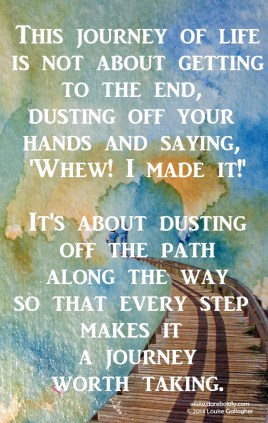
This journey of life is not about getting to the end, dusting off your hands and saying, ‘Whew! I made it!’

It’s about dusting off the path along the way so that every step makes it a journey worth taking.

This is life. We all know where it’s going and none of us are getting out alive.

Making the journey an adventure, exploring every nook and cranny to discover hidden gems and treasures within you creates a journey worth taking every step of the way.


Practice Deep Listening | 52 Acts of Grace | Week 9

acts of grace week 9 copy

It doesn’t have to be a co-worker you take out for coffee. It could be a daughter or son, your cousin, neighbour, a friend, your spouse…

The question, “What are you passionate about?” is a direct line of communication to the heart. It speaks to purpose without asking “what is your purpose in life?” Which for some people can be a daunting question if they’ve never really stopped to think about their purpose in the world. Being asked the question,”What is your purpose in life?”, especially if we’ve never explored the question, can cause us to feel vulnerable, exposed. It leads us directly into our heads as we scramble to find the ‘right answer’. And, because we think there’s a right answer, it can ignite the fear we won’t get the answer right, or that we’ll be judged if our purpose isn’t clear, or ‘big’, or headline making.

But when we ask, “What are you passionate about?”, we are speaking heart-talk. We are saying, “I have a deep interest in knowing who you are and what you’re about.” In the open expanse of the question, people click into that space within where their heart beats freely and their mind knows what they’re talking about is not about getting the answer right, but rather about what calls to their heart.

People can be passionate about many things. Collecting stamps. Being a Big Brother or Big sister. Their family. Reading. Mountain Climbing. Volunteering at a hospice.

Asking them to share about their passion, and listening deeply, builds connection. It strengthens the bonds that unite us as human beings and as we listen deeply, gives the gift of being heard, seen, known and valued.


Ask a question and listen deeply.

You may be surprised by what happens next.

The Face of NIMBY is Not Pretty

“Who’s going to live here?”  It is one of the most frequently asked question when talking to communities about housing for formerly homeless individuals.

The challenge is, the answer is the thing that causes their fear to rise. Individuals with long-term experience of homelessness.

Not because formerly homeless individuals and families are scary, but rather, because often we carry misconceptions of what the state of homelessness is and who the people experiencing it are.

Homeless and criminal are not the same words; yet there are those who believe Homeless = Criminal.

People experiencing homelessness may have a criminal record. But then, it’s almost impossible to live in homelessness and not be ticketed for some infraction for which the majority of us would never be ticketed.

Jay-walking. Sitting on park benches. Open liquor in public spaces. Being intoxicated in public. Spitting on the sidewalk. Littering. Urinating in public. These things happen every day in our city, especially during Stampede, yet often they are overlooked by authorities because, well really? Are you going to ticket everyone? And anyway, it’s Stampede. It’s just what happens.

In homelessness, you do not have the luxury of a backyard or living room to pop open a beer and kick back. You do not have access to a washroom when you need it.

As to jay-walking and sitting on park benches and other things that people of all walks of life do everyday, they are less likely to be ticketed at the same rate as those who are visibly homeless. Add to that the fact that individuals in homelessness do not have the resources to pay fines and often do not turn up for court dates, it’s easy to see how a criminal record can easily follow.

The other factor that leads to individuals in homelessness having criminal records is that addictions are often a result of, or part of the homeless condition. And, even though homelessness accounts for less than 0.1% of the population, over 40% of those experiencing it self-report having an addiction (approximately 10% of the total population will report being impacted by an addiction in their lifetime).

Again, without the resources to a) support an addiction, or b) get help; individuals will turn to other means to get the substances they need to feed the beast of an addiction.

And that’s why housing with supports is so important.

Homelessness by its very nature is an unstable condition. With housing and supports, individuals begin to take stock of their lives from a place of stability. In that place, evidence clearly shows that self-care follows. Use of illegal substances, interactions with police and emergency response teams, incarcerations, all decrease.

For six years I worked at one of Canada’s largest homeless shelters. During that time I never once experienced a mob scene where a mass of individuals yelled and threatened staff, demanding they answer questions or give them assurances they will be safe on our streets, or not be ticketed for sitting on a bench, or as happened the other night, give them the names of the people who were coming in that day to serve meals or sort clothing or a host of other jobs regularly filled-in by volunteers.

Yet, last week, when my co-workers and I attended an open house to meet with community about a proposed housing development for 28 formerly homelessness citizens , we were met with an angry mob threatening us, demanding answers, yelling out and demanding to know, “Who is going to live here?”


They weren’t there to talk about the merits of our proposal. The aesthetics of the building. Its fit within the architectural landscape or compliance with zoning.

They were there to talk about ‘the people’.

When a for-profit developer proposes an apartment building, community does not demand to know the income, life-history including criminal background-check, race, gender, faith of those moving in. They do not demand to know what will they do in their spare time. Because they have no right to know these things. And to ask would be to risk being charged with infractions of the Human Rights Act.

Yet, because people have been marginalized, impoverished, homeless, and are often without a voice, people feel they have the right to ask questions and use names that demean the human condition of fellow citizens. They feel they have the right to act out in ways that are more threatening and offensive than anyone I have met on the streets or in a shelter who is experiencing homelessness.

This week, I have been sifting through emails from community members regarding our project.

I am stunned by the face of NIMBYism (not in my backyard) many of those who have written in portray. It is not pretty.

Yet, at the same time, I am optimistic. Their opposition is not based on the merits of the development. It is all about fear.

We can, I hope, abate fear by continued engagement that heightens our awareness of the need to  lower our voices against and raise our voices for taking action to get homelessness off the streets and out of backyards by making it possible for people to find themselves at home.


The Photo Challenge Self-Bomb

Liz, over at Be. Love. Live. posted an interesting, and fun (I hope) challenge.

Scroll through your phone photos and randomly select 10 to 12 photos (you decide how many). Post them with a brief comment of each. And send them off into cyberland as a post. A photo challenge where you are bombing your own photo roll.

The trick is to a) keep your eyes closed as you scroll and randomly stop scrolling without choosing where. (Now why didn’t I delete that photo where I look like a Zombie?)

The other trick is to b) trust in the process.

Again. Seriously. No cheating?

Yup. Trust in the process and enjoy the ride.

I decided to give it a go. To simply let judgement, self-selection, and fear have a rest as I sank into the fun of it all!

And here’s the result:

PHOTO CHALLENGE SELF-BOMB – 12 random photos of me and my world.

IMG_2074 (1)

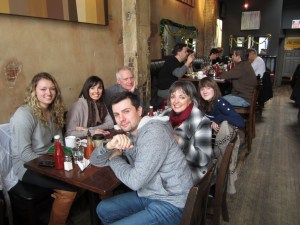
Brunch in Vancouver — #favpeople

FullSizeRender (72)

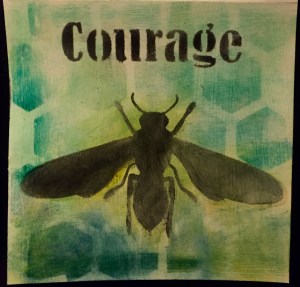
Creative expressions — #courageistheway

FullSizeRender (87)

Walk in the park  #thelongview

 FullSizeRender (88)

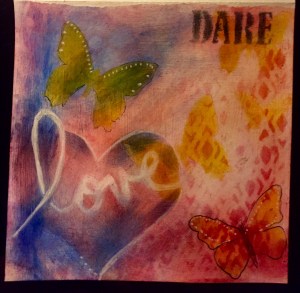
Creative expressions 2 — #loveistheanswer

IMG_6571

A wedding is a family affair!– #familyiseverything

FullSizeRender (89)

Tofino beauty — #runwildinthesand

IMG_7766

Grace in every moment  — #breathe

IMG_8292

Beaumont the Sheepadoodle — #isanyoneoutthere?

IMG_7829

Let me go! #wannarunfree

IMG_8570I Love Spring! — #springissprung

IMG_8668

Morning coffee with my sister — #playwithmealready!

IMG_8503

The early riser — #areyouupyet?

7 Steps to Let Art Happen

7 steps to let art happen copy

With less than 24 hours to go before the 7 cities Conference on Housing First and Homelessness started, one of our keynote presenters took ill. We met as the organizing committee and the decision was made that I would give the address at noon the next day. It was specific to a play that was to be performed, one which I had a deep understanding of. It was my eldest daughter’s play which she’d written as a 20-year-old volunteer in the art program I’d started at the shelter where I used to work.

I knew I was best suited to set the stage for the play, but I was a tad panicked. I still had the official conference powerpoint to prepare and the final tweaks to the EMCEE notes to finish off. Plus, I was meeting the team at the hotel to help set up that evening.

Panic, fear, anxiety were not my friends.

I had to let them go. I breathed.

And then I breathed some more.

I arrived at the hotel for the opening reception and afterwards asked the team if they were okay setting up without me. They had no problem. It was all my head dancing with fear (and a little bit of procrastination) that made me feel like I ‘needed’ to be there.

I came home and worked on my presentation and suddenly, where I did not know it was already germinating, a presentation appeared with 7 key points to highlight how it was that art happened in a place where survival was the name of the game, and art was not considered part of the survival path.

That was my first lesson on how to Let Art Happen — anywhere. Trust in the process.  

In letting go of fear and giving into trust, the ideas and words and underlying framework of the presentation appeared. Which is also what happened when I first set up the Possibilities Project at the shelter. I simply trusted in the process. Trusted it was the right thing to do with a donation that had been given to the shelter from a church – they wanted to support art in the shelter. I knew I could make that happen simply by trusting in my own creative and artistic abilities.

The second step that became clear was Persistence is vital. I started writing the story of a man who kept refusing to come up to the studio space until one day, after weeks of asking, he simply said, “Now’s the time.” He became one of the cornerstones of the project’s success.

Find value in all things was a challenge the day I discovered much of the art stored in the large multi-purpose room had inadvertently been thrown into a dumpster on the loading dock. We salvaged much of it — and I used that event to leverage the value of having a dedicated art studio for the project.

Watching how the artists were delighted for each other when they sold a piece at the art shows was a true lesson in how to Be Grateful for all things. It didn’t matter if they sold a piece for $5 or if another sold 10 pieces to their one. They were all grateful for the opportunity to share their work.

From a man holding a paint brush for the first time in 20 years breaking into tears and committing himself to another path, to a woman selling her first piece and deciding to connect with supports to find a way out of homelessness, Always believe in miracles was vital to the success of the project.

We do not know what will happen when we Plant seeds of possibility. We can be confident something will. Seeds of possibility are closely linked to miracles — you need the seeds planted to grow into those beautiful miracles of life dancing all around.

Every life is a work of art. It’s important that we each Be the artist in our own lives. Artists honour their talent. They trust it and respect it. They value its presence and treat it with love and compassion and do not give up in believing in themselves, even on their darkest days. Artists let their creative expression out. Always. When we become like the artist, miracles happen, possibility explodes wide open and life expands into limitless opportunity to be ourselves, in every kind of weather, no matter where we are. All because, we Let Art Happen.

Let Art Happen.

  1. Trust in the process
  2. Persistence is vital
  3. Find value in all things
  4. Be grateful for all things
  5. Always believe in miracles
  6. Plant seeds of possibility
  7. Be the artist in your own life.


PS. The play was amazing. More about that in another post!

Give the Gift of Life | 52 Acts of Grace | Week 8

acts of grace week 8 copy

For the past few months I have been part of the organizing team for a conference that was held Wednesday, Thursday, Friday here in Calgary. The 7 cities Conference on Housing First and Homelessness attracted over 410 delegates, 85 presenters and people from across Canada.

When we were planning for the event, we wanted to create a space where knowledge could be shared, ideas sparked and successes recognized, as well as a place to learn from mistakes so we could all do better. We also wanted to create a space where we celebrated the amazing people who are at the front lines and in the back offices planning, organizing and mapping out strategies to end homelessness.

We decided to create a Photo Booth with a Hero Wall — a space where delegates could dress up, act silly, and take photos of their ‘inner hero’. People were also invited to complete two statements on a piece of coloured paper — Ending homelessness means… and  Excellence already turns up in my work… and to hold their answers up while they were having their photo taken in the photo booth.

The second question came from a conversation I had prior to the conference with one of our Friday keynote speakers, Michelle Cederberg. When I explained the Hero Wall she quickly identified ways to tie it in with her talk — and even came to the Thursday noon keynote session to ensure she aligned her talk with the theme of the conference and the audience. Her insightful and high-energy talk on energizing for excellence inspired everyone with simple and practical ways to take care of themselves. She offered helpful tips on feeding and tapping into our personal pool of internal energy so that we can direct our outward attention, in a healthy way, at the important work of ending homelessness. (I highly recommend Michelle as a keynote speaker)

Ending homelessness is hard work.

Having fun is good self-care.

When we were in the planning stages for the conference there was some concern the Photo Booth would be a dud. Nobody would dress-up. People would think it was silly.

We needn’t have worried.

The Photo Booth was a huge hit!

It showed very clearly that — we all want/need to ‘let our sillies out’, as Week 7’s Act of Grace suggested.

Taking ourselves too seriously can wield a death blow to creativity, energy, enthusiasm and compassion.

Cutting loose, letting your hair down, letting it all hang out — they are antidotes to the weary that can overshadow our work and lives when we get stuck trying to push through each day pulling our energy out of an empty well.

Did you ‘let your sillies out’ last week? How did it go?


The Mob.

I am searching for the “face of the divine” in the strangers circling me. I am searching to see them as more than the mob they have coalesced into. I am searching for the essence of our humanity, for the same kind of different we each share. And I am blind.

Fear does that.

It blinds me to seeing, as St. Benedict counselled, ‘the face of the divine’ in every stranger at the door.

My fear is not-ill placed.

I am at an open house for an apartment building the Foundation I work for is considering building. Some community members have already been clear they do not want this 28 unit apartment building for formerly homeless individuals in their community.

The challenge is, we are not there to talk about the people who will be housed. As I told one man, each person we house has the same right to live in community as you and I do.

But the people who have come to this open house do not want to talk about the merits of the development. Does it comply with zoning? Can we decrease the density? Can we change the facade?

They are there to tell us they do not want ‘those people’, or as one man called them the week before, ‘this litter’ in their community.

And my heart is heavy.

But I am not afraid. I believe in the power of our human capacity to connect, to ‘see’ beyond the labels and into the heart of what is the right thing to do.

And then suddenly, fear awakens.

Where the room is filled with small circles of people standing by the renderings we have on display of what the building will look like, talking to my co-workers at the various stations, it suddenly becomes a full blown mob.

All it takes is one woman yelling into the centre of the room “Gather round people. We gotta talk. I’m not liking what I’m hearing.”

And the crowd circles around her. Their murmuring becomes a roar. They turn to face me and start chanting in response to a man’s calling out, “Do we want them here?”

“No! No! No!” And as a mob they raise one arm into the air, fists clenched and keep shouting and glaring at me and pumping their fists into the air.

They are between me and the exit. My back is up against the wall.

“What’s it going to take for you to hear us Louise? We Don’t Want You Here?” the woman who incited the mob yells out.

I take a breath.

“We hear you,” I tell her. A co-worker has come to stand beside me. I turn to her. “What should we do?” she asks. “I think we need to pack up and leave,” I reply.

I turn back to the crowd. “We hear you and so we are going to pack up our display and leave.”

Their anger rises. “No! No! No!” they scream as one voice.

The woman calls out again. “Tell us what we have to do to get you to hear us! We don’t want you!”

I breathe again. Fear grows with each breath as the mob circles closer around me.

“We hear you. We are leaving so you can meet and talk about your next steps.”

The woman screams. “No! Tell us what to do.”

I keep breathing, willing the tears, the shaking in my body to not rise up and take over. “We cannot tell you what to do. Good night and thank you for coming.”

And my co-worker and I turn our backs on the crowd and begin to pack up our information.

With no foci, the mob energy deflates. Someone turns on the lights at the far side of the room and the crowd moves as a wave to take seats where a microphone was already set up for a town hall meeting.

A woman approaches as I am pulling the panels of the display pieces together. “I really came here tonight to learn more about the project,” she tells me.

“I appreciate that,” I reply. “What would you like to know?”

And we talk for ten minutes about the project as the mob settles into chairs on the other side of the room and begin to discuss how to block our bringing those people into their community.

“Why can’t you tell us who will live here?” she asks.

“We have,” I reply. “They are individuals with a history of long term homelessness who need housing and supports in order to end their homelessness. We cannot be more specific than that.”

And therein lies the challenge.

The community wants certainty. They want names of those will live there, histories. To give them what they want would violate the human rights of those we serve. The people we serve deserve better than that.

It is not the ‘who’ the community really wants to know. They want to know the crime that already scares them will end. They want to know their future is secure.

We can tell them our experience in our over 20 buildings in the city does not show increased crime around our buildings. We can show them the evidence from crime data and maps, findings of property values.

They cannot hear us because ultimately, it is not about the merits of the development nor the evidence in other communities. It is about their fear of the world around them today and their fear of what their world will look like in the future.

And I cannot change their fear.

I faced a mob the other night. I was scared. I felt unsafe. Upset. Exposed.

I am writing about it because I am still shaken, still struggling to see ‘the divine’ in the ugly face of the mob. Yet I know, it is the path to finding our humanity beyond our fear of one another.

And so I continue to seek the divine in every face and in that journey, my fear abates.


Mom. Thank you for your million kindnesses.

photo (100)The fact is, I could have been a better daughter.

I could have been less critical. Less strident in my opposition of her way. Less insistent on my right to do it my way.

I could have loved her as she was, and not tried to constantly make her change, to get with the times, to loosen up.

I could have held her in compassion. Seen her through eyes of understanding. Listened with an open heart. Spoken with an open mind.

And mostly, I didn’t.

I was a teenager. A rebel. Angry and confused by what I saw as her dismissal of me. Her disregard for my feelings, my needs, my wants.

I was narcissistic. Insensitive. Unkind.

I cannot change the past.

My mother didn’t teach me that. At 93, she still wishes she could change the course of time, alter its path.

What she has taught me though, again and again, is the value of kindness.

The need for it. The importance of it. The beauty of it.

My mother is a kind woman.

Gentle of heart. Soft-spoken, she has never fit comfortably into the world beyond the beautiful confines of the place where she was born.

She grew up in a then French colony on the coast of south east India. Pondicherry was the place she always goes back to in her memory. Surrounded by 9 siblings, various cousins and aunts and uncles, at the edge of the Indian Ocean, she remembers family gatherings on sun-soaked beaches, monkeys shrieking from the branches of swaying palm trees, the smell of frangipani soaking the air, the laughter of children, the smell of incense burning in the Catholic cathedral where she did her First Communion, changed the flowers on the altar every Saturday in preparation of Sunday mass. And her Amah. The woman who cared for her, helped her dress, helped her learn her arithmetic, do her school work. Be a good girl.

Until she met my father, my mother wanted to be a nun. She wanted to devote her life to God.

And in some ways, she has. She is devout, never without words of a prayer far from her lips, her mantra, “God’s will be done.”

I never understood her steadfast belief, her devotion to someone, some thing she could not see.

For my mother, God was and continues to be real. She does not need to ‘see’ Him with her eyes. She knows Him in her heart and she knows, he sees her. He knows her heart.

And that is enough for my mother.

My mother is a woman of grace.

At 93 she still has a girlish charm and beauty that never fades. Her hands are crooked and deformed by arthritis but her heart remains pure with a Love that never fades, never goes away.

She still does not fit comfortably into the world around her. She cannot understand the violence, the anger, the hatred.

It is what makes her shine with kindness.

Because no matter what is happening in the world around her, my mother will always find the kind word, the kind path.

I was a challenging teenager, a not so nice daughter.

This journey of forgiving the past is a constant journey through Love.  Sometimes, my mother and I navigate the waters well. Other times, we struggle. Our history runs deep.


And yet, for all our struggles, because of the depth of my mother’s teachings about kindness, one thing never changes. We are forever bound in a circle of love that began when she gave birth to the woman I am today.

Thank you mom for my life. Thank you for the lessons. The memories and the Love. Thank you for your million kindnesses.

6 Principles for Living Life Joyfully in the Now.

“It takes more courage to reveal insecurities than to hide them, more strength to relate to people than to dominate them, more ‘manhood’ to abide by thought-out principles rather than blind reflex. Toughness is in the soul and spirit, not in muscles and an immature mind.”

Alex Karras

Yesterday, I challenged myself to write my six principles for daily living. It was more complex a task than I thought.

First, there’s the little voice inside me that whispers, ‘rather grandiose of you Louise to think you can write such a thing.” Secondly, there’s the indecision, the questioning, the looking at the truth — do I really uphold these principles in my everyday living? Do I really live by these principles in everything I do and say?

Not sure I do every moment of every day, but — and here’s the beauty of taking the time to consciously write out what I believe are the principles that are important to me — they are principles that I want to live by, principles that guide me in every thing I do and say.

When I know better, I do better. In writing about the principles I believe in, I learn more about where I am, and what I want in my life. I learn more about me — my insecurities, my strengths, my belief structure. I have a measuring stick against which to gauge my progress, minute by minute, encounter by encounter. I have a rock solid foundation upon which to build my life.

I believe we are all connected. That when I live by the Golden Rule, ‘do unto others as you would have them do unto you’, I am accountable for everything I do and say. When I respect the differences between me and my fellow man, when I honour who I am by making room for who others are, I am walking my truth, being the difference I want to create in the world by connecting to what is important to me and the world around me.

I believe we are all magnificent human beings, capable of greatness in everything we do. I believe in my own personal significance. That who I am, what I do makes a difference. It is my responsibility to recognize my gifts, acknowledge them and use them wisely. It is my responsibility to step softly, to ensure my footsteps are like butterfly kisses, each imprint inspires imagination, but leaves no mark to mar the surface upon which they passed.

I believe I am responsible for my own happiness, and I trust others to be responsible for theirs. I am happiest when I am living a principled life, acknowledging my dreams and taking action to make them come true. Like happiness, my dreams are my responsibility to bring to fruition.

I believe kindness counts. That being kind creates a more caring world. When I care for the universe, everything and everyone in it, I am contributing to a better world and creating a world of value in everything I do, and every where I go.

I believe in honesty and truth. When I honour someone with my truth, I am opening the door for their truth to enter. When I am honest with myself, I love myself exactly the way I am. When I look at myself honestly and truthfully, I give myself grace to lovingly acknowledge my short-comings, my inconsistencies, my fallibilities. In my truth, I set myself free to change the things I do that hurt me and those around me.

I believe in treating all people with respect. How I treat people is a reflection of who I am. It’s my responsibility to be the best me I can be at all times.

The question is: Have you written down your principles? If not, what are you waiting for?

****************

I am at the 7 cities Conference on Housing First and Homelessness for the next 2 days. This post was originally posted on my Recover Your Joy blog, on Thursday, September 27, 2007. I was fascinated to see how these principles are still my truth today.

namaste.